Content from the Journal of the American Neurological Surgeons.
Friedrich W. Mohr, MD, PhD is the medical director of the Leipzig Heart Center, Leipzig, Germany, and an International Director of The Society of Thoracic Surgeons. Professor Mohr has also served as President of the German Society of Thoracic and Cardiovascular Surgery, President of the Society of Heart Valve Disease, and Congress-President of the German…
An intrathoracic esophago-gastric anastomosis has the potential to reduce morbidity and mortality in patients undergoing minimally invasive esophagectomy (MIE) for cancer. Esophageal squamous cell carcinoma (SCC) has a high incidence of early lymphatic spread and is usually located in the midthorax, in comparison to esophageal adenocarcinoma. Consequently, the anastomosis should be made high in the…
Uniportal VATS pulmonary resections are becoming more frequent in the age of minimally invasive approaches. When facing big, central tumors, surgeons sometimes find it difficult to control vascular structures, mainly arterial branches, especially in the presence of enlarged interlobar lymph nodes. This video shows a 49-year-old woman with a 3.8 cm right upper lobe tumor, surrounding…
This video demonstrates the clinical application of the lung lavage technique for the treatment of Pulmonary Alveolar Proteinosis (PAP) (1,2). Indications The main indication for lung lavage in patients with PAP is the limitation of activities due to dyspnoea. The threshold could be lower for patients who work as heavy laborers, than those who have…
This video illustrates an alternative technique for the implantation of a left ventricular assist device (LVAD) via a bilateral mini-thoracotomy instead of a standard median sternotomy. This approach has some theoretical advantages, such as: less surgical trauma and inflammation, better compliance of the thorax, improved pulmonary function, and better right heart protection. Therefore, this approach…
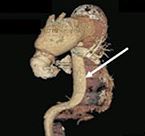
The treatment of thoracoabdominal aortic aneurysms continues to be a challenge in cardiovascular surgery. Recently, hybrid debranching and endovascular repair of extensive thoracoabdominal aneurysms became a suitable approach in those considered to be a high risk for open surgical repair. The procedure involves extra-anatomic bypasses to the celiac, renal, and superior mesenteric arteries based off…
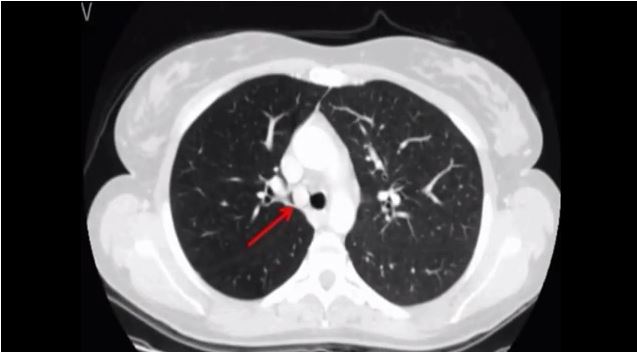
This video demonstrates the technical details of an endoscopic radical resection of an endobronchial carcinoid by laser-assisted rigid bronchoscopy. A 35-year-old woman with a history of cough and asthma was referred for acute hemopysis. A chest CT scan disclosed a round, well-defined mass occluding the right main bronchus; no lymph nodal involvement or tracheo-bronchial wall…
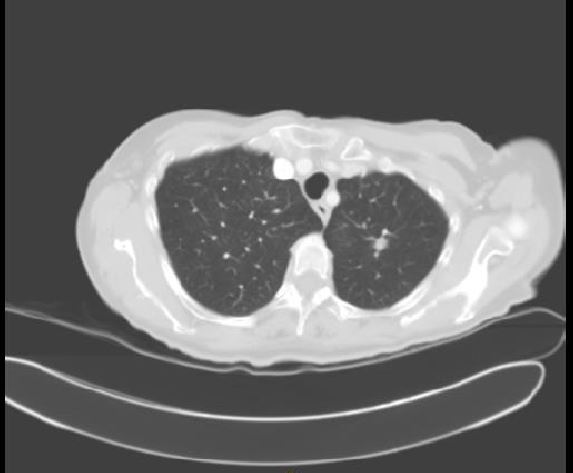
Uniportal VATS pulmonary anatomical and wedge resections are becoming common worldwide, but there are difficulties associated with the procedure. For example, when the operating surgeon tries to find small undiagnosed intraparenchymal pulmonary nodules or performs left-upper lobectomies with totally fused fissures. Figure 1. This video shows a 73-year-old woman with a past history of gastric…
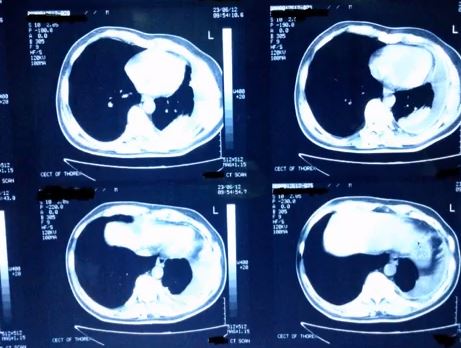
In organized stage 3 pleural effusions, the thickened visceral pleural layer entraps and collapses the lung resulting in lung volume loss with crowding of the intercostal spaces. The patient is a 56-year-old male previously treated for pulmonary tuberculosis with a left pleural effusion. A 4 cm single incision for thoracoscopy through the 4th intercostals space…
Advancements in imaging technology have inspired the development of minimally-invasive approaches to thoracic disease. These improvements in imaging, however, have also introduced challenging diagnostic and treatment considerations in the identification of an increasing number of small pulmonary nodules. Video-assisted thoracic surgery (VATS) provides a platform for obtaining a tissue diagnosis or achieving a satisfactory resection…
Extrapleural pneumonectomy is a surgical resection option for the treatment of malignant pleural mesothelioma. This video shows a right-sided extrapleural pneumonectomy on a 60-year-old woman with mesothelioma. The author describes the operative procedure in detail with video and audio narration. The patient did well postoperatively and was discharged from the hospital in one week. The…
Introduction A variety of approaches for surgical management of myasthenia gravis and thymoma have been described. There is a growing experience with VATS approaches to the management of each of these conditions. One approach to VATS thymectomy is described in this article and the accompanying videos. Patient Selection a. Nonthymomatous myasthenia gravisb. Small (< 2cm)…
Background Congenital cystic adenomatoid malformation (CCAM) of the lung is a rare congenital malformation.This anomaly has been rarely described in adults when in association with bronchial and vascular atresia. There are few reports in the literature describing thoracoscopic lobectomy in patients with this unusual anomaly. This video is the first report of a lung resection…
Dr. Jose Luis Pomar, EACTS President, discusses the highlights of the 2013 EACTS Annual Meeting taking place from October 5 – 9 in Vienna, Austria. This content is published with the permission of EACTS.
The patient was a 27-year-old male with a 5 cm ascending aneurysm, BAV and 3+ aortic insufficiency (AI). He underwent a mini-sternotomy using an 8 cm skin incision. He was centrally cannulated and cooled to 20 degrees Celsius while the aortic valve was repaired. Deep hypothermic circulatory arrest (DHCA) was initiated and the ascending and…
Hybrid aortic procedures have the potential to reduce morbidity and mortality in patients that may not be reasonable candidates for traditional open operation. Proposed advantages are: reduced mortality in patients with distal arch pathologies, obviating need for open second stage operation, reduced recurrent nerve injury, reduced bleeding, and pulmonary complications. 1. Hybrid aortic procedures are…