Content from the Journal of the American Neurological Surgeons.
This is a case presentation of a full-term infant female who was prenatally diagnosed with pentalogy of Cantrell and a cardiac diagnosis of ectopia cordis, a Tet-type double outlet right ventricle (DORV) with two large subaortic and inlet ventricular septal defects (VSD), left superior vena cava (LSVC) to left atrium (LA) without a bridging vein,…
The patient was a 68-year-old male with a history of type 3 paraesophageal hernia (PEH) recurrence post receiving a Nissen fundoplication and an attempted robotic repair one year prior. The repair was aborted intraoperatively due to respiratory decline and hypercapnia. His past medical history was also notable for Cameron’s ulcers, chronic obstructive pulmonary disease (COPD),…
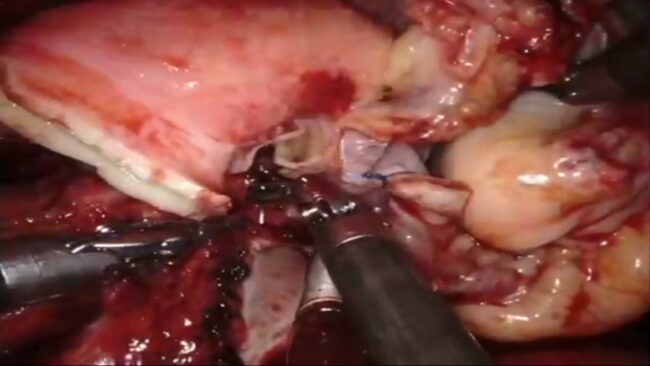
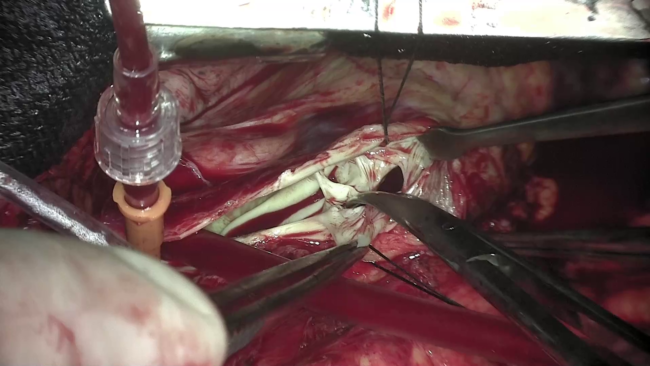
Dr. Vince Gaudiani demonstrates how to perform a complex repair of a mitral valve with a heavily calcified posterior leaflet. He began by cannulating the femoral vein and then performed a sternotomy. Following this, he placed a right superior pulmonary vein vent and performed aortic cannulation with antegrade cardioplegia. The roof of the left atrium…
This video shows an 80-year-old patient who had severe mitral and tricuspid regurgitation with pulmonary hypertension and, intraoperatively, was found to have a sinus venosus defect. Dr. Vince Gaudiani found the sinus venous defect when he was ready to place a right superior vein vent and discovered that the right superior pulmonary vein (RSPV) was…
In the latest CTSNet Guest Editor Series, Mastering Aortic Root Surgery—Learning From Top Surgeons, cardiac surgeon and CTSNet Senior Editor Dr. Lorena Montes invited top cardiac surgeons from around the world to contribute clinical videos on various aortic root surgery techniques, such as the David procedure for aortic regurgitation, the Ross procedure for aortic stenosis,…
To begin, a 5-6 cm incision was made in the right 3rd intercostal space, with the fourth rib sheared at the costochondral junction. The specific intercostal space used can be tailored to the patient. The authors prefer using the standard, centrally placed ascending aortic cannula with angled high superior vena cava (SVC) cannulation and a…
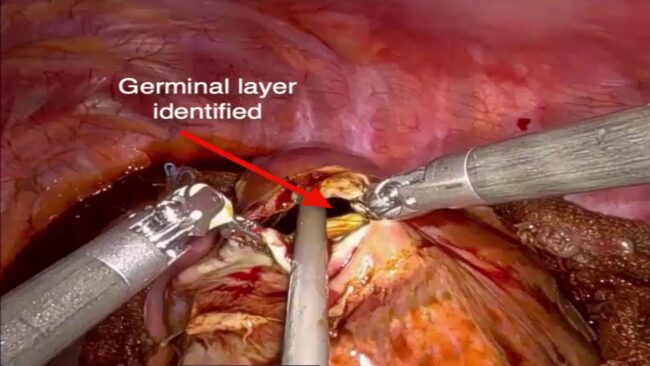
Conventional robotic-assisted subxiphoid thymectomy provides excellent visualization to both the phrenic nerve and the superior horn of the thymus gland, allowing the surgeon to effectively perform a radical thymectomy. However, this technique requires a 3 cm incision for subxiphoid dissection, and VATS dissection has some risk of injury to branches of the musculophrenic artery, the…
In June 2024, a panel of cardiothoracic surgery experts gathered at Teatro delle Muse in Ancona, Italy to discuss Minimally Invasive and Trans-Catheter Interventions for patients with Mitral and Tricuspid Valve Diseases. This course was directed by Professor Marco Di Eusanio. The videos that follow are a sampling of the sessions that were featured at…
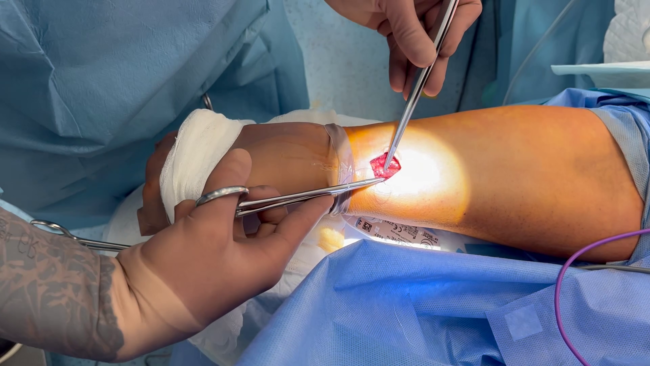
This video presents a case of endoscopic radial artery harvesting using a reusable retractor with an open CO2 insufflation system. The procedure was performed with the patient’s arm positioned at a 90-degree angle from the body and a tourniquet was applied to the shoulder for controlled blood flow occlusion. A 1.5-2.5 cm longitudinal incision was…
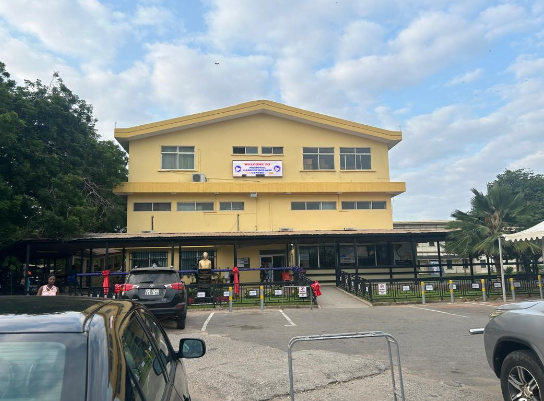
I. Background Specialist surgery training in West Africa produces a wide range of surgical specialists across various fields, including cardiothoracic surgery. The training occurs in tertiary healthcare facilities (teaching hospitals) that have been accredited by either a national postgraduate medical college or by the regional West African College of Surgeons. Most surgery trainees choose one…
Lead surgeon, Dr. Feras Khaliel has generously shared his video of the first-ever robotic heart transplant. This video is in full resolution and shows his right chest approach with a 5 cm mini thoracotomy and anastomoses. This video also demonstrates how this is a highly feasible technique that is likely to be performed more times…
This patient in this video was a 55-year-old female who underwent a mitral valve repair for prolapse and had an anomalous right coronary artery as well. Dr. Vince Gaudiani begins this video by explaining the condition of anomalous right coronary artery and when it poses risks and when it does not. Dr. Gaudiani began the surgery…
This video shows a 55-year-old patient who underwent an open pulmonary valvotomy in 1967. He presented with a 10cm right atrium, free pulmonary regurgitation, tricuspid regurgitation, and mitral regurgitation. First, Dr. Gaudiani cannulated the femoral vein and performed a full sternotomy. He then placed a right superior pulmonary vein vent and cannulated the superior vena cava…
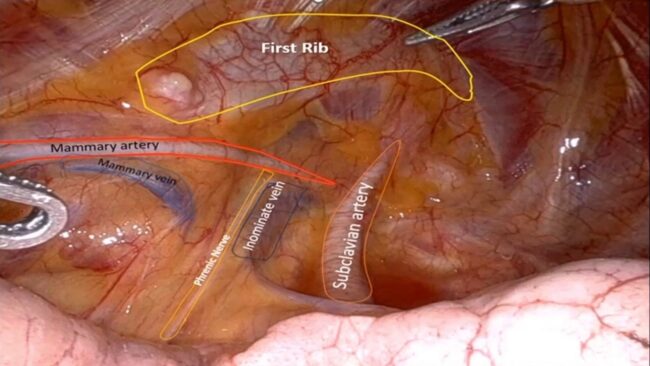
The authors present a robotic-assisted approach for first rib resection. Traditionally, first rib resection is performed through conventional open surgery, often using either a supraclavicular or transaxillary approach, each with its own advantages and disadvantages. A minimally invasive approach can solve many shortcomings of the conventional open approach, and in expert centers, proved superior in…
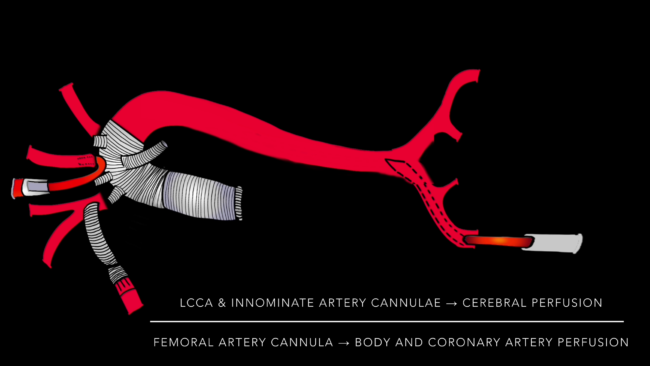
A 26-year-old male with Marfanoid features presented with severe interscapular pain. An ECG-gated CT aortogram (CTA) revealed acute dissection in the ascending aorta, and chronic dissection with complex tears, two false lumens, and a thrombus in the descending thoracic aorta (DTA) measuring 7.6 cm and involving the origin of the celiac artery. Tears were identified…
The patient was a 34-year-old male from Syria who presented with an incidental finding on his chest X-ray during a visa work up. Further testing revealed a 7.5 x 7.5 x 7 cm cyst in the left lower hemithorax, raising concern for either a bronchogenic cyst or a hydatid cyst. After an extensive infectious disease…