Content from the Journal of the American Neurological Surgeons.
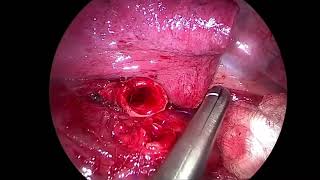
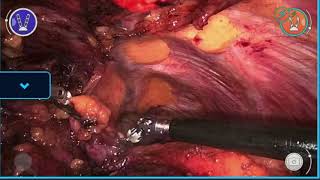
Bronchial sleeve resection with end-to-end anastomosis is described as the most complex bronchoplasty procedure (1). Cases performed by an experienced surgeon are either done using double or triple port VATS (2). We are presenting a 38-year-old patient who was referred to our service complaining of 1-month history of hemoptysis. CT scan showed soft tissue lesion…
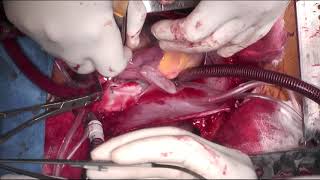
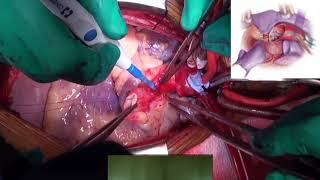
A 29-year-old man was found to have right bundle branch block in ECG during regular health check-up and was diagnosed with SVC type of sinus venosus ASD with PAPVC of right upper and middle pulmonary veins. He refused surgery at that time and was kept under follow up. One year later, he developed dyspnea on…
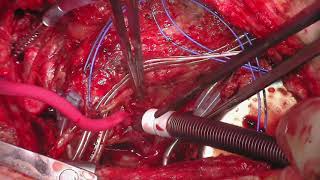
Purpose: The incidence of long-term Fontan complications have led some centers to reevaluate their “functionally single ventricle” patients for different surgical strategies. [1] Other centers have described their short-term outcomes with biventricular (BiV) conversions for patients with small left-sided heart structures. [2] Methods: We present a video case report of the course and operations for…
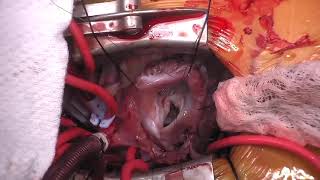
AV canal is a complex heart condition and several different techniques of repair have been used. We present different techniques that we adapt to individual patient anatomy.The first infant we present had complete AV canal with a large VSD with minimal chordal attachments to the ventricular septum. We utilized a two-patch technique with two autologous…
This is a video of the first Versius Robotic Segmentectomy. It is a segmentectomy of the apical segment of the right upper lobe by the team in Argenteuil, Paris. It was performed using the Endoscopic base unit, two other instrument units (a 3mm handheld grasper as the third instrument), and an assistant port. They did…
Cleft Sternum (CS) contributes to only 0.15% of all chest wall malformations. It is either complete or incomplete type. Complete CS is very rare and involves non-union of the sternal plates from the manubrium to the xiphoid. There are many methods of surgical correction. Sabiston described multiple bilateral sliding chondrotomies to approximate the defect. In…
Trans-Septal/Intraconal Left Main Coronary Artery (LMCA) is a rare form of coronary arterial anomalies. It has been linked to increase risk of myocardial ischemia and sudden death. In this anomaly, the proximal portion of LMCA is surrounded by the myocardium of the interventricular septum. Usually there is a single anterior coronary artery that gives origin…
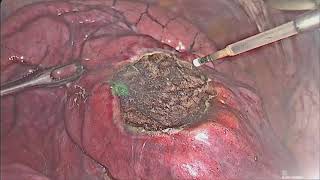
Laser-assisted resection of pulmonary metastasis has been established for over a decade (1). A significant advantage over conventional wedge resection is the preservation of lung tissue, allowing resection of multiple and/or bilateral metastasis without compromising pulmonary function, whilst achieving similar survival and recurrence rates (2). The technique has since been adapted to the VATS setting.…
This is a report of a successful slide tracheobronchoplasty for right mainstem bronchial agenesis. Patient is a 2.4kg ex-36 week male (with a corrected gestational age of 39.6 weeks at time of surgery) with an antenatal diagnosis of congenital high airway obstruction syndrome (CHAOS). Patient was born via cesarean section at 36-week GA and 1.94kg.…
Dr Bode Falase is a consultant and an associate professor of Cardiothoracic Surgery at the Lagos State University Teaching Hospital in Lagos, Nigeria. Dr Falase earned his MB and BS, as well as conducted his surgery residency, at the University College Hospital in Ibadan, Nigeria. He completed his cardiothoracic surgery residency in Wales, United Kingdom,…
We present the case of a 2.8 kg baby born with Axial Mesodermal Disruption syndrome that encompasses features of Oculo-Auriculo-Vertebral spectrum disorder and VACTERL. OAV spectrum disorder is also known as Goldenhar. The patient was diagnosed with a left pulmonary artery sling, long segment tracheal stenosis, atrial septal defect and bilateral superior vena cavae. The…
Double aortic arch is the most common complete vascular ring, frequently causing compression on the trachea and esophagus, and presenting with stridor, recurrent chest infection, or dysphagia lusoria (1). In 70% of cases the right arch is dominant but both arches together form a complete vascular ring (2). This case is a 37-year-old female presenting…
We present the case of a 20-year-old man with a previous medical history of toxic megacolon and a viral pericarditis, which after 3 days of fever and headache, as well as a dry cough and dysgeusia, a chest CT scan was performed and a lesion in the left upper lobe was observed. The PET scan…
Ventricular assist device surgery using a lateral access has been shown to be a safe and a partially beneficial alternative to the standard approach by sternotomy (1). Hereby, left anterolateral minithoracotomy is obligatory for accessing the apex, but for facilitating the outflow-graft anastomosis mainly two options are described: (I) partial upper sternotomy and (II) right…
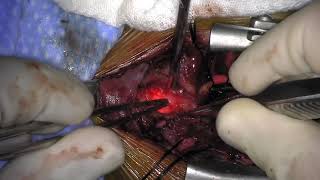
We present to you the surgical repair of a complete vascular ring consisting of a right aortic arch with a retroesophageal aberrant left subclavian artery and a persistent diverticulum of Kommerell. This is a 15-month-old girl who was diagnosed with a vascular ring prenatally. She was asymptomatic; however, the parents elected to proceed with elective…