Content from the Journal of the American Neurological Surgeons.
In this oral history interview filmed in 2000, William Stoney talks with Anthony Dobell. Dr. Dobell discusses his life and career, including his experiences with the first heart-lung machine in the 1950s. CTSNet recently commemorated Dr. Dobell’s life and career. To leave a memory of Dr. Dobell, please click here. This interview is part of…
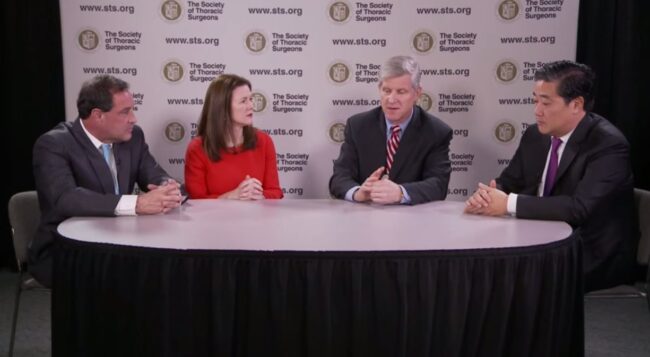
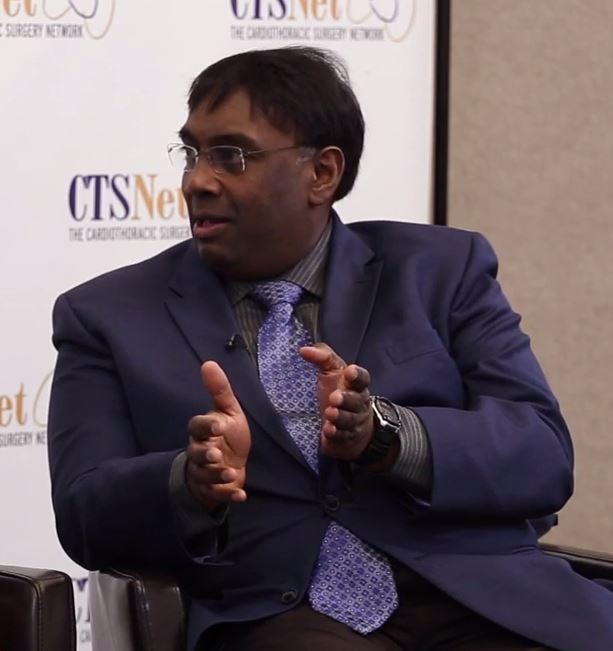
Filmed at the 2015 STS Annual Meeting in San Diego, California, this roundtable focuses on minimally invasive lung surgery, highlighting robotic and video-assisted methods. Scott Swanson moderates a discussion with Shanda Blackmon, Robert Cerfolio, and Bernard Park. The panelists discuss the similarities and differences between robotic and video-assisted techniques, the learning curve for minimally invasive…
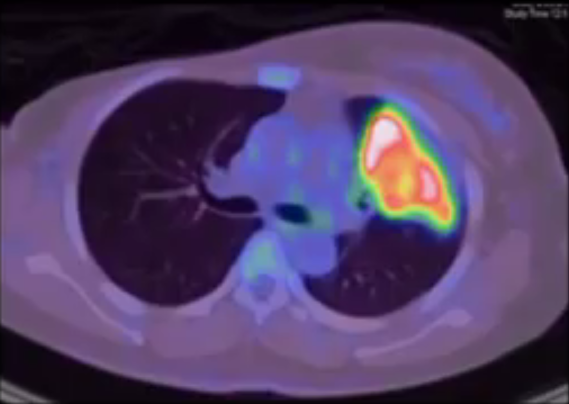
A 36-year-old woman was diagnosed with a left lung mass, which was incidentally detected during a routine x-ray examination. She had undergone right radical mastectomy with axillary clearance for carcinoma in July 2014. A thorax CT scan showed a large left upper lobe lung mass, with another nodule in the same lobe. A PET scan…
Introduction Primary cardiac lymphomas are very rare, representing only 0.5% (1) of all lymphomas and 1.3-2% of all heart tumors (2). Cardiac involvement from systemic lymphomas is more common, comprising 8.7-28% of all lymphomas (1). These secondary cardiac lymphomas are non-Hodgkin lymphomas. Most frequently, they affect the pericardium, and then the myocardium. Pericardial tamponade is…
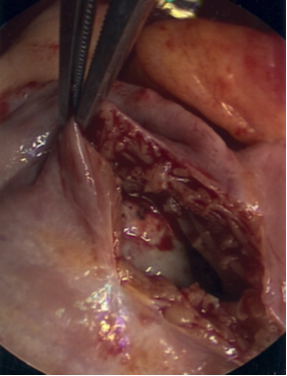
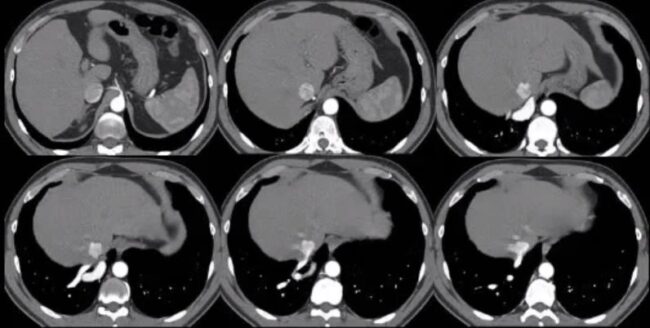
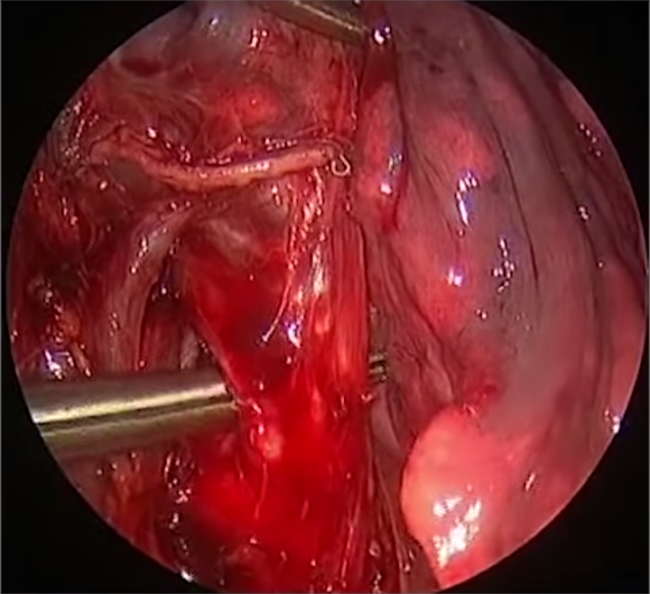
This video demonstrates a VATS resection of extralobar sequestration in an asymptomatic patient. A 40-year-old male patient was admitted for abnormal findings on his chest radiography. The authors suspected a sequestration, and performed CT-angiography in order to make a diagnosis. This revealed a feeding artery that was originating from the abdominal aorta, and a vein…
In this oral history interview filmed in 2003, William Stoney talks with Floyd Loop. Dr. Loop discusses his over 30-year career at the Cleveland Clinic, including his pioneering work in coronary artery revascularization. CTSNet recently commemorated Dr. Loop’s career and life. To leave a memory of Dr. Loop, please click here. This interview is part of…
Jorge Mascaro of Queen Elizabeth Medical Centre, Birmingham, United Kingdom, discusses re-do aortic root surgery, and its growing prevalence as the rates of first-time aortic surgery increase. This presentation was originally given during the SCTS Ionescu University program at the 80th Annual Meeting of the Society for Cardiothoracic Surgery in Great Britain and Ireland. This…
This video shows the replacement of an infected homograft in a six-year-old boy. He had truncus arteriosus repair at four months. The RV-PA conduit was replaced when he was four years old with a homograft. At six, he presented with an intermittent fever that had lasted for eight months. ECHO showed severe conduit stenosis, with…
The objectives of this video are to review potentially dangerous situations that may occur during thoracoscopic lobectomy, and how to manage them (see Table 1). Multiple events and responses are discussed. Important Considerations for Performing VATS Lobectomy When building a practice or training a surgeon to perform VATS (video-assisted thoracoscopic lobectomy), it is important to…
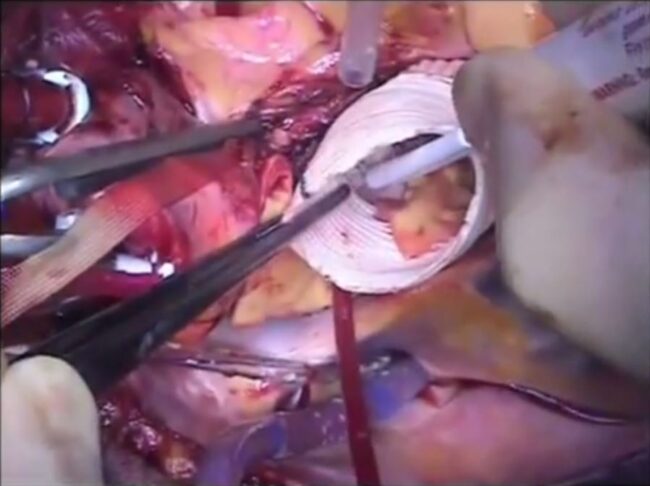
While graft cannulation of the axillary artery has become a standard approach for antegrade cerebral perfusion during aortic arch surgery, it is limited. The second incision can be morbid, with risk of injury to the brachial plexus. In addition, hyper-perfusion of the right upper extremity with a pressure gradient across the thoracic inlet is not…
Filmed at the 2015 STS Annual Meeting in San Diego, California, this roundtable discussion focuses on the use of stereotactic body radiation therapy (SBRT) in the treatment of lung cancer. Stephen Hazelrigg moderates this discussion with Neil Christie and Hiran Fernando. The panelists discuss how thoracic surgeons can take an active role in SBRT programs,…
Santi Trimarchi of the University of Milan, Milan, Italy, discusses re-intervention following acute type-A aortic dissection repair. Dr. Trimarchi draws on data from the International Registry of Acute Aortic Dissection (IRAD) to report on extended versus limited arch replacement, and the predictors of future intervention after initial treatment for acute aortic dissection. This presentation was…
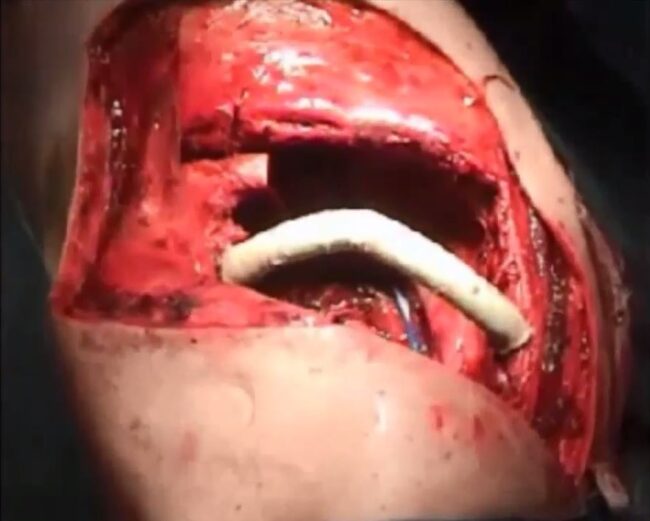
Summary Rib reconstruction is often mandatory after chest wall resection. This video shows how to use orthopedic screws and bone cement molded in a latex drain for a very strong rib reconstruction. The procedure is easy to implement and versatile. It can be used even if the posterior end of the rib has been resected…
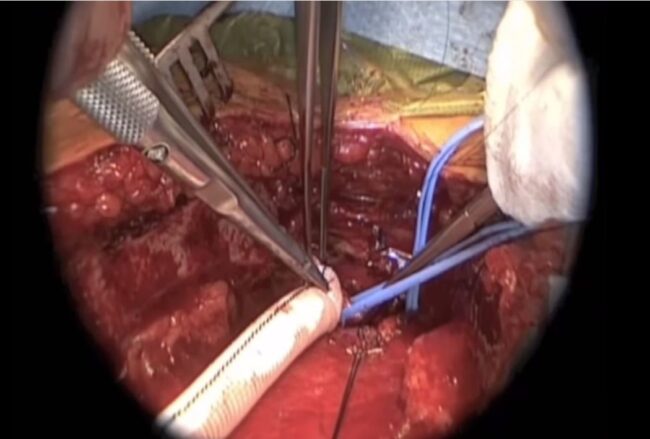
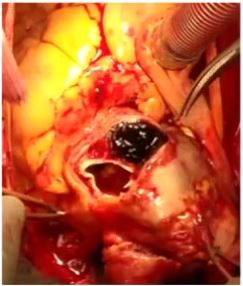
Coronary ostia re-implantation is a key stage of aortic root replacement. Currently, the button technique is the most widespread method, and is considered the standard approach. However, there are still concerns about the incidence of coronary pseudoaneurysm formation, bleeding, and distortion of the coronary geometry, especially when the coronaries are hard to mobilize (as in…
Work/life balance and good rhythm are possible in cardiothoracic surgery! Faculty members from the University of Washington show off their moves at a recent WTSA event. In the comments, let us know what you do for fun when you are not in the OR.
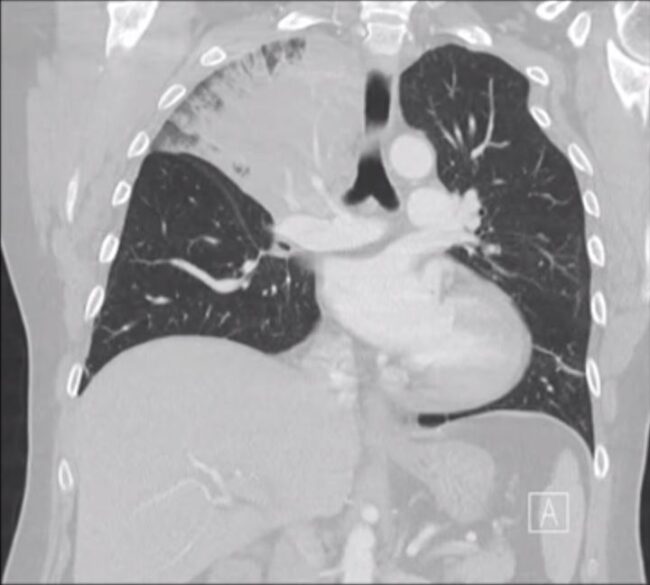
A 52-year-old female smoker presented to the ER with pneumonia. Her chest x-ray showed consolidation of the right upper lobe (RUL). Flexible bronchoscopy revealed that the orifice of the right upper bronchus was fully occluded by a tumor mass, and biopsy confirmed a typical carcinoid tumor. Her chest CT scan showed the right upper lobe…