Content from the Journal of the American Neurological Surgeons.
Minimally invasive cardiac surgery (MICS) frequently requires peripheral cannulation strategies. Femoral cannulation remains the standard approach; however, it is associated with potential complications such as lymphorrhea, hematoma, infection, and an increased risk of embolic stroke in patients with significant atherosclerotic burden due to retrograde perfusion during cardiopulmonary bypass (CPB) (1, 2). Axillary artery cannulation represents…
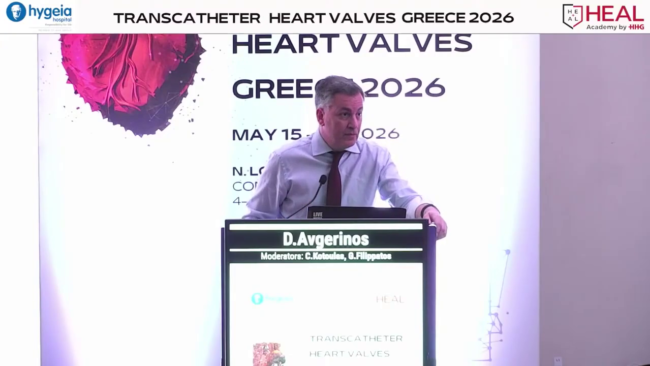
This session features leading surgeons discussing various aspects of the aortic valve at the Transcatheter Heart Valves Greece (THVGreece) 2026 conference. Please note that all presentations are delivered in Greek. The first presentation, “Failed TAVI Referred for SAVR” was delivered by Dr. Apostolos Roubelakis, Director of the 3rd Department of Cardiac Surgery at the Athens…
A 45-year-old man presented with a self-inflicted stab wound to the chest, near the left lower parasternal area. He was evaluated at an outside facility, where the knife was removed carefully and the laceration wound was closed with a nylon suture. A computed tomography (CT) scan of the chest revealed hemopericardium and a mild to…
In this session, cardiothoracic surgery experts gathered to discuss transaxillary valve surgery, options to avoid patients-prosthesis mismatch, aortic valve replacement (AVR), and transcatheter aortic valve implantation (TAVI). These presentations were recorded during the aortic valve session of the Ancona Minimally Invasive and Trans-Catheter Cardiac Surgery Course on May 28, 2026. Introduction Transaxillary Valve Surgery: Innovation…
A 35-year-old woman, who had undergone an aortic valve replacement (AVR) with a 19 mm mechanical prosthesis nine years prior presented with exertional fatigue and shortness of breath despite a well-functioning mechanical prosthesis. Her body mass index (BMI) was 36.2, and she had a significant left ventricular outflow tract gradient that was attributed to patient-prosthesis…
Mixed reality–guided anatomical segmentectomy represents an emerging strategy to improve intraoperative spatial understanding during sublobar lung resection. Accurate identification of segmental anatomy is critical in segmentectomy, particularly for ground-glass nodules, where lesion localization and margin assessment can be challenging. Conventional imaging review and intraoperative visualization may be insufficient to fully translate complex three-dimensional anatomy into…
This video demonstrates a redo operation in a patient in their 60s who had a previous biological aortic valve replacement and required an aortic root replacement with the Konect valved conduit. The patient had undergone a biological aortic valve replacement 10 years prior, which now exhibited a severely stenotic gradient across it. Additionally, the aortic…
The clinical case presented in this video concerns a 67-year-old female patient who came to the authors’ attention in 2021 after undergoing a computed tomography (CT) scan that revealed the incidental finding of a 16 mm ground-glass opacity (GGO) located in the left lower lobe. As the lesion was well localized and adequate surgical margins…
Surgery of the aortic arch has advanced significantly in recent years. The gold standard technique for treating arch aneurysms remains moderate to deep hypothermia with circulatory arrest of the lower body, coupled with cerebral protection. Recently, some authors have developed various techniques for normothermic arch surgery without cardiopulmonary arrest (1, 2). Here, the authors present…
This is a case presentation of an 18-month-old female who presented to the emergency department with altered mental status. In the emergency room, the patient’s electrocardiogram (EKG) raised concerns for biventricular hypertrophy. A transthoracic echocardiogram indicated that her right coronary artery originated from the main pulmonary artery (ARCAPA) and measured approximately 1.8 to 2.2 mm,…
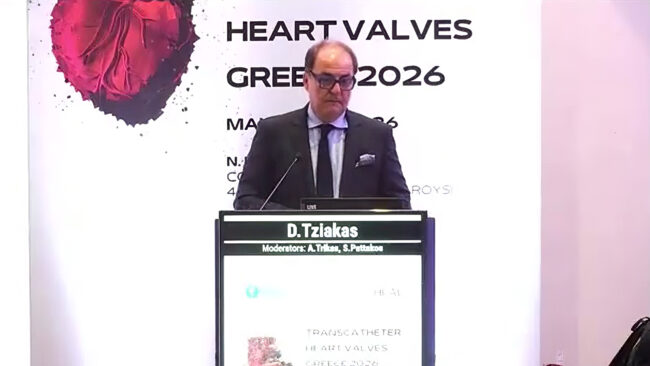
This session features leading surgeons discussing various aspects of aortic stenosis at the Transcatheter Heart Valves Greece (THVGreece) 2026 conference. Please note that all presentations are delivered in Greek. The first presentation, “Moderate AS + EF 35%: Intervene or Observe?” was delivered by Dr. Dimitris Tziakas, an Associate Professor of Cardiology at Democritus University of…
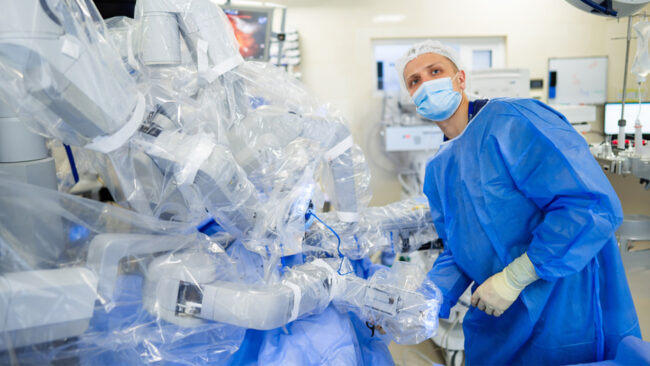
This interview centers around robotic cardiac surgery. At the 2026 American Association for Thoracic Surgery (AATS) Annual Meeting, CTSNet JANS Editor Dr. Mujtaba Mubashir, a cardiothoracic fellow at Beth Israel Deaconess Medical Center, Boston, MA, USA, engaged in an insightful discussion with Dr. Ali Hage, a cardiac surgeon at NYU Langone Health, NY, USA, to…
This video series showcases a robotic mitral valve replacement performed by Dr. Feras Khaliel, a world leader in robotics, at King Faisal Specialist Hospital, Riyadh, Saudi Arabia. CTSNet Editor-in-Chief Joel Dunning traveled to Riyadh to film a series of videos with Dr. Feras Khaliel, who has performed more than 520 robotic cardiac operations, including the…
This case involved a 74-year-old woman who complained of dyspnea on exertion for the past three weeks. She also reported dysphagia for solids without experiencing weight loss. The patient had a history of hypertension and dyslipidemia, and a previous occurrence of deep vein thrombosis. During a cardiac evaluation, a transthoracic ultrasound revealed a large mass…
This video presents a Ross procedure with internal and external reduction annuloplasty using autologous tissue rings. The patient was a 41-year-old previously healthy male who presented after a syncopal episode. Workup showed complete heart block, a bicuspid aortic valve with leaflet thickening, and a large vegetation on the non-coronary cusp, and 4+ aortic insufficiency (AI).…
This instructional video demonstrates techniques for managing adhesions and preventing air leaks during right upper lobe lung volume reduction surgery (LVRS) in patients with severe emphysema. In Case 1, a 79-year-old patient with significant comorbidities presented with extensive adhesions between the right upper lobe and the chest wall. Careful adhesiolysis was performed using cauterization while…