Content from the Journal of the American Neurological Surgeons.
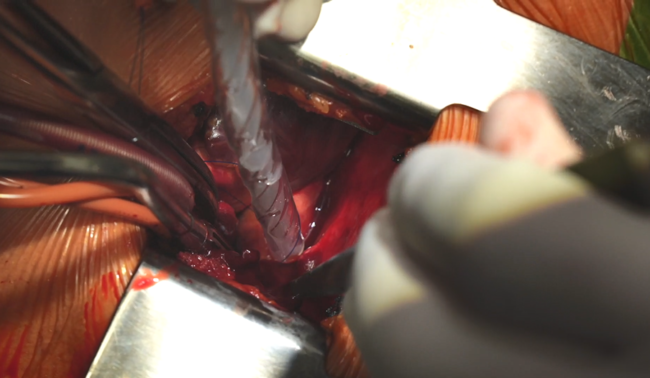
In the case shown in this video, a midline sternotomy was used, which is ideal for multiple procedures. However, a right thoracotomy can be done as a minimally invasive approach if tricuspid repair is being done in isolation. This procedure requires cannulation of both the superior (SVC) and inferior vena cavae (IVC) as well as…
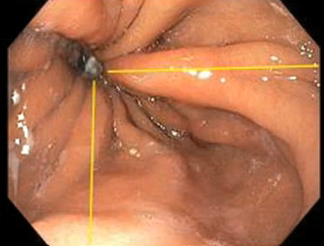
Transoral incisionless fundoplication (TIF) is increasingly accepted as an effective management strategy for refractory gastroesophageal reflux, especially in patients with minimal or no hiatal hernia. All antireflux procedures have a failure rate, however, and TIF is no exception. Nevertheless, it has significant advantages and likely will continue to gain widespread adoption. One concern about the…
Filmed at the 2018 STS Annual Meeting in Fort Lauderdale, Florida, Tom Nguyen of the University of Texas Houston interviews former Navy SEAL Brian Ferguson of Arena Labs about the pursuit of performance excellence in medicine, and particularly in the realm of cardiothoracic surgery. They discuss how to handle high levels of stress and anxiety in…
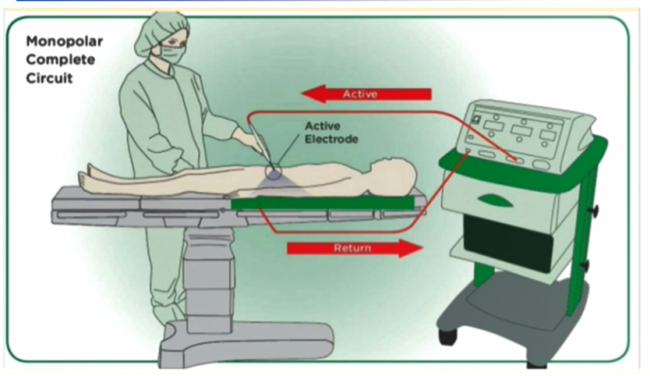
Stephen D. Cassivi of the Mayo Clinic in Rochester, Minnesota, USA, presents a discussion on the indications for, limitations of, and future potential of energy devices in thoracic surgery. This presentation was originally given during the SCTS Ionescu University program at the 2018 Annual Meeting of the Society for Cardiothoracic Surgery in Great Britain and…
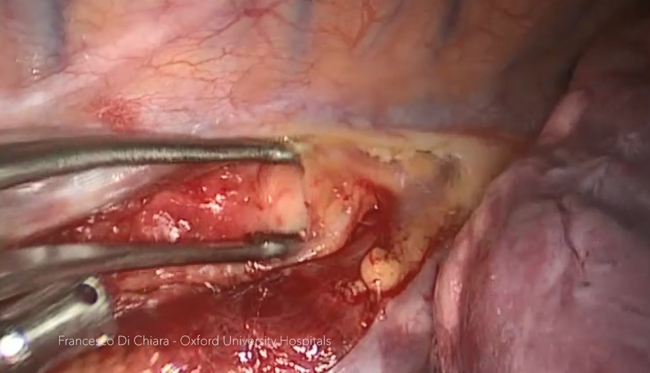
A 65-year-old woman was referred from the otorhinolaryngology department to the thoracic surgery department for a prolonged high-volume chyle leak following neck dissection. She had undergone surgery for nodal recurrence of thyroid cancer. The chyle leakage from the neck drains was evident immediately after the procedure, producing 1.5 – 2.0 L/day. She was started on…
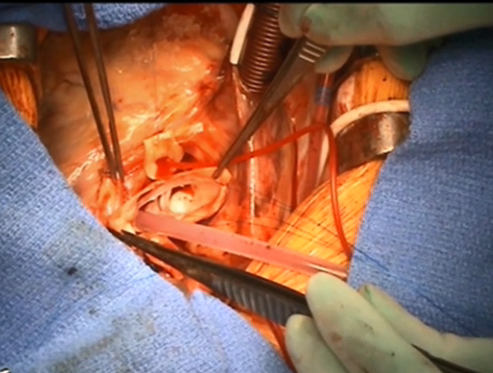
Introduction The least invasive approach to surgical aortic valve replacement is through a right anterior minithoracotomy incision. Most groups using this approach cannulate either the femoral artery and vein or the ascending aorta and femoral vein to establish cardiopulmonary bypass. The authors, however, routinely cannulate the ascending aorta and superior vena cava, avoiding any incisions…
The patient was a 16-year-old girl with a diagnosis of cystic fibrosis, with pancreatic insufficiency and diabetes. She was listed for lung transplant and she underwent a bilateral lung transplant. Disclaimer The information and views presented on CTSNet.org represent the views of the authors and contributors of the material and not of CTSNet. Please review our…
Lognathen Balacumaraswami of the Royal Stoke University Hospital in Stoke-on-Trent, UK, presents a discussion on reimplantation versus remodeling for the treatment of connective tissue disorders. He discusses the principles of reimplantation, long-term outcomes for reimplantation versus remodeling, and the techniques and complications of reimplantation. This presentation was originally given during the SCTS Ionescu University program…
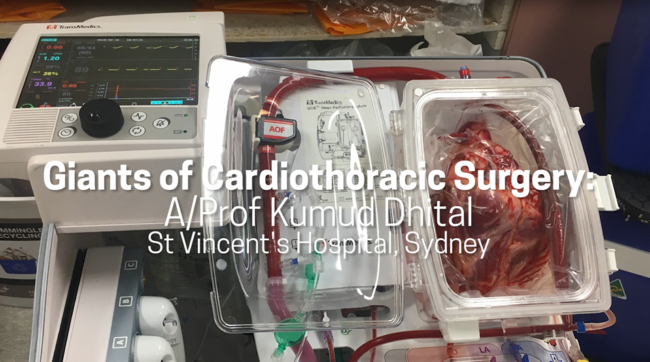
In this Giants of Cardiothoracic Surgery interview, Shruti Jayakumar of King’s College London School of Medicine in the UK speaks with Kumud Dhital of St Vincent’s Hospital in Sydney, Australia, about heart donation after circulatory death (DCD). They discuss technical aspects of DCD heart donation, the importance of a recipient-protective program, and Dr Dhital’s journey…
The authors present a video of a robotic assisted pulmonary segmentectomy of the anterior segment of the right upper lobe (S3) for a metastatic nodule. The patient was a 67-year-old man with a history of colon cancer, treated previously by resection. A metastatic pulmonary nodule in the anterior segment of the right upper lobe was…
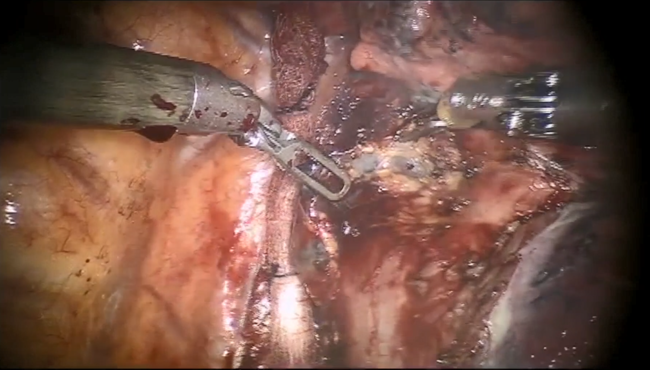
At the end of a cardiac procedure, two or three chest tubes are placed in the mediastinal space to continuously monitor postoperative blood loss and to prevent undesirable blood collection, especially in the pericardial space. Pleural tubes are sometimes used when the pleural space is entered, for example, when left or right internal mammary arteries…
Filmed at the 2018 STS Annual Meeting in Fort Lauderdale, Florida, Lisa Brown of UC Davis Medical Center in Sacramento, California, USA, moderates a discussion on the management of gastroesophageal reflux disease. She is joined by Brian Louie of the Swedish Medical Center in Seattle, Washington, USA, and Inderpal Sarkaria of the University of Pittsburgh in…
Olaf Wendler of King’s College Hospital in London, UK, presents a discussion on the 2017 ESC/EACTS guidelines for the management of valvular heart disease. He discusses guideline recommendations for a variety of scenarios, addressing heart team discussions, SAVR versus TAVI (TAVR), and AoV treatment assessments. This presentation was originally given during the SCTS Ionescu University…
The patient was a 71-year-old woman with a bronchiectatic left upper lobe lesion that was under surveillance. She had a biopsy-proven adenocarcinoma in the left lower lobe, normal pulmonary function tests, and no signs of nodal disease or spread outside of the left lung. The initial surgical plan was a left video-assisted thoracoscopic (VATS) lobectomy. …
Introduction Primary ovarian carcinoid tumors account for less than 0.5% of all carcinoid tumors [1]. Patients with primary ovarian carcinoid tumors may develop carcinoid heart disease by release of bioactive amines directly into the inferior vena cava or renal vein. Carcinoid syndrome is characterized by flushing, secretory diarrhea and bronchospasm. Half of patients with carcinoid…