Content from the Journal of the American Neurological Surgeons.
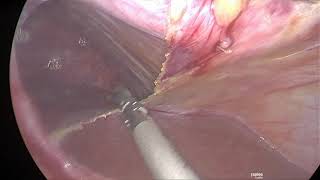
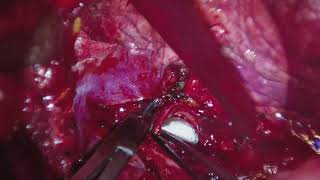
There are several different approaches for the repair of a Morgagni hernia, including primary closure with intraperitoneal sutures, transabdominal sutures, primary mesh closure, on-lay mesh, and others. In this video, the authors demonstrate a tension-free, laparoscopic-assisted closure of a large Morgagni hernia using transabdominal sutures. Disclaimer The information and views presented on CTSNet.org represent the…
The ideal aortic valve (AV) substitute for patients with AV disease remains under debate. In select patients in whom valve durability is of particular importance, the Ross procedure, when performed at high-volume centers, results in excellent long-term survival and favorable valve durability and freedom from valve-related reinterventions (1). In the pediatric population, however, aneurysmal growth…
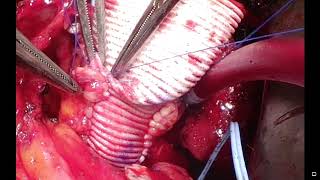
Surgical correction of redo complex aortic pathology through the same thoractomy incision can be associated with significant risks, including re-entry into a possibly frozen hemithorax. This could lead to injury to nerves and, more importantly, bleeding from hugely dilated collateral intercostal arteries, precluding optimal surgical repair (1). A single-stage approach via median sternotomy provides several…
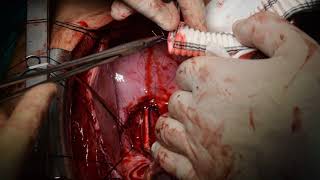
TAPVC surgical repair can be performed through many approaches. In this video, the authors demonstrate a “septosuperior” approach for the repair of supracardiac TAPVC. This technique is simple and reproducible. Disclaimer The information and views presented on CTSNet.org represent the views of the authors and contributors of the material and not of CTSNet. Please review our…
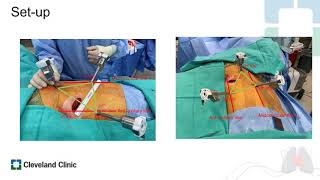
In this video, the authors present the case of a 51-year-old man who suffered a high impact cyclist collision with a car. He suffered a severe right neck extension injury, which transected his brachial plexus and caused multiple right transverse process fractures of his cervical spine. In addition, he suffered disruption of the right internal…
This video demonstrates a robotically-assisted mitral valve commissuroplasty in a young patient who presented with a complex mitral regurgitant jet and unclear mechanism of the regurgitation. A 41-year-old man was referred to the authors for consideration of mitral valve repair. He was found to have a mitral valve murmur during a routine physical exam. He…
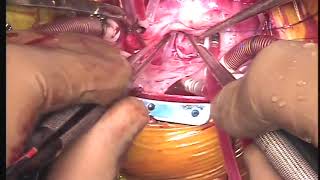
The authors present a case of ascending aorta and rapid deployment aortic valve replacement (Edwards Intuity Elite prosthesis) through a J-ministernotomy approach in an elderly patient. Clinical Summary 86-year-old man Normal ejection fraction No coronary disease Chronic obstructive pulmonary disease (COPD) Severe aortic valve stenosis Ascending aorta diameter: 6 cm NYHA class III You can…
The authors present the surgical repair of a complete vascular ring consisting of a double aortic arch in a 2-month-old boy who presented with noisy breathing and difficulty swallowing. Diagnosis was confirmed with a computed tomography scan, which showed a complete vascular ring consisting of a dominant right aortic arch and partially atretic left arch.…
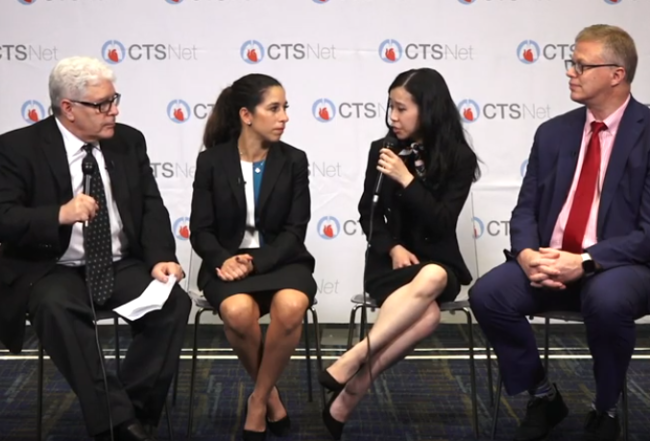
Filmed at the 2020 STS Annual Meeting in New Orleans, Louisiana, Edward M. Bender of Stanford University in California, USA, moderates a discussion on how the internet plays a role in establishing and growing cardiothoracic careers. He is joined by T. Sloane Guy of Thomas Jefferson University in Philadelphia, Pennsylvania, USA, Jessica G. Y. Luc…
Tetralogy of Fallot (TOF) is one of the most common cyanotic congenital heart diseases. The aim of this video is to demonstrate the technical aspects of total correction of TOF in a 5-month-old, 5 kg infant. Median sternotomy was performed. The surgery required standard cardiopulmonary bypass with aortobicaval venous cannulation. The authors’ choice of cardioplegia…
The authors present a case of AV valve repair in a 3 kg infant with tricuspid atresia. The patient was diagnosed prenatally with tricuspid atresia. The patient was born full term with a birth weight of 2.8 kg. Diagnosis was confirmed as tricuspid atresia with transposition of the great arteries. Atrial septal defect and bulboventricular…
This is a short video interview with Robin Sunley, a complementary therapist that started with Joel Dunning’s team in October of 2019. He routinely provides acupuncture, auriculotherapy, and mindfulness to thoracic surgical patients as part of their routine clinical care. Disclaimer The information and views presented on CTSNet.org represent the views of the authors and…
Patient Selection The standard method of treatment for an ascending aorta aneurysm is replacement with the Dacron tube graft. However, some surgeons use alternative techniques in selected cases for dilated ascending aorta, such as wrap without aortoplasty (1, 2), wrapping of the ascending aorta with a fine transparent and stretchable Dacron mesh (3), manually pre-prepared…
The authors present an MVR procedure for a patient who was admitted with pneumonia, had a complicated course, and required ECMO and tracheostomy. Disclaimer The information and views presented on CTSNet.org represent the views of the authors and contributors of the material and not of CTSNet. Please review our full disclaimer page here.
A foreign body inhalation is an uncommon event, especially among children and young adults. The authors report a case of a 1.5-year-old boy who had presented to A&E with a 3-hour history of choking and coughing while eating a fish-based meal. There were signs of respiratory distress (stridor). A plain chest X-ray demonstrated a radio-opaque…
A 63-year-old old man was diagnosed with an aortic aneurysm by routine chest X-ray. His 2D echo showed moderate aortic regurgitation with normal LV function. A CT aortogram revealed an aortic aneurysm involving the ascending aorta, arch, and descending thoracic aorta. Coronary angiogram showed a tight ostioproximal lesion in the ramus intermedius. He was taken…