Content from the Journal of the American Neurological Surgeons.
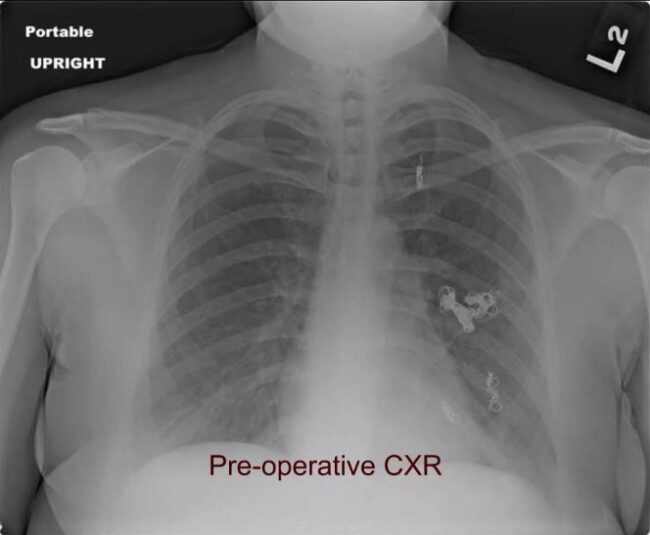
Inferior vena cava (IVC) filters have been widely used for the management of venous thromboembolism (VTE) in patients who are not candidates for anticoagulation. The IVC filter, however, is not an innocuous alternative. An increase in the use of IVC filters has resulted in greater incidence of complications. Filter leg penetration is a commonly seen…
European Association for Cardio-Thoracic Surgery (EACTS) Past President Jose Pomar interviews current President Martin Grabenwoger on key features of the 2015 EACTS Annual Meeting.
Pieter Kappetein, Secretary General of the European Association for Cardio-Thoracic Surgery (EACTS), previews the 2015 EACTS Annual Meeting taking place in Amsterdam, The Netherlands.
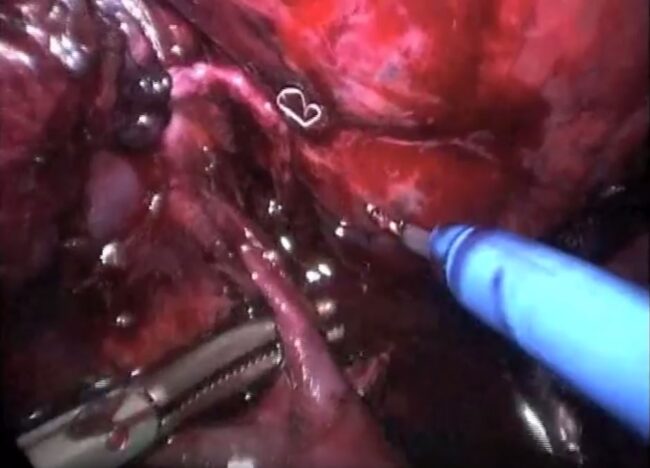
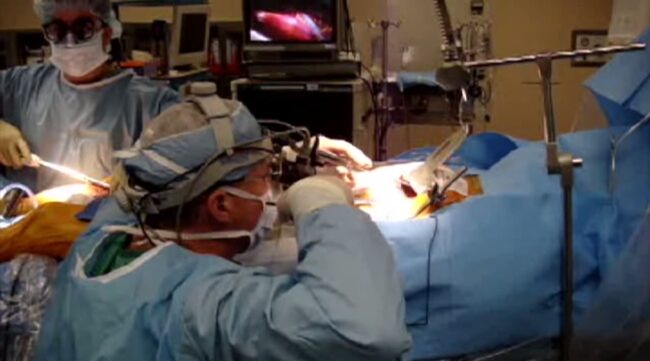
This video shows a right upper microlobectomy. Microlobectomy differs from VATS lobectomy in the following ways: No incisions in the intercostal spaces larger than 5 mm A 12 mm subxiphoid port Subxiphoid removal of the resected specimen, above the diaphragm CO2 insufflation Vision through a 5 mm camera Stapling of vascular structures using the Cardica…
In an interview filmed at the 2015 STS Annual Meeting in San Diego, California, Tom Nguyen speaks with Michael Reardon, Chief of Cardiac Surgery at the Methodist DeBakey Heart & Vascular Center in Houston, TX. Dr. Reardon takes an in-depth look at transcatheter aortic valve replacement (TAVR), including the evolution of transcatheter interventions and specific…
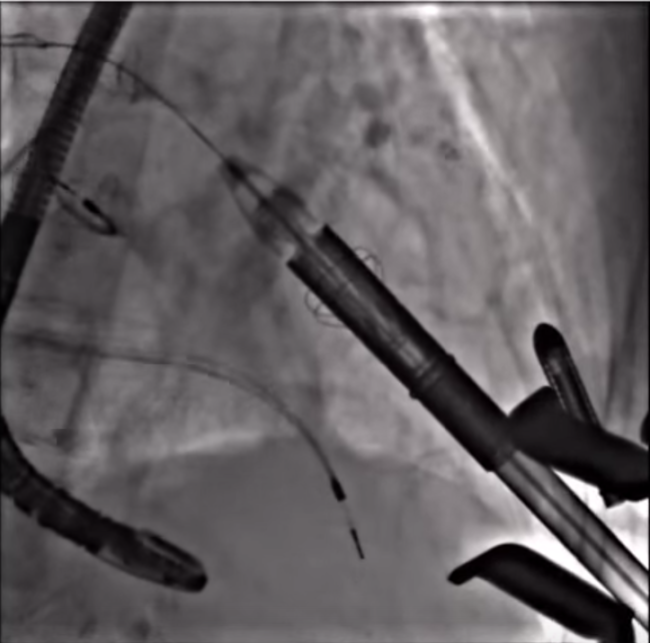
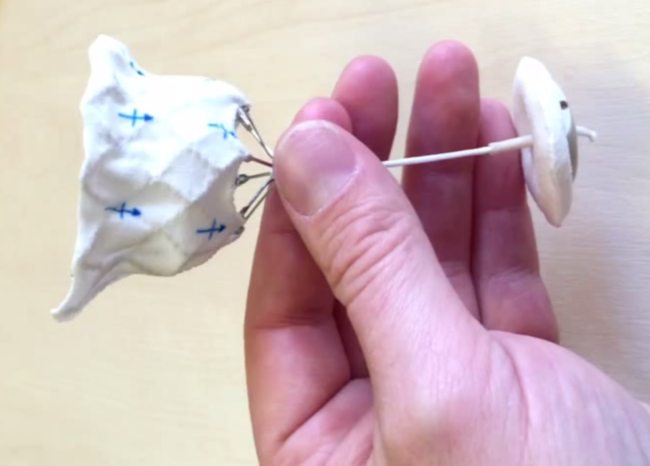
Vinnie Bapat of Guys and St. Thomas’ Hospital, London, UK, discusses the Edwards FORTIS device, a transcatheter mitral valve device, including the implantation technique and data from his early clinical experiences. This presentation was originally given during the SCTS Ionescu University program at the 80th Annual Meeting of the Society for Cardiothoracic Surgery in Great…
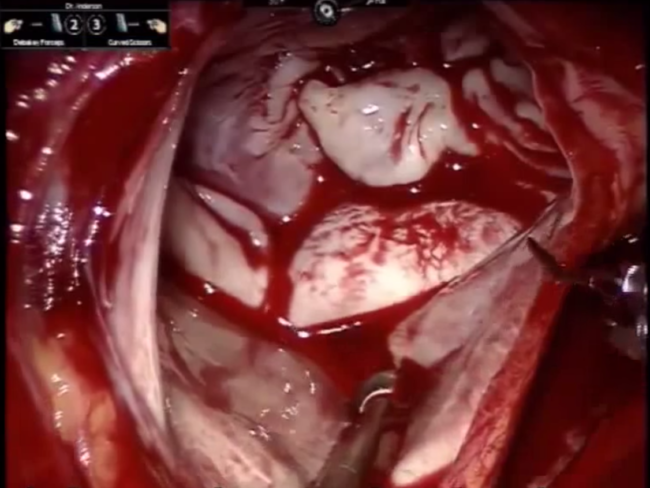
This video displays a robotic-assisted repair of an anterior mitral valve leaflet perforation from endocarditis and ruptured posterior chordae tendinae. The patient had severe mitral regurgitation related to functional class Type I and Type II dysfunction. The patient had undergone an autologous pericardial patch repair of the anterior leaflet perforation, followed by neochordae repair of…
As an exhausted cardiothoracic resident in Atlanta driving to the hospital early one morning, I was tempted to feel a little sorry for myself until I noticed the drivers of the other cars. Suddenly it occurred to me how very lucky I was to be headed to spend the day (or maybe two days) in…
Neil Moat of the Royal Brompton Hospital, London, UK, gives a talk on transcatheter mitral valve implantation. Mr. Moat discusses the complexities of mitral valve replacement and the challenges of taking a transcatheter approach. He also shares his own experiences with transcatheter mitral valve implantation. This presentation was originally given during the SCTS Ionescu University…
Pulmonary arteriovenous malformations (PAVM) can have potentially serious neurological and cardiac consequences if left untreated. Embolization has supplanted surgical resection as the first line treatment modality. However, this technique is not always successful and carries risks of air embolism, migration of the coil, myocardial rupture, vascular injury, pulmonary hypertension, and pulmonary infarction. The author presents…
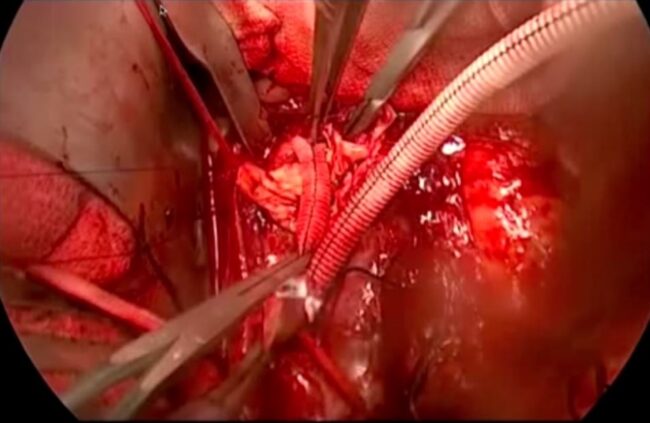
This video demonstrates a technique for performing a minimally invasive multi-vessel coronary bypass. The authors show how to safely access the ascending aorta for proximal anastomosis.
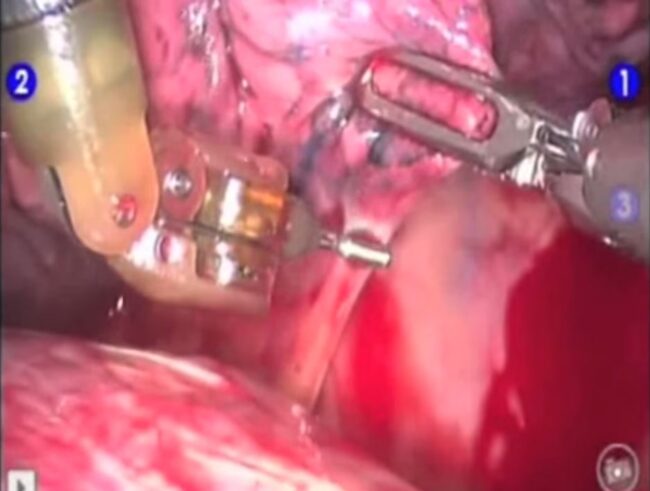
Introduction Robotic anatomic pulmonary resection with the da Vinci robotic system (Intuitive Surgical, Mountain View, CA) for early-stage lung cancer is a safe and well-established procedure. The authors decided to explore the technical feasibility of a robotic major lung resection (pneumonectomy) for cancer. In this video, the authors report their first robotic assisted left pneumonectomy…
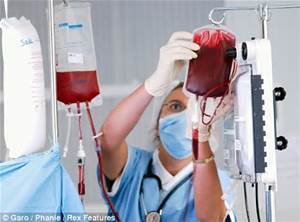
Introduction Red blood cell transfusion in cardiac surgical patients has been strongly associated with increased infection, increased ischemic post-operative events, prolonged hospital stay, increased mortality, and increased hospital costs. CCM and CTA, in partnership with CTS, have a role to play in reducing red cell transfusions. Principles This document will confine itself to questions about…
In an interview filmed at the 2015 STS Annual Meeting, Joel Dunning and Joseph Coselli of the Baylor College of Medicine, Houston, TX, have a conversation regarding Dr. Coselli’s distinguished career and his special insights into the surgical treatment type A aortic dissection. Dr. Coselli discusses the diagnosis of type A aortic dissection, when and…
This video describes how to perform a minimally invasive aortic valve replacement via a right mini thoracotomy approach. Tips and tricks are demonstrated that have simplified the procedure, and made it reproducible. Disclosure: Dr. Lamelas is a partner in Miami Instruments.
Alec Vahanian of Bichat Hospital, Paris, France, provides an overview of transcatheter mitral valve repair. Dr. Vahanian discusses percutaneous annuloplasty, chordal implants, and transcatheter treatment after the failure of a surgical approach, and stresses the importance of the heart team concept with regard to transcatheter mitral valve repair procedures. This presentation was originally given during…