Content from the Journal of the American Neurological Surgeons.
In this case, Konno aortic root enlargement was found to be the perfect solution to deal with an intraventricular septal aneurysm. The patient is a thirty-nine-year-old woman with a history of aortic valve endocarditis, which was treated with a ventricular septum patch for a small ventricular septal defect, and a 21 mm bioprosthetic aortic valve…
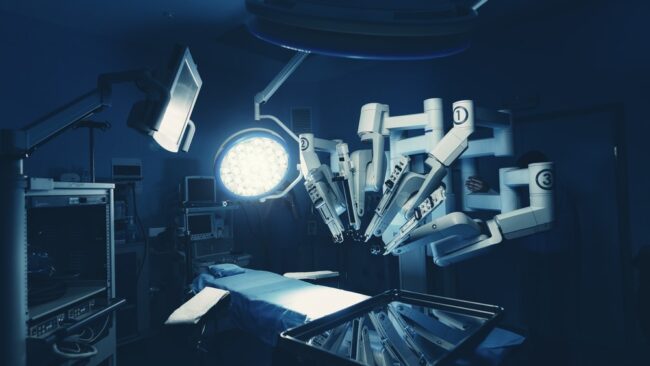
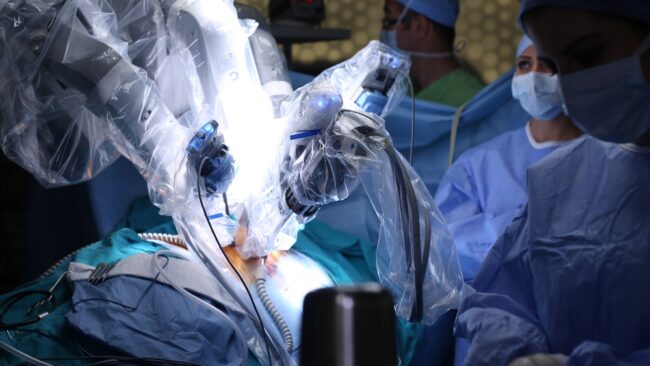
Uniportal robotic surgery is a relatively new technique that is being practiced in a few centers across the world. It offers the benefit of robotic surgery in a single incision. The term pure uniportal robotic assisted thoracic surgery (U-RATS) is used when robotic thoracic surgery is performed through a single intercostal incision and without rib…
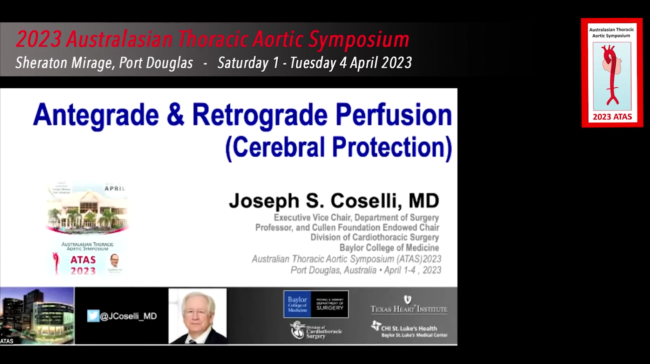
As a part of the 2023 Australian Thoracic Aortic Symposium, Dr. Joe Coselli presented on antegrade and retrograde perfusion for cerebral protection during cardiac surgery. Dr. Coselli is a cardiothoracic surgeon at the Texas Heart Institute and Baylor College of Medicine in Houston, Texas. View Dr. Coselli’s CTSNet profile for more of his articles and…
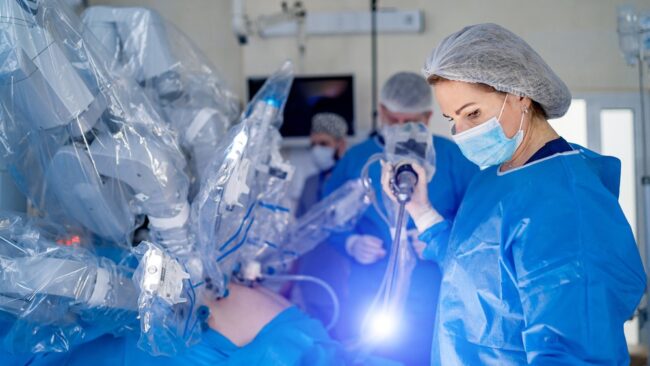
Options for aortic occlusion during robotic cardiac surgery include endoaortic balloon occlusion, which requires imaging guidance and coordination between the bedside assistant and anesthesia teams; the Chitwood DeBakey transthoracic clamp, which requires a separate incision and can lead to interactions between the clamp and robotic arms; and more recently, a detachable head aortic cross-clamp. The…
Nissen fundoplication is frequently performed by thoracic surgeons. This video shares the authors’ twelve-step operative technique for a robotic Nissen fundoplication. The patient is a sixty-three-year-old man with a history of longstanding gastroesophageal reflux disease refractory to medical treatment. He presented reporting chest and epigastric pain, regurgitation, and dysphagia despite maximal intervention of 40 mg…
A hybrid arch surgical approach is an option for elderly or high-risk patients undergoing treatment for aortic arch pathologies. It avoids cardiac conduction abnormality (CCA), hypothermia, and prolonged cardiopulmonary bypass (CPB) times. Despite new techniques like the total endovascular arch emerging, this technique still has its role for patients whose anatomy is not suitable. This…
September’s most popular video on CTSNet, and one of the most viewed so far in 2023, demonstrates a safe and simple technique for efficient replacement of the aortic hemiarch under hypothermic circulatory arrest that consistently takes just seven minutes. Joel Dunning, CTSNet’s editor in chief, spoke with the video’s creator, Dr. Stephen Spindel of Ochsner…
This case demonstrates the resection of a leiomyoma robotically. Preoperatively, the diagnosis was not made, and the leiomyoma was a surprise finding. The surgical team was set up for a robotic thoracic case but quickly discovered the diagnosis in the operation, bringing in a consultant upper GI surgeon to perform the case. First, the lesion…
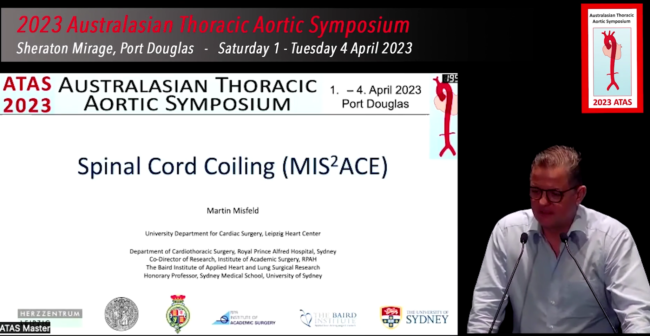
As a part of the 2023 Australian Thoracic Aortic Symposium, Dr. Martin Misfeld presented on minimally invasive segmental artery coil embolization prior to cardiac surgery. Dr. Misfeld is a cardiothoracic surgeon at University Clinic of Cardiac Surgery, Heart Center Leipzig in Leipzig, Germany. View Dr. Misfeld’s CTSNet profile for more of his articles and videos…
As a part of the “One-Access Concept,” the median sternotomy is the main surgical access route for all cardiac surgical procedures. As a way to translate this concept into minimally invasive cardiac surgery as a counterpart to the full median sternotomy, the authors have established the right lateral transaxillary (RLT) thoracotomy in their institution. Via…
A seventy-six-year-old woman who is non-diabetic and a non-smoker presented with complaints of abdominal pain and was diagnosed with a thrombosed infrarenal abdominal aortic aneurysm. She was planned for open repair due to tortuosity of aneurysm and financial constraints. First, a midline laparotomy was done, and the bowel was retracted using warm, moist sponges. The…
This video presents the case of a thirty-seven-year-old woman with a history of aortic valve replacement and reconstruction of her aortomitral fibrosa and anterior leaflet of the mitral valve due to endocarditis. A bioprosthetic valve was used at the time due to concerns regarding compliance with coumadin. She is fully rehabilitated from drug abuse and…
The arterial switch operation, combined with the LeCompte maneuver, is the treatment of choice for transposition of great arteries. Right ventricular outflow tract (RVOT) obstruction remains one of the most frequently encountered long-term postoperative complications and is the most common cause for reintervention after an arterial switch operation. The Patient This video presents a case…
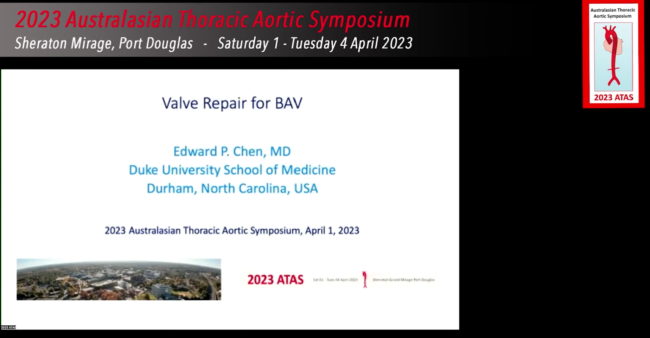
As a part of the 2023 Australian Thoracic Aortic Symposium, Dr. Edward Chen presented on his methods for valve repair in patients with a bicuspid aortic valve. Dr. Chen is a cardiothoracic surgeon at Duke University Medical Center in Durham, North Carolina. View Dr. Chen’s CTSNet profile for more of his articles and videos on…
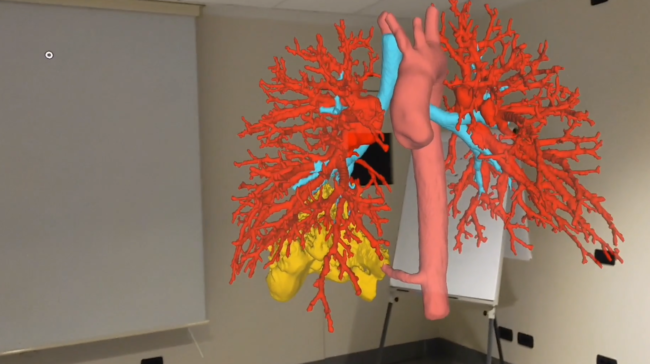
This video shows the case of a thirty-eight-year-old patient with a previous history of colonic cancer and Lynch syndrome. She was referred to the thoracic surgery department because of a pulmonary mass in the right lower lobe. Chest computed tomography and holographic reconstruction disclosed a transdiaphragmatic feeding artery from the abdominal aorta entering the pulmonary…
In addition to the costovertebral and sternocostal joints, the three-dimensional structural integrity of the central chest wall is usually enhanced with additional connections between the anterior fifth through eighth ribs. These secondary costochondral joints, or bridging cartilages, are formed by an inferior projection of one rib that connects firmly to a superior projection of the…