Content from the Journal of the American Neurological Surgeons.
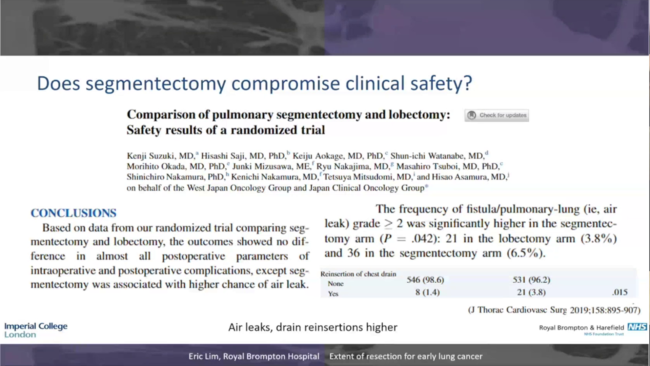
JCOG0802 is the largest randomized clinical trial (RCT) ever conducted in more than 1100 patients. The intent was to answer the question “Is segmentectomy or lobectomy superior?” The five-year results indicated that segmentectomy was superior, but now the 10-year results show the complete opposite and the Japan Clinical Oncology Group (JCOG) recommends that lobectomy is…
This video presents the case of a 34-year-old male soldier, who experienced heart trauma in April 2022. He was wounded by a shell fragment during combat defending Mariupol city. After, he was taken in captivity for three and a half years. In October 2025, after repatriation from captivity, the authors took him to the operating…
The authors report the case of a 73-year-old man with a history of acute type A aortic dissection, who was treated with urgent hemiarch repair and later underwent endovascular arch repair with a fenestrated stent graft. After several years, he presented with fever and anemia. Diagnostic investigations revealed the presence of a huge aortic pseudoaneurysm…
This video is part of Dr. Vince Gaudiani’s Anomalous Right Coronary Artery Series. View more videos from this series here. The patient was a 55-year-old woman with mitral valve prolapse. Additionally, an angiogram revealed that she had an anomalous right coronary artery (RCA) origin. A diagram was used to explain the pathology of an anomalous RCA,…
This video demonstrates a thoracoscopic segmentectomy of segments seven and eight of the left lower lobe in a 79-year-old male enrolled in a lung cancer screening program, in which a pulmonary nodule was detected. An endoscopic biopsy confirmed pulmonary adenocarcinoma, and positron emission tomography (PET) imaging revealed a standard uptake value (SUV) of 4.2 without…
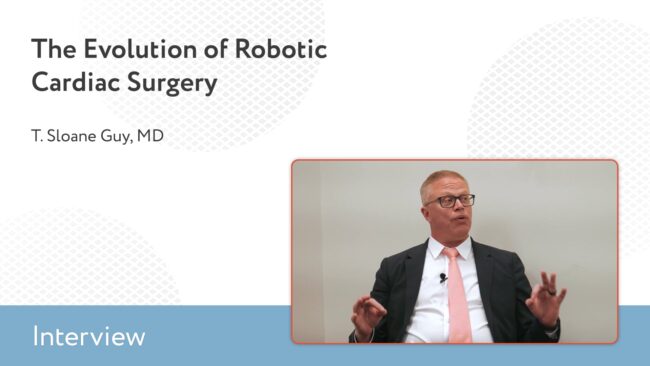
At the 2025 Endoscopic Cardiac Surgeons Club Annual Meeting, CTSNet Senior Editor Dr. Lorena Montes conducted insightful interviews with leading cardiothoracic surgeons from around the world. Stay tuned for more interviews from the meeting. At the 2025 Endoscopic Cardiac Surgeons (ECS) Club Annual Meeting, CTSNet Senior Editor Dr. Lorena Montes spoke with Dr. T. Sloane Guy, a…
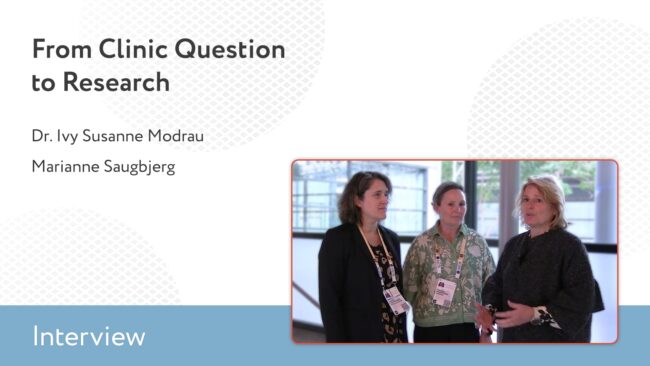
At the 2025 European Association for Cardio-Thoracic Surgery Annual Meeting, CTSNet senior editors set out to interview the most knowledgeable CT surgeons from around the world. Watch for more interviews from the meeting. At the 2025 European Association for Cardio-Thoracic Surgery (EACTS) Annual Meeting, CTSNet Senior Editor Cristina Ruiz Segria spoke with Dr. Ivy Susanne Modrau, Associate…
Combined aortic valve replacement (AVR) and coronary artery bypass grafting (CABG) are predominantly performed via full sternotomy. The authors present an innovative sternum-sparing technique using a left anterior minithoracotomy (LAmT) for concomitant AVR and multivessel CABG. In this case, the implantation of a sutureless bioprosthesis facilitated rapid valve replacement and compensated for the limited exposure…
This video submission is from the 2025 CTSNet Innovation Video Competition. Watch all entries from the competition, including the winning videos. Robotic harvesting of the left internal mammary artery (LIMA) in a pedicled fashion can offer optimal conduit quality while minimizing trauma to the vessel; however, achieving this safely and efficiently requires precise preoperative planning and…
Introduction This clinical case reports a hydatid cyst of the interventricular septum that was surgically treated under cardiopulmonary bypass using Barrett’s technique. Case Presentation The authors report the case of a male child weighing 26Kg, with no family history of hydatid disease. Clinical examination revealed hepatomegaly. The chest X-ray (frontal view) was normal. The electrocardiogram…
This video submission is from the 2025 CTSNet Innovation Video Competition. Watch all entries from the competition, including the winning videos. The en bloc heart and lung donation after circulatory death (DCD) rapid recovery protocol, particularly when combined with abdominal normothermic regional perfusion (A-NRP), has been demonstrated to be safe and feasible. Key steps include isolating…
Minimally invasive cardiac surgery is increasingly becoming a standard approach for the treatment of various cardiac pathologies such as aortic stenosis and mitral regurgitation. It is also gaining popularity in the context of coronary artery bypass grafting (CABG). In contrast, minimally invasive approaches for aortic aneurysm surgery remain rarely reported. Bentall procedures via right anterior minithoracotomy…
In the treatment of aortic valve disease, there is increasing recognition of the adverse impact of patient–prosthesis mismatch, which has been associated with early valve failure and poorer long-term outcomes. This awareness has renewed surgical interest in aortic root enlargement techniques that enable the implantation of larger prostheses. However, the more commonly employed enlargement methods…
This video is part of Dr. Vince Gaudiani’s Anomalous Right Coronary Artery Series. View more videos from this series here. This case demonstrates the repositioning of an anomalous right coronary artery (RCA). The computed tomography (CT) angiography is shown. An upper ministernotomy was performed with femoral venous cannulation and a standard aortic cannula. The RCA…
This case presentation demonstrates a transcatheter aortic valve replacement (TAVR) explant with repair of focal invasion of the left fibrous trigone in the left ventricular outflow tract (LVOT). The patient was a 76-year-old female who underwent TAVR with a bioprosthetic valve in 2023. She presented to the emergency room with fevers, tachycardia, and hypotension, at…
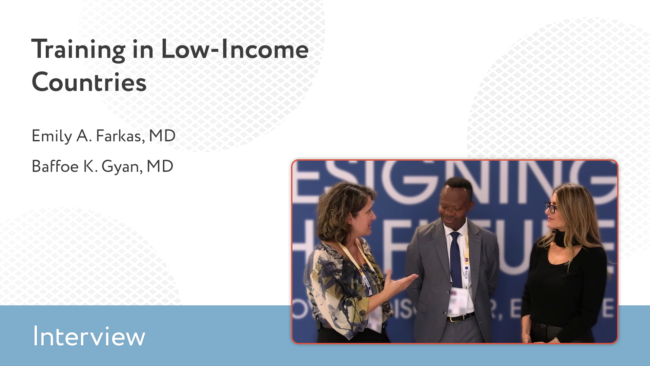
At the 2025 European Association for Cardio-Thoracic Surgery Annual Meeting, CTSNet senior editors set out to interview the most knowledgeable CT surgeons from around the world. Watch for more interviews from the meeting. At the 2025 European Association for Cardio-Thoracic Surgery (EACTS) Annual Meeting, CTSNet Senior Editor Cristina Ruiz Segria spoke with Drs. Emily Farkas, Associate Professor…