Content from the Journal of the American Neurological Surgeons.
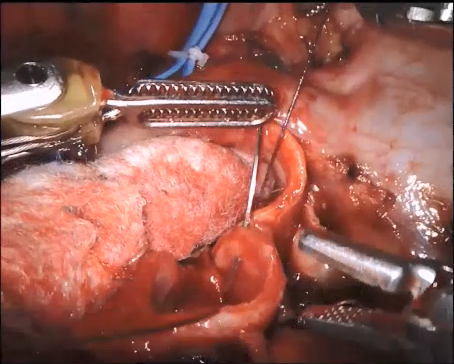
Clinical Summary A 52-year-old male light smoker was under regular annual checks following a previous ocular melanoma, which was treated in 2013 with brachytherapy. During one of the follow-up visits, a lesion was found in the upper right lobe (RUL), close to the right main bronchus without hilar or mediastinal adenopathy. Flexible bronchoscopy showed, in…
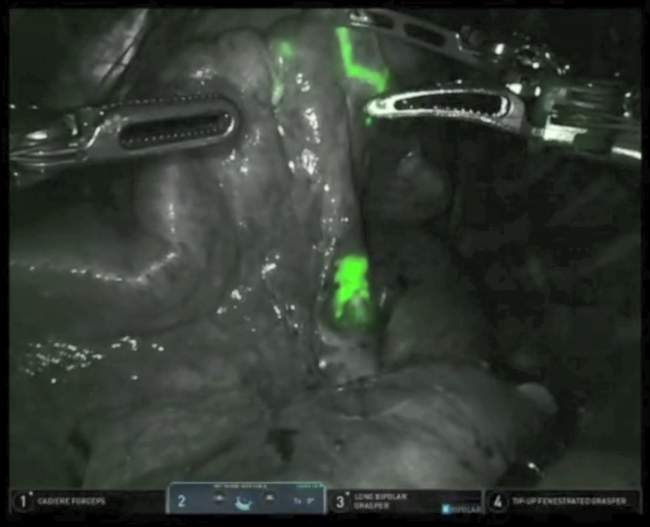
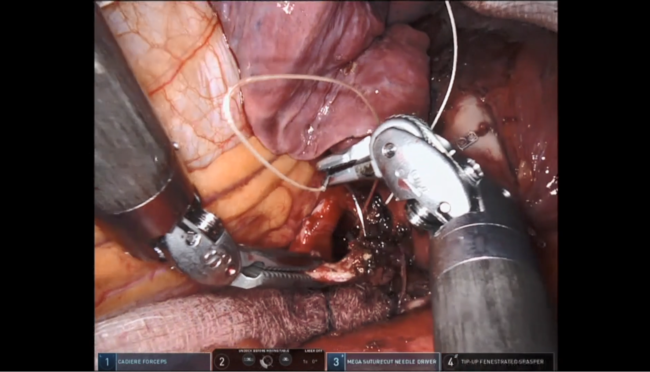
This video demonstrates a procedure performed for a 56-year-old woman with a cT1BN1M0 stage IIB adenocarcinoma of the left upper lobe. She underwent endobronchial ultrasound for mediastinal staging, which ruled out N2/N3 disease and confirmed the diagnosis by guided sampling of a level 10L node in the left hilum. A robotic-assisted approach can be helpful…
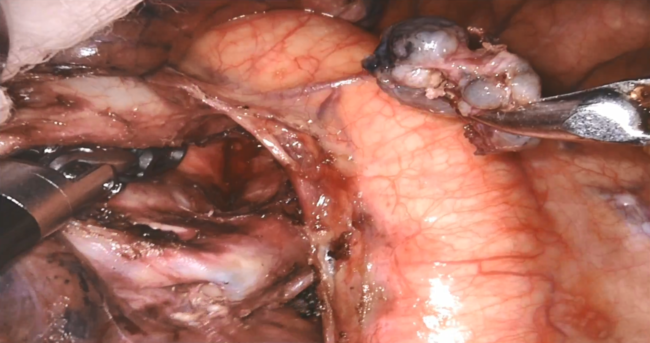
The procedure illustrated in this video was performed for a 67-year-old female nonsmoker who presented with hemolysis and a cough. She was found to have a 5 cm centrally-located clinical T2N0MX stage IB carcinoid tumor of the left lung. Suggested Reading Cerfolio RJ, Bryant AS, Minnich DJ. Starting a robotic program in general thoracic surgery: why,…
The Current State of the Treatment of Mitral and Tricuspid Valve Disease Filmed at the 2017 EACTS Annual Meeting in Vienna, Austria, Randy Martin moderates a discussion on the current exciting time in the treatment of degenerative and functional mitral disease and tricuspid repair. Dr Martin is joined by Michael Borger, David Adams, Vinay Bapat, and Octavio Alfieri.…
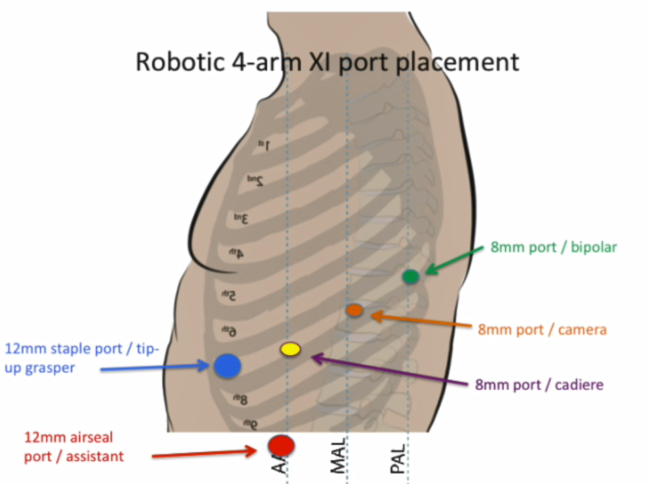
The use of the robotics in thoracic surgery, including segmentectomy, has increased substantially over the last decade. In the authors’ experience, for small pulmonary nodules, pulmonary segmentectomy allows for a safe and oncologically effective resection, while preserving parenchyma, which potentially limits complications and accelerates recovery when compared to lobectomy. Importantly, the authors believe that the…
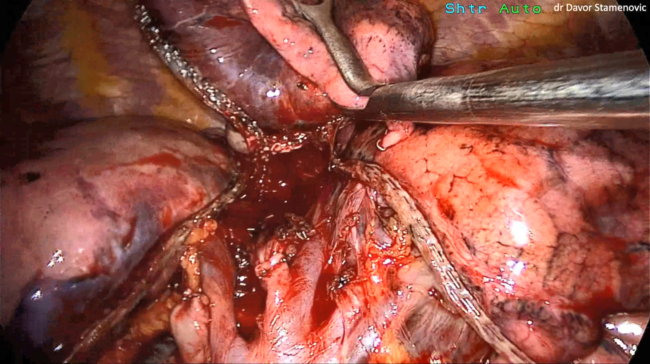
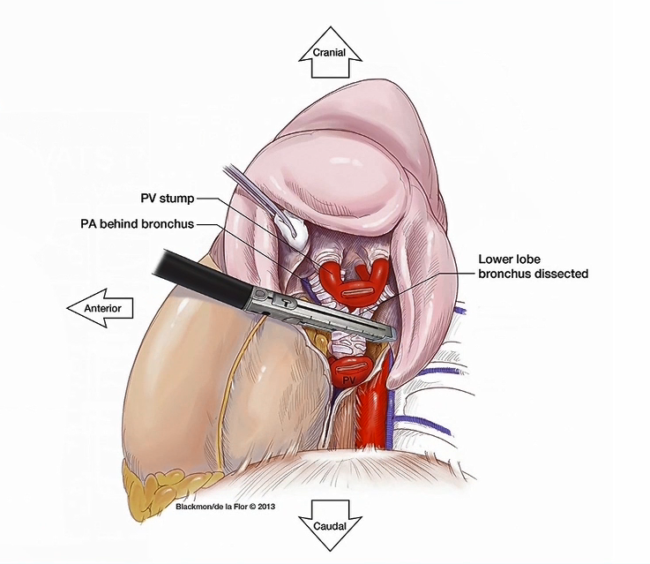
Minimally invasive surgical management can be performed safely with R0 resection, utilizing the same technique that would be applied through thoracotomy. The robotic platform provides the surgeon with the opportunity to perform complex procedures with precision, emulating open surgery. Managing the bronchus minimally invasively without compromising the margin and without complication requires that the surgeon…
For CTSNet’s first General Thoracic Guest Editor Series, Advances in Robotic Thoracic Surgery, we asked Dr David Rice of the University of Texas MD Anderson Cancer Center to bring together videos from experts focused on this increasingly important approach within general thoracic surgery. Dear Reader, With any new technology, there is a latent period between…
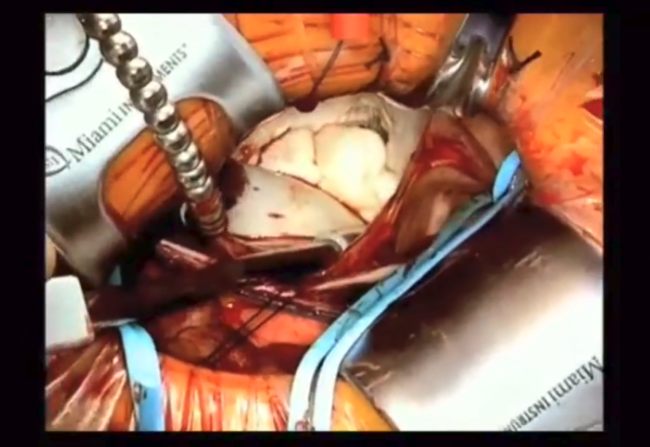
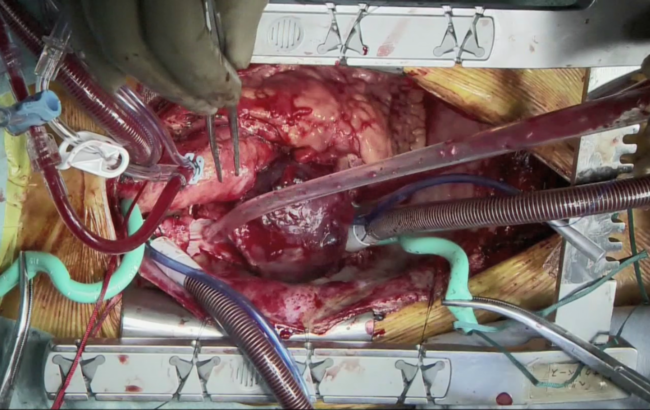
This video demonstrates the feasibility of a complex double valve repair performed via a right minithoracotomy. The operation is done via a two-inch incision with caval isolation and access to both the right and left atrium. Further, the author shows that complex mitral repair with excellent visualization can be accomplished without compromising the repair due…
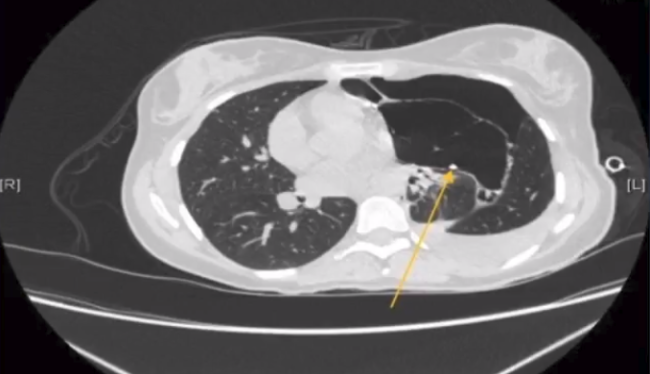
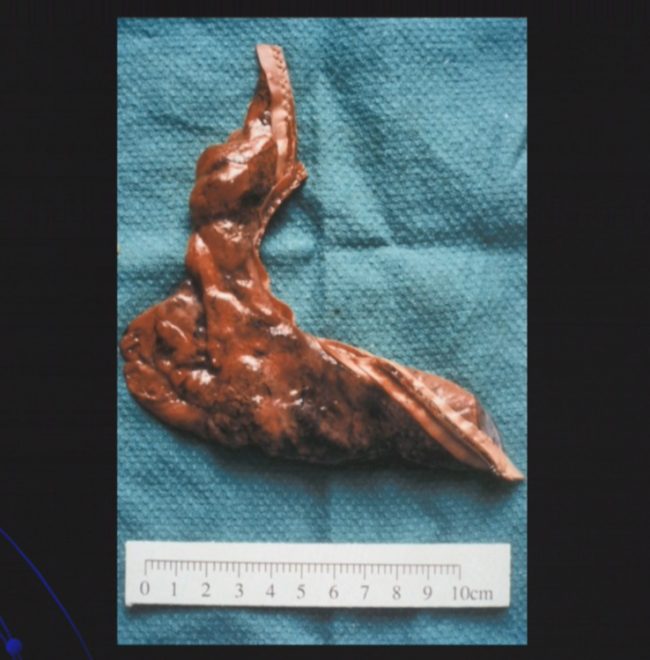
This video demonstrates a video-assisted thoracoscopic resection of a congenital lobar emphysema in a young woman with spontaneous pneumothorax. Congenital lobar emphysema occurs when there is a developmental ball-valve obstruction in the bronchial tree. This is usually related to bronchial malformation and most commonly affects the left upper lobe. Small osseous formations were observed in…
CTSNet is excited to announce that “Anastomotic Techniques for Robotic Beating-Heart Totally Endoscopic Coronary Artery Bypass (TECAB)” by Brian Mitzman has won first place in the 2017 Resident Video Competition. Dr Mitzman discussed his video with CTSNet Associate Editor Joel Dunning at the 2018 STS Annual Meeting in Fort Lauderdale, Florida. Dr Mitzman is a…
Objectives In the past, atrial septal defects (ASD) have been repaired via open heart surgery through a median sternotomy. Recent advances have allowed ASD closure via catheter inserted devices and also via minimally invasive surgical techniques utilizing endoscopy and robot-assisted surgery. Described below is a minimally invasive approach to ASD closure that is performed without…
Anterior segment resection of the left upper lobe is rarely performed. It is, however, usually incorporated within resection of the upper three segments of the left upper lobe. A 56-year-old patient, with a known oropharyngeal carcinoma and otherwise amenable to curative treatment, was admitted to the authors’ clinic for a 1 cm nodule in the…
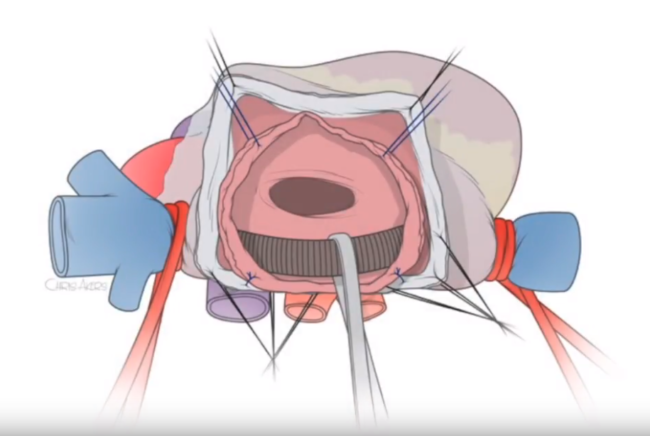
This video demonstrates the surgical treatment of a patient with a right heart angiosarcoma who underwent radical resection followed by composite reconstruction of the right atrium and the superior vena cava (SVC), with bovine pericardial patches and a polytetrafluoroethylene (PTFE) vascular prosthesis. The right atrium is the structure most often affected by cardiac sarcoma. The…
Introduction Multifocal lung cancer is an increasingly common clinical scenario, but there is a lack of high-level evidence for its optimal treatment [1]. Staging is an important first step in the management of such pathologies. As many as six percent of patients may present with unsuspected cranial metastases [2]. Minimally invasive resections, parenchymal-sparing approaches, and…
Mr Sridhar Rathinam of the Glenfield Hospital in Leicester, UK, discusses the surgical treatment of emphysema. He focuses on the risks and benefits of lung volume reduction surgery, taking a historical perspective, as well as comparing the surgical approach to other approaches that are currently available. This presentation was originally given during the SCTS Ionescu…
Filmed at the 2017 EACTS Annual Meeting in Vienna, Austria, Leanne Harling of Imperial College in London, UK, moderates a discussion on the future of coronary revascularization with David Taggart of the University of Oxford in the UK and Philippe Kolh of the University Hospital of Liege in Belgium. They discuss selecting patients for surgical…