Content from the Journal of the American Neurological Surgeons.
Filmed at the 2017 EACTS Annual Meeting in Vienna, Austria, Jill Ley of the California Pacific Medical Center in San Francisco, California, USA, moderates a discussion on infection prevention and the management of surgical wounds. She is joined by Teresa Kieser of Libin Cardiovascular Institute of Alberta in Calgary, Canada, Richard Van Valen of Erasmus…
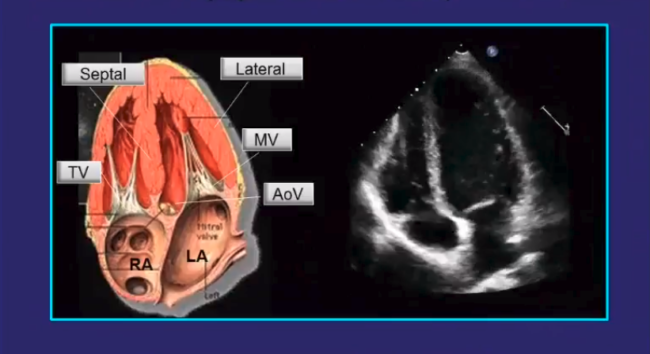
Ademola Abiose of the North Ohio Heart Elyria Medical Center in Ohio presents an overview of standard echocardiography views and discusses echocardiographic evaluation of mitral and aortic valve disease.
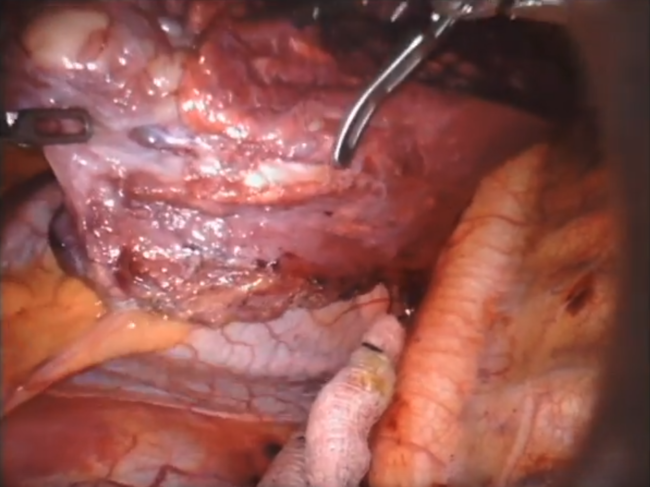
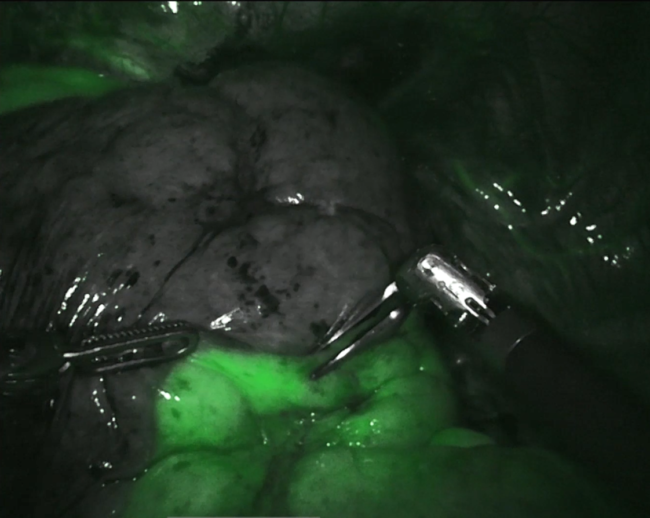
Pulmonary sequestration is a rare condition. The blood supply originates from systemic circulation and can consist of small fragile vessels. Injury to these vessels can be challenging to control during minimally invasive approaches and should be avoided at all costs. In this video, the authors demonstrate a few advantages of using robotic surgery in selected…
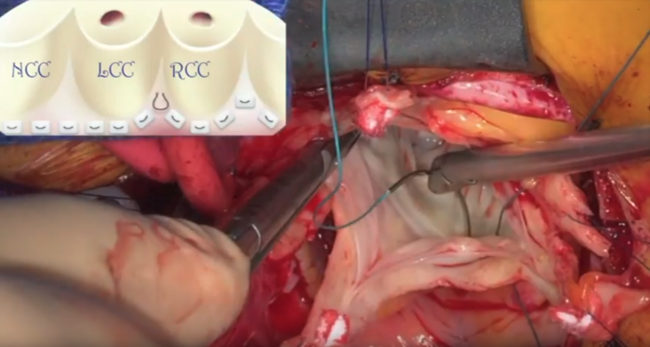
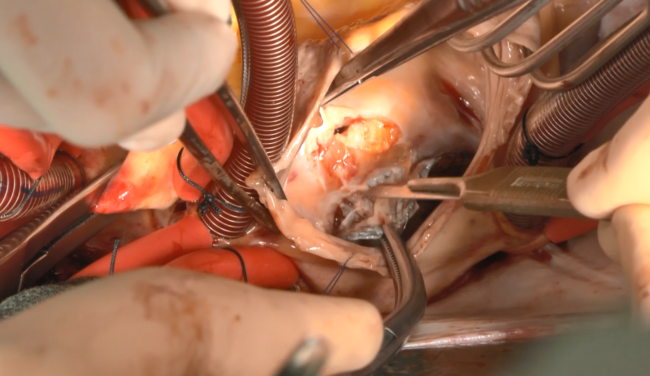
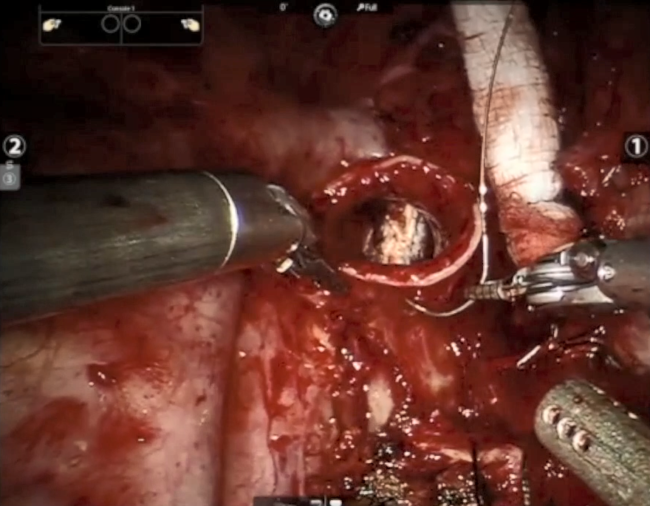
Minimally invasive valve sparing aortic root replacement in a patient with Marfan syndrome is feasible and provides an excellent outcome in a young patient. Preoperative computed tomography of the chest showed an aortic root dilatation at the sinuses of Valsalva, which measured 5.5 cm. Transesophageal echocardiogram (TEE) demonstrated a trileaflet aortic valve with moderate aortic…
The American Association for Thoracic Surgery (AATS) and the Pan-African Society for Cardio-Thoracic Surgery (PASCaTS) held their 6th Joint Global Forum at the recent AATS Annual Meeting in San Diego, California. The forum focused on the importance of education and training for cardiovascular health in resource-limited underserved regions, with a panel discussion highlighting the critical…
A 60-year-old patient was diagnosed with a T3N0M0 squamous cell carcinoma. A multidisciplinary tumor board decided to perform a hybrid procedure of left upper lobectomy with resection of three involved ribs. The course of the surgery was uneventful, and the patient was discharged home on postoperative day five.
Objectives The Amplatzer™ Septal Occluder is a minimally invasive device used to treat atrial septal defects (ASD). Despite the low associated complication rates, the Amplatzer™ device has, on rare occasions, been found to erode surrounding structures. The authors describe a case in which a patient presented with an aortic root fistula and underwent open surgical…
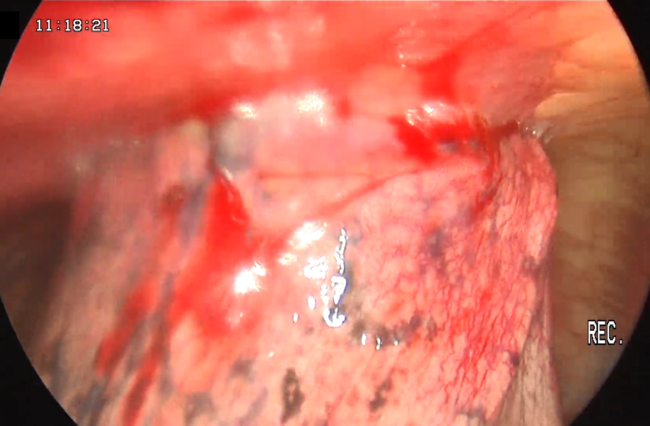
This video showed a robotic right upper lobectomy for stage IIIA-pN2 non-small cell lung cancer (NSCLC) following induction chemotherapy. The patient underwent three cycles of cisplatinum-based induction chemotherapy, and then she was enrolled in the authors’ ongoing prospective study to assess the safety and effectiveness of the robotic approach in patients with NSCLC, stage IIIA-pN2. Thanks…
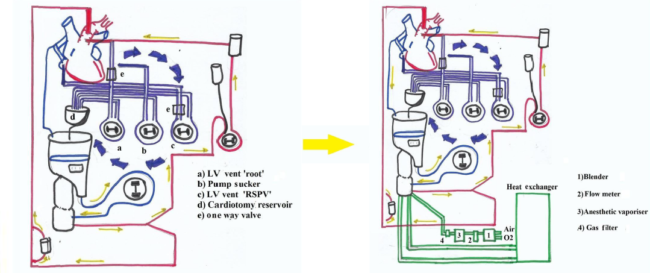
The aim of this Three-Minute Review is to enable junior doctors to study and memorize topics in cardiac surgery in a simplified manner based on the rationale of things rather than rote memorization. In this publication, the authors set a mind map of how to study cardiopulmonary bypass. They simplify the major criteria, processes, and…
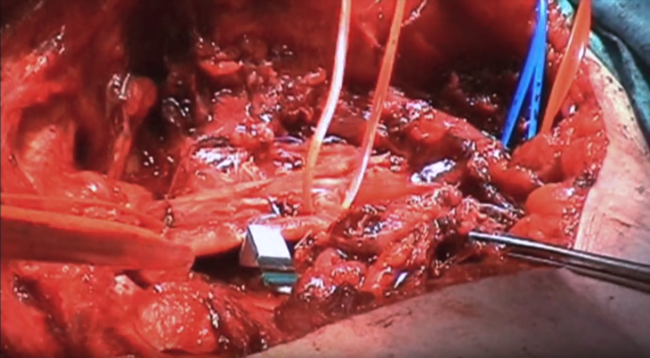
Introduction Breast cancer can sporadically relapse in the subclavicular region, localizing in the lymph nodes around the axillary blood vessels of the axillary apex and often invading the neurovascular bundle and pectoralis muscles. In patients with failed multimodal treatment, or in those who develop an isolated recurrence, surgical resection may be useful to remove all…
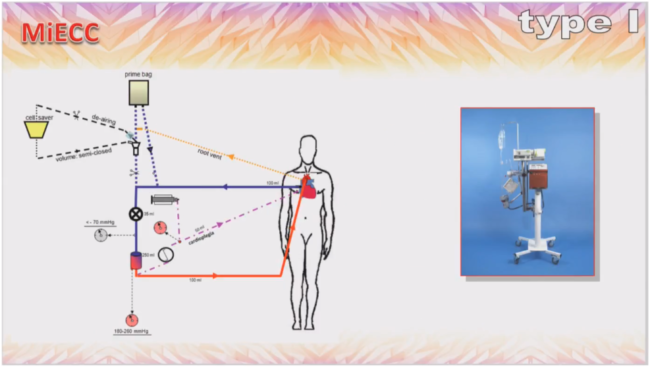
Kyriakos Anastasiadis of the Aristotle University of Thessaloniki in Greece discusses the advances of minimally invasive extracorporeal circulation that distinguish it from conventional cardiopulmonary bypass, focusing on the definition and benefits of minimally invasive systems. This presentation was originally given during the SCTS Ionescu University program at the 2017 Annual Meeting of the Society for…
Filmed at the 2017 EACTS Annual Meeting in Vienna, Austria, Stan Antonides of Erasmus University Medical Center in Rotterdam, Netherlands, moderates a discussion on the patency and longevity of vein grafts. Dr Antonides is joined by David Taggart of the University of Oxford in the UK, Joseph Sabik of the Cleveland Medical Center in Ohio, USA,…
Sublobar resection of small (<2 cm) well-differentiated lung cancers is appropriate, especially in elderly patients, and it preserves useful lung parenchyma, thereby maximizing postoperative lung function [1]. Though minimally invasive anatomic segmental lung resection by video-assisted thoracoscopic surgery is relatively straightforward for resection of the lingular (S4+5), trisegment (S1+2+3), superior (S6), and basilar (S7+8+10) segments,…
IntroductionCarcinoid is a rare lung cancer that originates from the neuroendocrine cells of the airways. Pulmonary parenchyma sparing procedures should be attempted whenever feasible. Bronchoplasty and sleeve resection are technically challenging, and a minimally invasive approach has been attempted in only a few dedicated centers. Video DescriptionProfessor Cerfolio demonstrates the adoption of a four-arm robotic…
Prosthesis patient mismatch (PPM), where a replacement valve that is too small relative to the patient’s body size results in an increased gradient across the prosthesis, has been studied extensively in the aortic position but less so in the mitral position. Despite the smaller literature on this topic, PPM at the mitral position is associated…
Robotic technology is being increasingly utilized for the performance of anatomic pulmonary resection. An excellent example of the technical advantages of the robotic platform over conventional minimally invasive video-assisted thoracoscopic techniques is in the execution of more complex resections. One such type of procedure is the single anatomic segmentectomy, particularly of the basilar segments. In…