Content from the Journal of the American Neurological Surgeons.
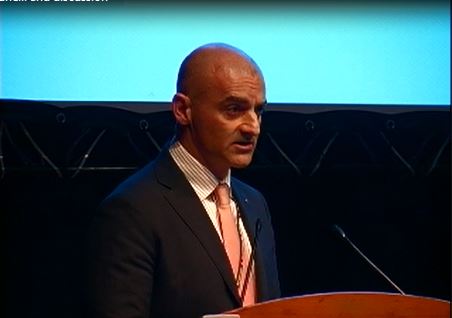
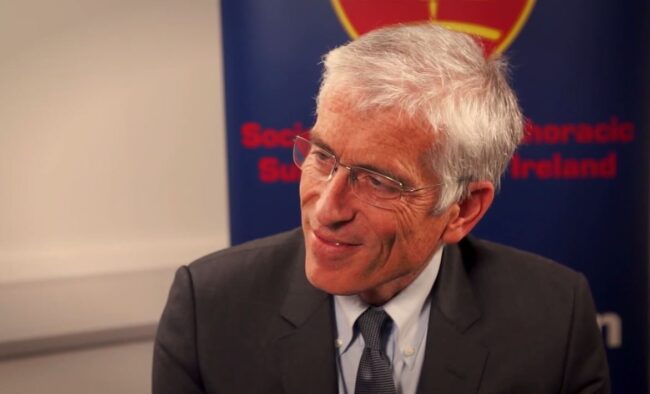
Alessandro Brunelli of St. James’s University Hospital, Leeds, United Kingdom, discusses the use of electronic drainage systems in managing chest tubes after surgery. This presentation was originally given during the SCTS Ionescu University program at the 80th Annual Meeting of the Society for Cardiothoracic Surgery in Great Britain and Ireland. This content is published with…
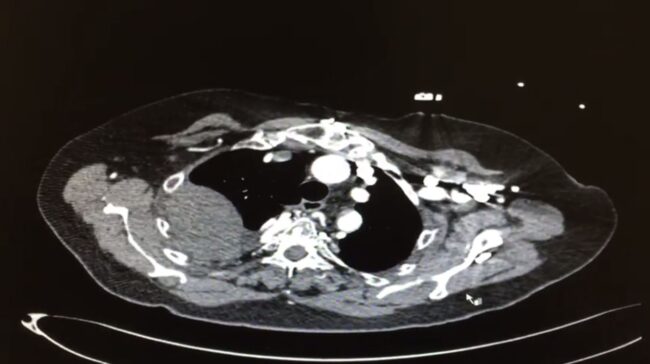
A 78-year-old female patient arrived at the ER with dyspnea, dizziness, and inter-scapular pain. Her past medical history was remarkable for coarctation of the aorta and mechanical aortic valve replacement surgery 12 years prior. The patient was taking Warfarin. In the ER, the patient had a 220/115 arterial blood pressure, 5.6 INR, 20000 WBC, 2500…
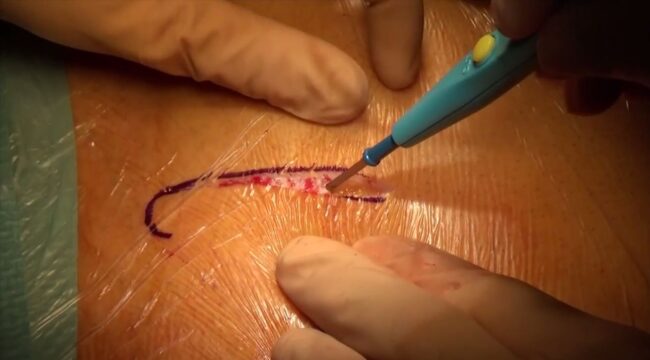
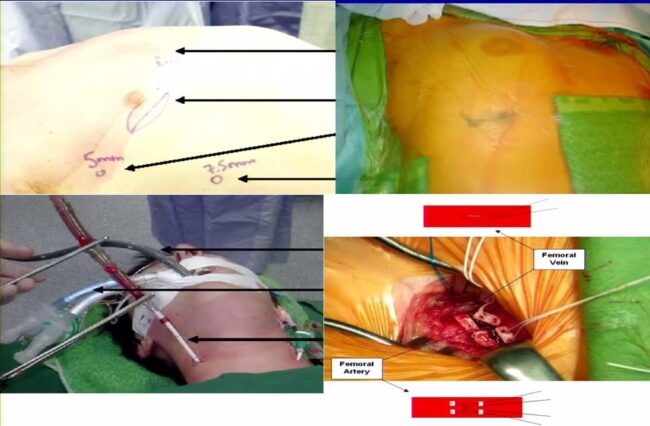
Median sternotomy remains the gold standard approach for aortic valve replacement. Recently, there has been growing evidence of interest in performing aortic valve replacement via right anterior minithoracotomy. This minimally invasive sternum-sparing procedure has been shown to be a reliable and safe technique, with better postoperative outcomes than full sternotomy (1). On the other hand,…
In these videos, two experts address lung cancer screening. Richard Freeman of St. Vincent’s Health and Hospital System/Indiana Heart Institute, Indiana, discusses the rationale and best practices for lung cancer screening. John Howington of Northshore University HealthSystem, Illinois, discusses the management of pulmonary nodules. These presentations were originally given at the Southern Thoracic Surgical Association…
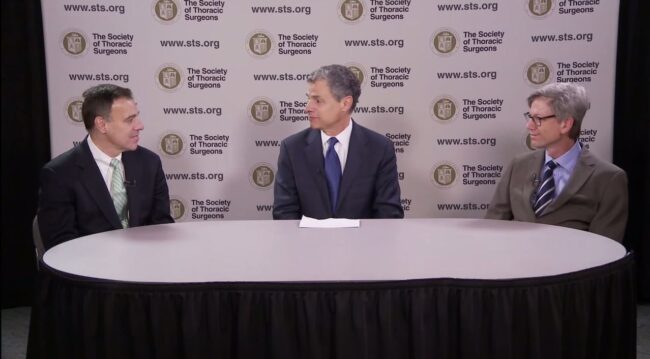
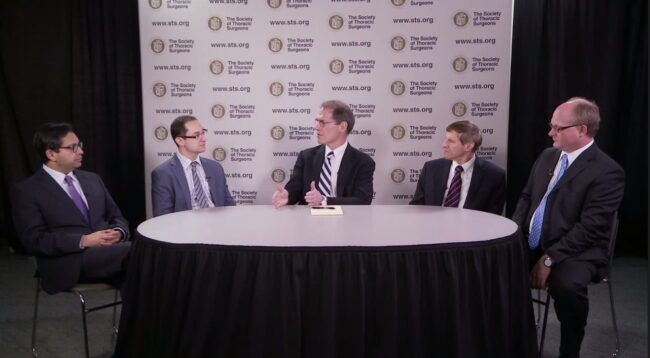
Filmed at the STS Annual Meeting in San Diego, California, this roundtable discussion focuses on total arterial revascularization. Todd Rosengart moderates the discussion with Joseph Sabik and Stephen Fremes. The panelists share their experiences performing total arterial revascularization, including indications and risks. The panelists also offer insights into how they perform total arterial revascularization, and…
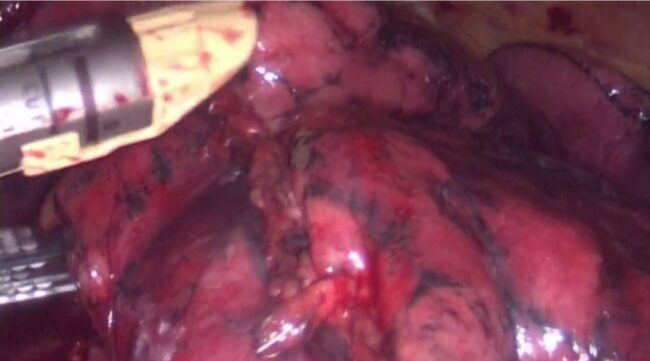
A 69-year-old patient was admitted to the authors’ department for a right lower lobe mass resection. The patient had a personal history of smoking (discontinued), hypertension, and COPD. He had no symptoms, but an x-ray revealed a mass in the right lower lobe, which was confirmed with a CT scan. The mass was a 44…
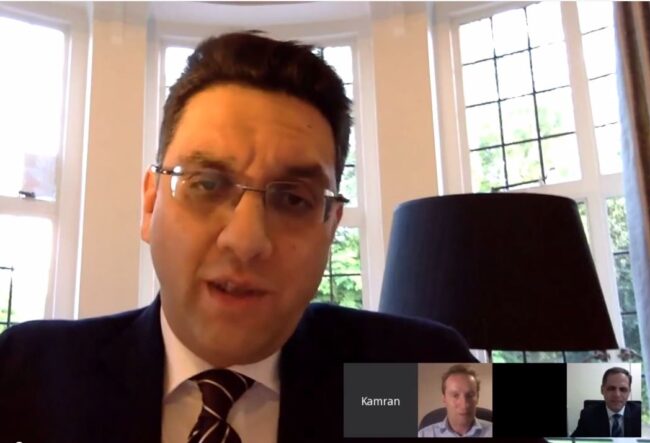
In March 2015, the first successful transcatheter aortic valve replacement (TAVR) was performed at the Armed Forces Institute of Cardiology (AFIC) in Rawalpindi, Pakistan. In this interview, recorded via Google Hangouts, Joel Dunning talks with Atiq Rehman of Lourdes Health System, NJ, and Kamran Baig of Trent Cardiac Centre, UK, about this development. Dr. Rehman…
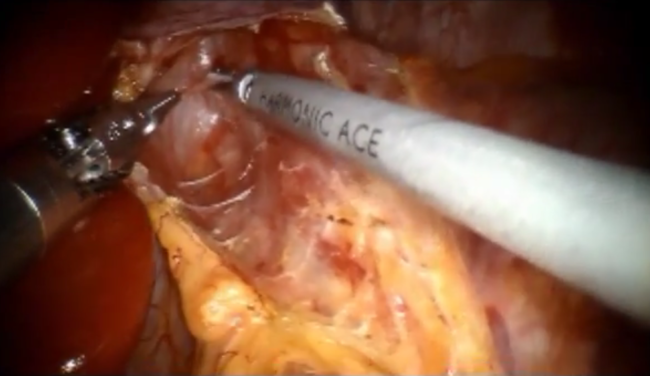
Objective This video demonstrates a robot-assisted Nissen fundoplication through a trans-abdominal approach. History A 41-year-old male presented with a 20-year history of gastroesophageal reflux disease and associated reflux laryngitis. His symptoms were only partially controlled with proton pump inhibitors. A barium esophagram revealed reflux, but no mass lesions. Esophagogastroscopy revealed changes consistent with reflux. Esophageal…
In this debate that occurred at the 2015 SCTS Annual Meeting, two experts discuss the use of the endoballoon versus the transthoracic clamp in minimally invasive mitral valve surgery. Ranjit Deshpande of King’s College Hospital, London, UK, argues for the endoballoon. Paul Modi of the Liverpool Heart and Chest Hospital, Liverpool, UK, argues for the…
This video shows an experimental method for total reconstruction of the mitral valve with autologous pericardium. The author believes that this method may become an alternative for prosthetic valve replacement in cases where mitral valve repair is not feasible. Are you using a mobile device? Download the CTSNet Videos app and watch CTSNet videos conveniently,…
Patrick Perier of the Herz und Gefass Klinik in Bad Neustadt, Germany, discusses the evolution and current practice of minimally invasive mitral valve surgery in Europe. This presentation was originally given during the SCTS Ionescu University program at the 80th Annual Meeting of the Society for Cardiothoracic Surgery in Great Britain and Ireland. This content…
Filmed at the 2015 SCTS Annual Meeting in Manchester, UK, Leanne Harling and Mattia Glauber discuss topics in minimally invasive valve repair and replacement. Drawing on his experiences performing over 3,000 minimally invasive procedures, Dr. Glauber discusses the minimally invasive approach to valve disease. Dr. Glauber also reflects on the future of minimally invasive valve…
While the standard of care for patients with achalasia remains laparoscopic modified Heller myotomy with partial fundoplication, there are many options available for patients to consider. Neither balloon dilatation nor injection of Botox provides as sustainable relief, and both often require repeat intervention. In addition to providing only short-term results, these options cause scar tissue…
Primary cardiac tumors are benign in 75% of cases, and malignant in the other 25%. Myxoma is the most common benign cardiac tumor. In 95% of these cases, the myxoma tends to be solitary, and appears between the third and sixth decade of life. However, in 5% cases, myxoma occurs in younger patients. In 75%…
Cardiac surgery is just over half a century old, and cardiac surgeons have always adapted to change rapidly. Innovation has been their hallmark, and it is awe inspiring to think of the innovative procedures developed by cardiac surgeons over the decades. The ingenuity and complexity of cardiac surgical procedures claims superiority over most other specialties.…
Filmed at the 2015 STS Annual Meeting in San Diego, California, this roundtable discussion focuses on the use of extracorporeal membrane oxygenation (ECMO). Glenn Whitman moderates this discussion with Jay Shake, Nevin Katz, Jonathan Haft, and Ashish Shah. The panelists discuss the current uses of ECMO and reflect on its future. For more information on…