Content from the Journal of the American Neurological Surgeons.
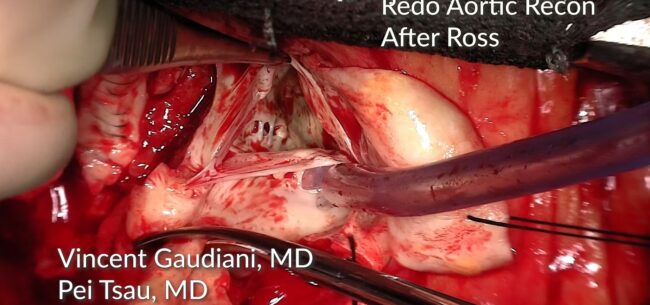
The patient in this video is a fit and active seventy-six-year-old man. Twenty-five years previously, he had a Ross procedure, but now presents with aortic root dilation. A percutaneous femoral vein cannula was used and the chest was opened. A very high aortic cannulation in the arch was used to provide space for the distal…
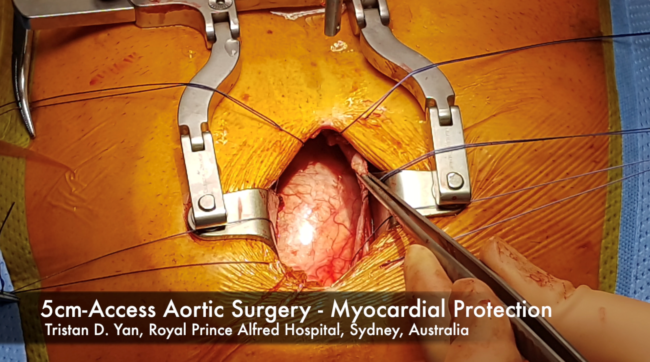
This video demonstrates one way to arrest the heart in a mini-access aortic root replacement procedure. The method described is suitable for patients with aortic regurgitation. The 5 cm incision provides adequate access for distal ascending aortic cannulation, aortic cross-clamping, and antegrade cardioplegia delivery via an aortic root needle. The venous drainage is achieved via…
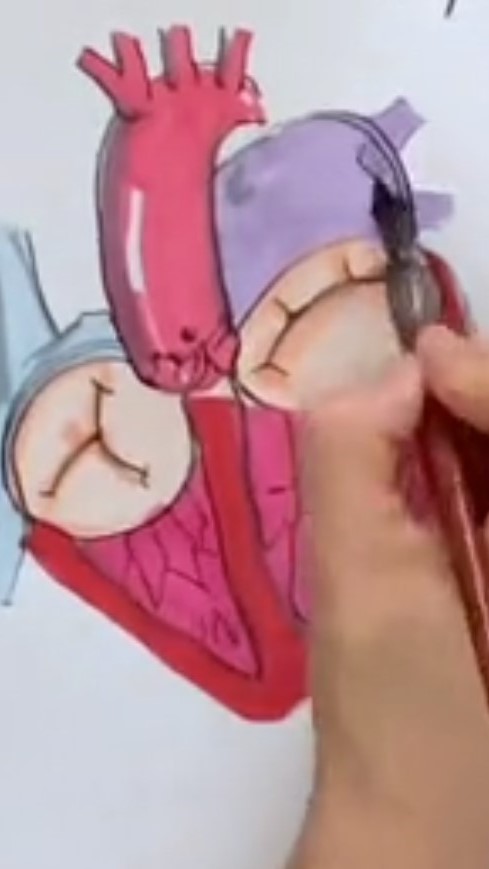
This video provides a simple explanation of mitral regurgitation pathophysiology and the technique developed by the author over the past 10 years, known as KISS. This visual presentation provides a thorough understanding of mitral regurgitation and advanced surgical techniques explained through an old-school doodle. This technique combines three essential elements, including linear reconstruction, prefabricated neochords,…
The Patient The patient was a seventy-three-year-old man with known epiphrenic diverticula for 13 years. He presented with worsening dysphagia to solid foods, nocturnal coughing, and regurgitation. His relevant past medical history includes achalasia and hiatal hernia. His relevant past surgical history includes esophageal dilations for presumed nonrelaxing sphincter. The patient’s preoperative Eckardt score was…
At the 2024 AATS Annual Meeting, CTSNet senior editors set out to interview the most knowledgeable CT surgeons from around the world. Stay tuned for more interviews from the meeting. Senior Editor Mara Antonoff spoke with Dr. Cecilia Pompili, an expert on patient-reported outcomes in cardiothoracic surgery, on the recently published results of the CheckMate…
First, note that there are many accepted strategies for wound closure. The technique will vary based on the weight of the patient and complexity of the wound. Regardless of the weight of the patient, the midsternal incision should be closed in three distinct layers. These include the deep, presternal fascia layer, the dermal layer, and…
This video demonstrates a right upper lobectomy. Although there is never a perfect case, the authors believe they are doing many things correctly with this technique. First, this is a training case. The authors try to train as much as possible without causing delays. They achieve this by having the training surgeon complete bedside stapling…
This is the case of a sixty-eight-year-old man who had an acute aortic dissection 10 years previously and had quite a small prosthetic aortic tube grafted onto a relatively large distal aorta. He presented with severe aortic regurgitation. First, percutaneous femoral vein cannulation was performed and the innominate artery was cannulated with a 14 Fr…
This fifty-five-year-old, 125 kg patient had a previous aortic valve replacement and presented with endocarditis with heart failure with a CVP of 30. It was determined unsafe to give antegrade cardioplegia due to the concern over embolizing endocarditis debris down the coronary arteries, so percutaneous femoral vein cannulation and SVC venous cannulation were performed. A…
Redo median sternotomy, total arch replacement, and the frozen elephant trunk procedures for chronic aortic dissection comprise a complex operation. In this video, Professor Yan first explains his operative approach. Then, three tips and tricks for redo total arch and frozen elephant trunk are highlighted: 1. Electro-evaporative technique for adhesiolysis.2. Left axillary artery extra-anatomic bypass.3. …
“Get down,” said the colonel, “and turn out your light.” The train was slowing through the dark countryside. I could barely make out a building far across a field in the moonlight. I was not sure what the alarm was about, but I trusted the colonel and so I minded his directions and sat quietly…
CTSNet continued its webinar series with ASAIO Journal on June 20, 2024 by enrolling cardiac surgery and heart failure professionals to discuss the topic, “LVADs and RV Dysfunction: Is It Manageable?” Panelists included Dr. Jennifer A. Cowger, Section Head of Advanced Heart Failure, Transplant, and Mechanical Circulatory Support and Member of the Shock, Structural, Sarcoid,…
At the 2024 AATS Annual Meeting, CTSNet senior editors set out to interview the most knowledgeable CT surgeons from around the world. Stay tuned for more interviews from the meeting. Senior Editor Mara Antonoff spoke with Dr. Marc de Perrot about the recent results of the SMARTER trial, which involved a lower dosage of radiation…
In this video, the patient is a six-month-old, 6.4 kg infant with a new diagnosis of dilated cardiomyopathy. The patient was at home and presented at the hospital in extremis. The patient had increased work of breathing, distressed respirations, and poor distal perfusion (capillary refill > 4s). The patient was initially stabilized with epinephrine, milrinone,…
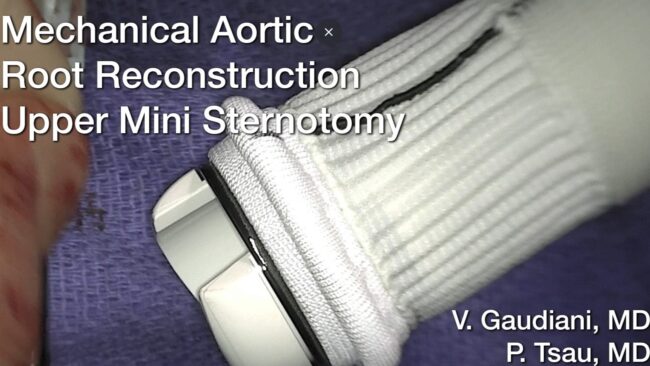
This video shows the case of a forty-year-old man who presented with a large 6 cm pear-shaped dilated aortic root. He was offered valve sparing root replacement or a mechanical root replacement and he chose the mechanical valve. A percutaneous femoral vein cannula was used along with a high aortic cannula. To begin, the patient…
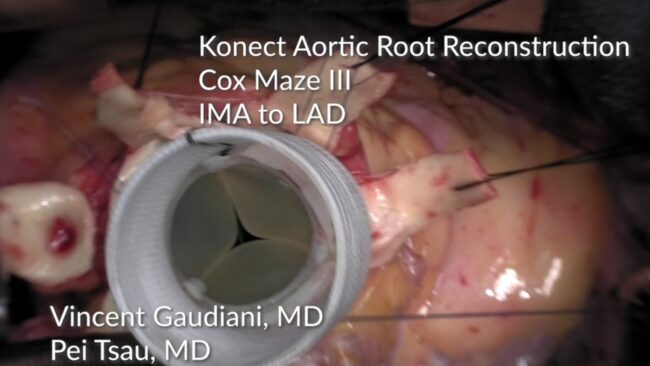
This is a video of a sixty-five-year-old man who presented with atrial fibrillation, a critical LAD lesion, and heart failure with severe aortic regurgitation and a root dilated to 48 mm. To begin, the SVC was cannulated and a percutaneous IVC cannula was placed from the femoral vein. The IVC was then clamped off in…