Content from the Journal of the American Neurological Surgeons.
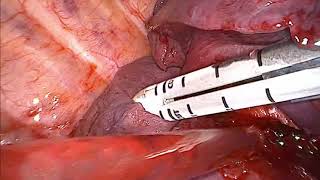
Minimal invasive approaches are the golden standard for the treatment of thoracic malignancies. Nowadays, we can offer a vast number of different procedures with either VATS or RATS approach, that would be out of question a few years ago. In this video, we demonstrate a VATS Bilobectomy through an only 4 cm incision on a…
A 30-year-old male patient was diagnosed with Behcet disease in January 2020 when he was admitted with abdominal aorta vasculitis. This resulted in a leaking large abdominal aneurysm that was repaired by the vascular team using a tube graft. The work up on that admission showed pulmonary embolism in the left lower lobe branches and…
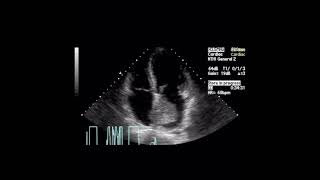
Slide 1This video illustrates a case of surgical correction of a giant left atrial myxoma that produced critical mitral stenosis in our patient. Slide 2Primary tumors of the heart are extremely rare with their incidence as low as zero point 19%. Three quarters of all cardiac tumors are benign in origin. Myxomas are benign neoplasms,…
Welcome to the final of twelve videos that compose the series “Thoracic Surgical Oncology – Technical Approaches” by Professor Tristan D. Yan. To learn more about the series and see the complete list of videos, click here. An electroevaporative surgical technique is demonstrated in this video. This is a unique surgical approach that can be…
A 13-years-old, 70 kg male patient was admitted to Siyami Ersek Thoracic and Cardiovascular Surgery Training and Research Hospital pediatric cardiac surgery clinic with fatigue and dyspnea on exertion. He had a history of balloon dilatation of the pulmonary valve when he was 3 years old. Preoperative echocardiography revealed a flail tricuspid anterior leaflet with…
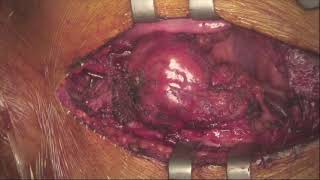
This is the case of a 53-year-old woman, nonsmoker, diagnosed with Ewing sarcoma of the left thoracic outlet. The lesion involved the subclavian vessels, first left 2 ribs, and brachial plexus, possible involvement of the apex of the left lung. No distant metastasis were evident on the scans. The patient underwent induction chemotherapy (5 cycles…
The video presents the technique of surgical excision of the right atrial myxoma using a totally endoscopic port-access without robotic assistance. A 51-years-old female was admitted to the hospital because of chest pain just one day before. She had a normal medical history. Transthoracic echocardiography revealed a giant neoplasm in the right atrium, a mass…
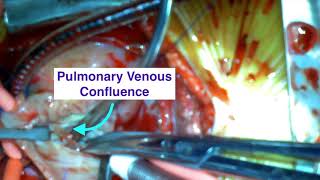
This is an 8-day old, 3.4 kg female neonate presented with cyanosis and failed the neonatal screening at 24 hours due to tachypnea and desaturation. She was born at 39 weeks gestation via a normal vaginal delivery, and apart from gestational diabetes, pregnancy was otherwise uncomplicated. Echocardiography showed total anomalous pulmonary venous connection (TAPVC) of…
A 19-year-old patient, known case of pulmonary hypoplasia, admitted to chest diseases hospital as a case of persistent pneumothorax. CT angiography was done which showed a left pulmonary artery agenesis with multiple bullae on the left lung with a compensatory hyperinflation left lung. A left uniportal VATS pneumonectomy was performed. The post operative stay was…
CTSNet’s Guest Editor Marc W. Gerdisch, MD, discusses his series “Surgical Atrial Fibrillation – What We Must Do and What We Can Do” with contributors from this series. Dr. Gerdisch, chief of cardiothoracic surgery at the Heart Valve Center at Franciscan Health, invited six contributors to bring together cutting-edge videos designed to broaden our perspective…
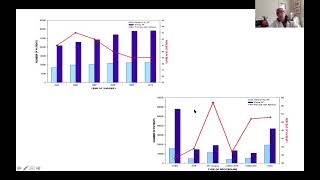
Survey Title: Challenges Faced During ECMO Cannulation for Patients with COVID-19Institution: Seattle Children’s Hospital We conducted an anonymous survey to gain a broader understanding of the challenges faced by extracorporeal life support (ECLS) providers when initiating ECLS for patients with COVID-19. A total of 17 survey responses was collected from April to July of 2020.…
Mitral valve repair is the preferred surgical treatment for mitral regurgitation. Minimally invasive technique through right minithoracotomy is routinely performed for treating this pathology for complex repair too. Cardiac surgeons must increasingly pursue high-quality mitral valve repair, which ensures excellent long-term outcomes. In this video, the authors have collected some particular cases in which there was…
Welcome to the eleventh of twelve videos that compose the series “Thoracic Surgical Oncology – Technical Approaches” by Professor Tristan D. Yan. To learn more about the series and see the complete list of videos, click here. Surgical management of malignant pleural mesothelioma remains a challenging task. This video tutorial demonstrates the surgical anatomy along…
Both the AATS and the STS guidelines for surgical ablation of atrial fibrillation made the highest-level recommendation for surgical treatment for atrial fibrillation be added and performed concomitantly with CABG or valve surgery (1,2). While over 60% of patients with mitral valve disease are surgically ablated, patients with non-mitral valve disease and atrial fibrillation are…
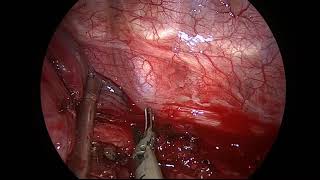
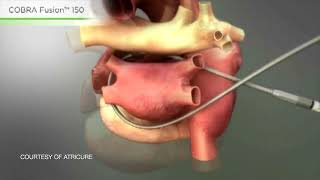
While several approaches for endoscopic surgical ablation have described, the current video will focus on the technical details of a beating heart, epicardial linear box isolation and related mapping. Briefly, a 3 ports right thoracoscopic approach is routinely adopted, then, following opening of the pericardial reflections, a dedicated guiding catheter allows for the advancement of…
The authors present an open Cox-Maze IV (CMPIV) procedure using bipolar radiofrequency (RF) and cryoablation devices(1). This procedure is performed on cardiopulmonary bypass via a median sternotomy due to significant aortic insufficiency. Our ablation technique for a minimally invasive approach differs slightly with respect to the type of ablation utilized for the lesions and has…