Content from the Journal of the American Neurological Surgeons.
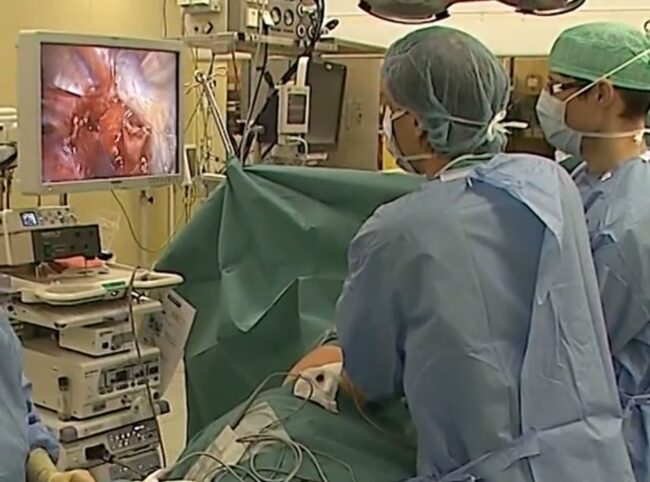
Mattia Glauber of the Istituto Clinico Sant’Ambrogio, Milan, Italy, discusses the use of central cannulation in minimally invasive mitral valve surgery. This presentation was originally given during the SCTS Ionescu University program at the 80th Annual Meeting of the Society for Cardiothoracic Surgery in Great Britain and Ireland. This content is published with the permission…
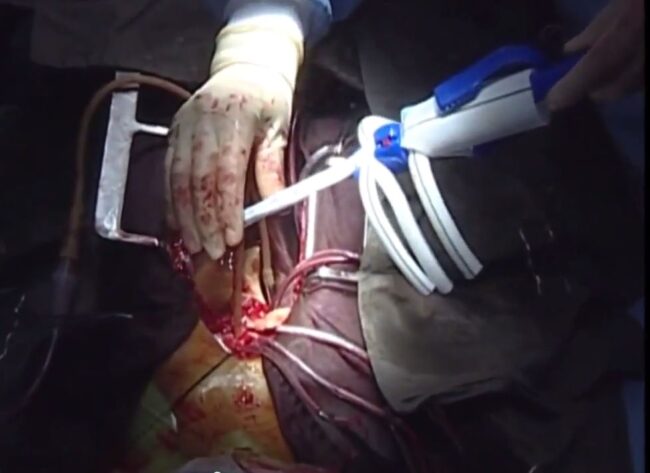
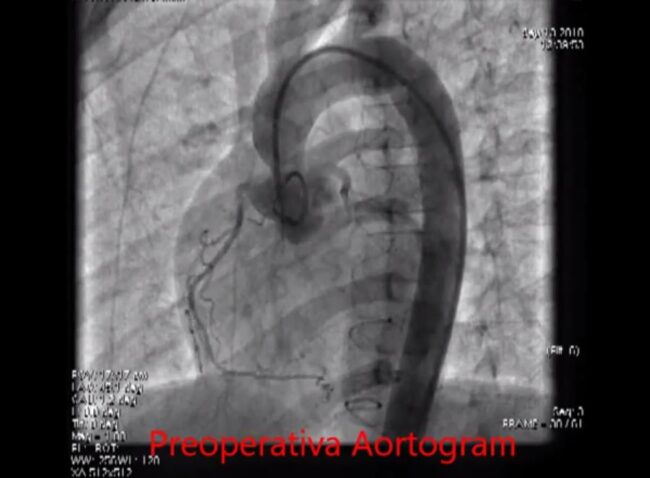
This video presents a case of chronic Type B aortic dissection, along with an aneurysmal arch and ascending aorta. The patient was treated using a Thoraflex device (frozen elephant trunk) as a “one-stage” solution, with subsequent complete remodeling of the aorta. A hybrid theater was used for this procedure. The surgeons utilized completion angiogram for…
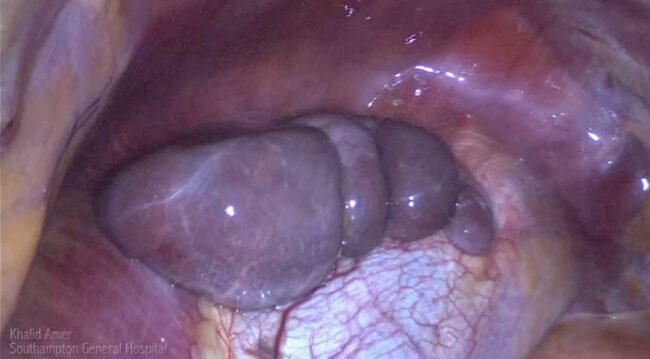
This video demonstrates a VATS repair of a symptomatic adult congenital right Bochdalek hernia and plication of the diaphragm. A 41-year-old female patient presented with worsening shortness of breath and the inability to lie flat. Her CT scan was suggestive of liver herniation through the right diaphragm, and there was no interstitial lung disease to…
In this interview with Joel Dunning, Henrik Hansen discusses his 15 years of experience performing VATS lobectomies, and reflects on the current status of the approach. Dr. Hansen compares VATS lobectomy to a chess game, suggesting that successful VATS surgeons should plan multiple steps ahead and seek to visualize potential problems before they occur. Dr.…
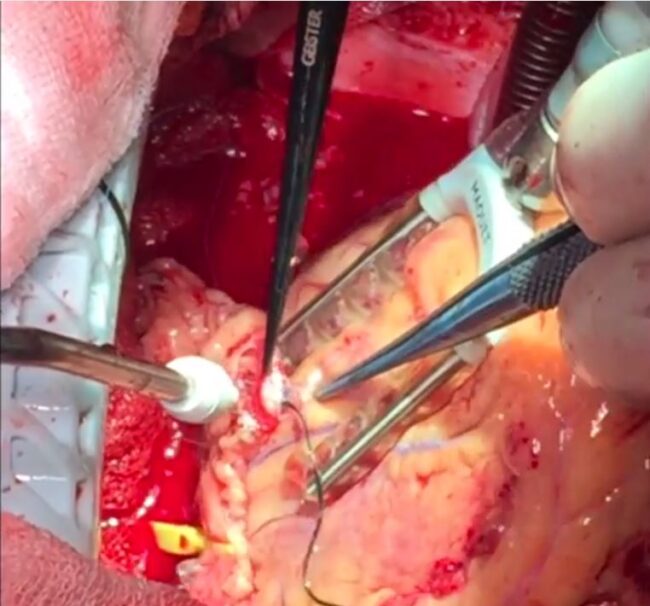
A 62-year-old male was admitted in cardiogenic shock. He had previously received a dual chamber pacemaker for complete heart block. A coronary angiogram revealed triple vessel disease. A transthoracic echo showed that the patient had severe ischemic mitral regurgitation (coaptation depth of more than 10 mm), and severe left ventricle dysfunction (EF 25%). He was…
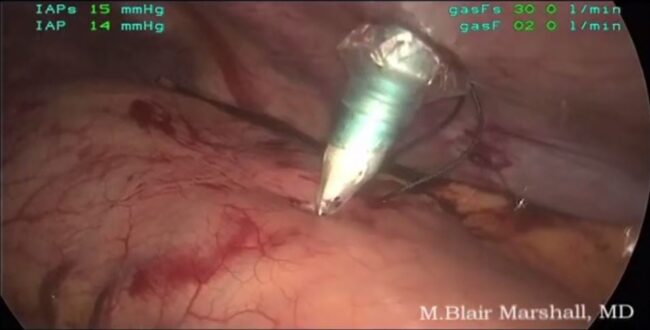
The authors have previously described the use of laparoscopic intra-gastric resection in the management of gastro-esophageal junction cancers and leiomyoma. This technique is used in highly selected individuals. For cancers, full thickness resection is best for maximal margins. For leiomyoma, the authors often use the stapling technique. However, it is thought by some that full…
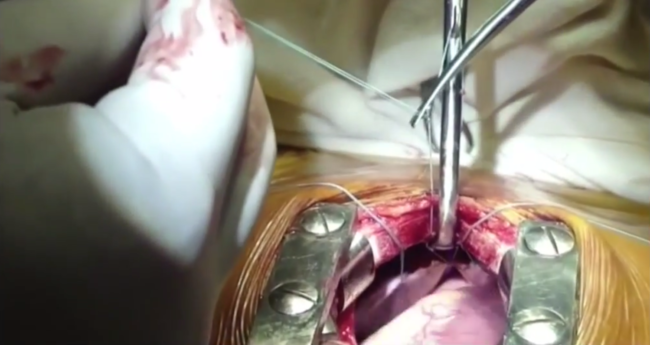
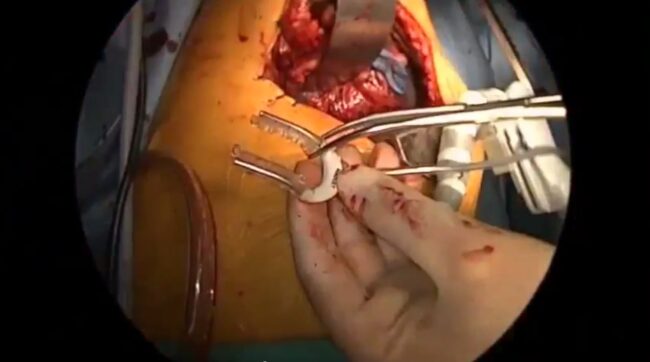
This video demonstrates an ASD closure via the transxiphoid approach, using a specially designed instrument for lifting the sternum anteriorly. The author believes that a transxihpoid, or ministernotomy, approach for simple congenital defects is a safe option. Are you using a mobile device? Download the CTSNet Videos app and watch CTSNet videos conveniently, on the…
In this oral history interview, filmed in 2000, William Stoney talks with Alain Carpentier. Dr. Carpentier discusses his groundbreaking career, including his work in mitral valve repair and replacement. He addresses the driving force behind his career: the desire to develop techniques that allow patients to be free from complications and anticoagulants. This interview is…
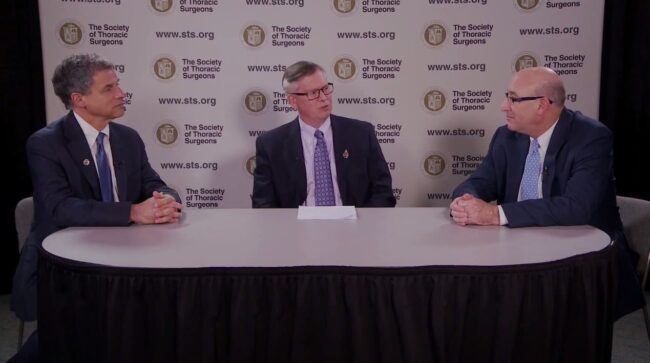
Filmed at the 2015 STS Annual Meeting in San Diego, California, this roundtable discussion focuses on minimally invasive cardiac surgery. John Conte moderates the discussion with Robbin Cohen and Todd Rosengart. The panelists share their experiences learning minimally invasive techniques, and tips for mid-practice surgeons interested in transitioning to a minimally invasive practice. For more…
A 12-year-old boy was diagnosed with supravalvular aortic stenosis. He underwent an aortoplasty with Brom’s technique, which involved enlarging all three sinuses with pericardial patches. This video is a step-by-step illustration of the procedure. Are you using a mobile device? Download the CTSNet Videos app and watch CTSNet videos conveniently, on the go.
This video presents a single-port VATS right upper lobectomy for stage Ia NSCLC in an 81-year-old patient. The total procedure time was 55 minutes. This was the authors’ third uniportal lobectomy, after previously performing close to 250 VATS lobectomies using a three-port technique. It is the authors’ belief that some parts of the VATS procedure…
Redo vascularization of a severely stenosed graft is considered risky because of the likelihood of embolization. The authors present a video of a severely stenosed and tortuous graft, redone via saphenous vein graft from the descending thoracic aorta to the obtuse marginal artery. A minimally invasive approach was used. The surgical approach involved harvesting the…
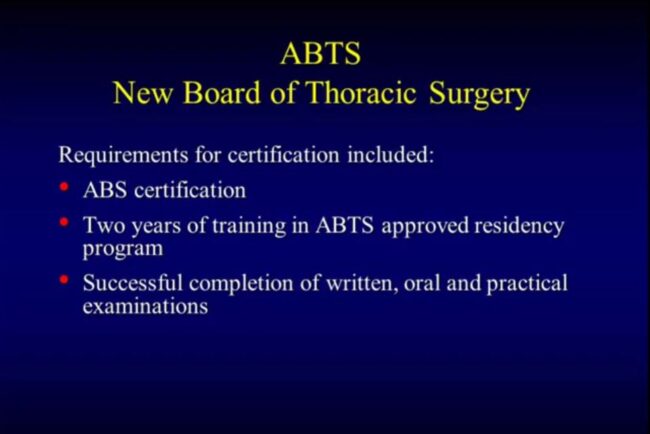
In this video, William Baumgartner, Executive Director of the American Board of Thoracic Surgery (ABTS), shares an update on ABTS activities. Dr. Baumgartner describes the current ABTS certification process, explains maintenance of certification, and summarizes the types and numbers of cardiothoracic surgery residency programs. This educational presentation was originally given during the Postgraduate Program at…
Thymectomy is often an effective treatment for patients with uncontrolled myasthenia gravis. During surgery, it is important to ensure that the gland has been completely removed without injury to the phrenic nerves or the innominate vein. The authors present the case of a 36-year-old female with a past medical history of myasthenia gravis not responding…
Filmed at the 2015 STS Annual Meeting in San Diego, Michael Bolanos and Mark Slaughter discuss topics in mechanical circulatory support and heart transplantation. Dr. Slaughter discusses the development and current status of ventricular assist devices, and the total artificial heart. Dr. Slaughter also shares his research on the combination of VAD and stem cell…
A 49-year-old male patient was operated on by the authors for a T4 (left atrium invasion) squamous cell carcinoma in the right lower lobe (Figure 1). pTNM was T4N0MO and four cycles of chemotherapy were given as adjuvant therapy. After four years of follow-up care, a chest CT showed a newly developed tumor (2.9cm) in…