Content from the Journal of the American Neurological Surgeons.
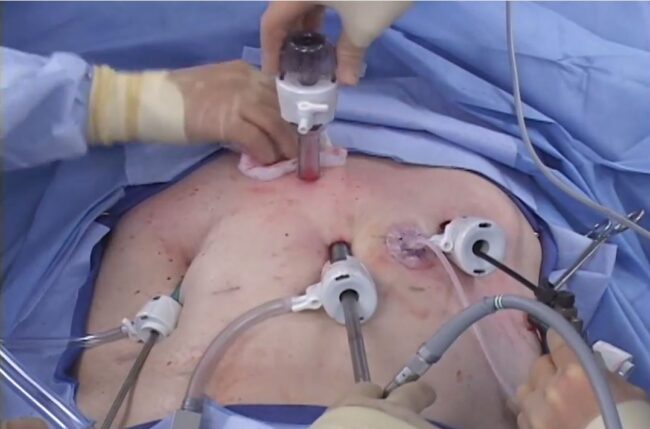
Dawn Jaroszewski, Assistant Professor at the Mayo Clinic (Arizona), discusses the potential advantages of minimally invasive esophagectomy (MIE) over open esophagectomy, and shares the Mayo Clinic’s current method for MIE. This presentation was originally given at the 27th Annual Meeting of the General Thoracic Surgical Club. This content is published with the permission of GTSC.
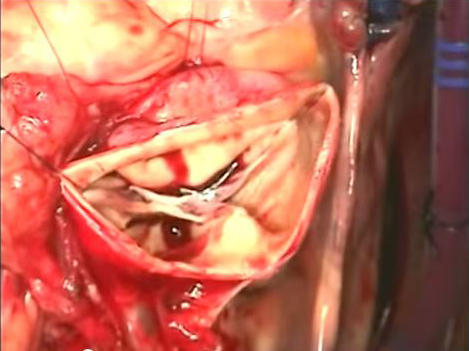
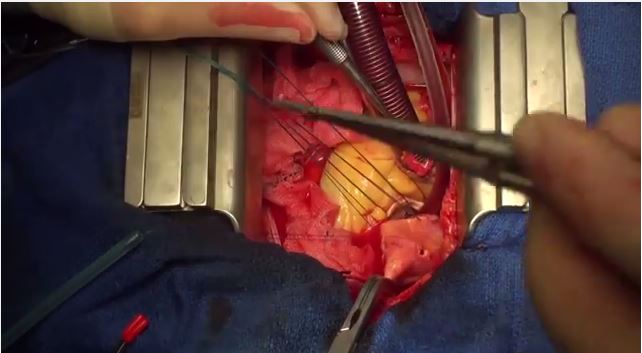
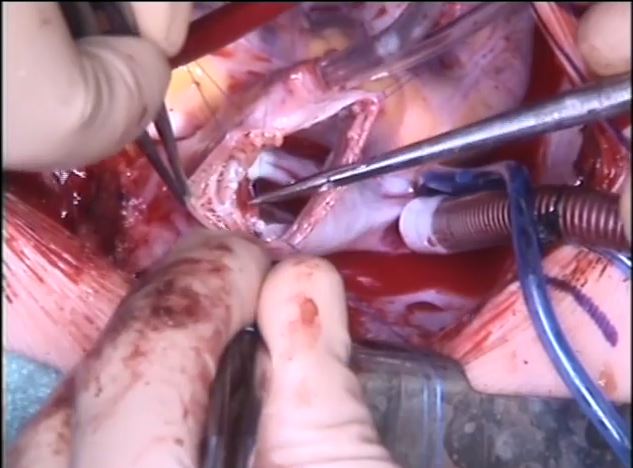
A step-by-step guide for performing an aortic root replacement with the Freestyle Aortic Root. Safeguards and pitfalls are reviewed.
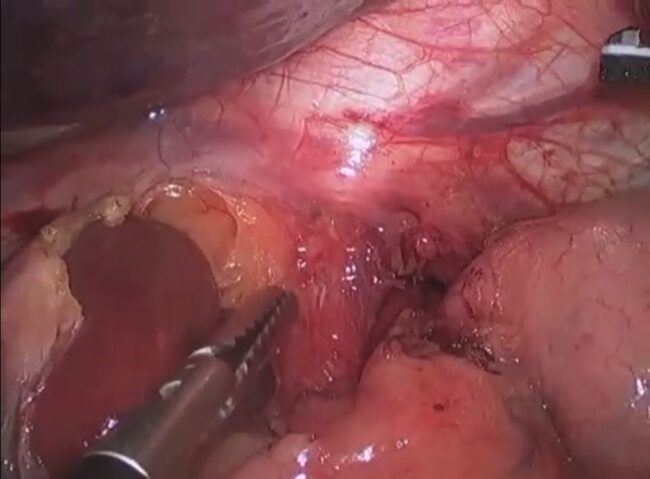
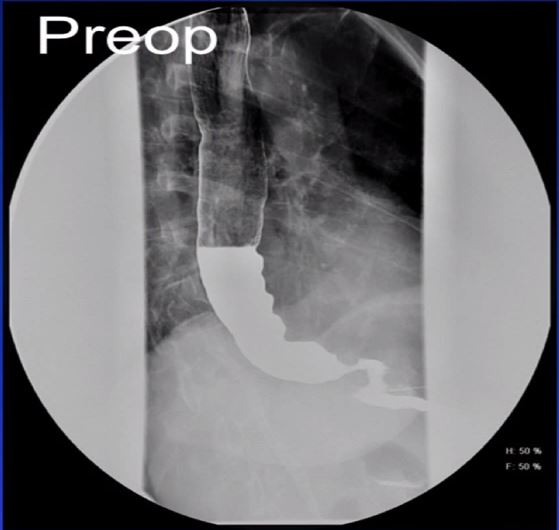
Introduction The presence of a shortened esophagus in patients undergoing paraesophageal hernia repair varies significantly in the literature, with high volume centers reporting the need to perform an esophageal lengthening procedure in 5.6% (1) to 63% (2) of cases. The goal of performing an esophageal lengthening procedure is to reduce axial tension on the hernia…
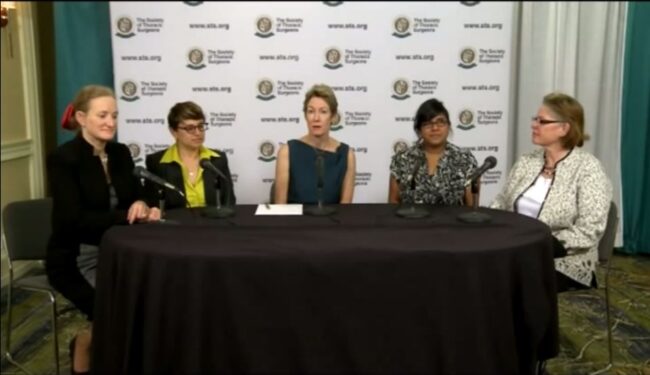
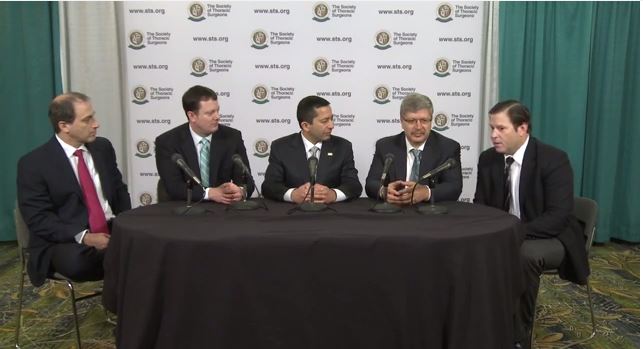
Filmed at the 2014 STS Annual Meeting, Virginia Litle, past President of the Women in Thoracic Surgery, leads a discussion on the growing role of women in the cardiothoracic surgery specialty. Yolonda Colson, Iva Smolens, Meena Nathan, and Nora Burgess share their thoughts on the increasing number of women in cardiothoracic surgery, career paths, and…
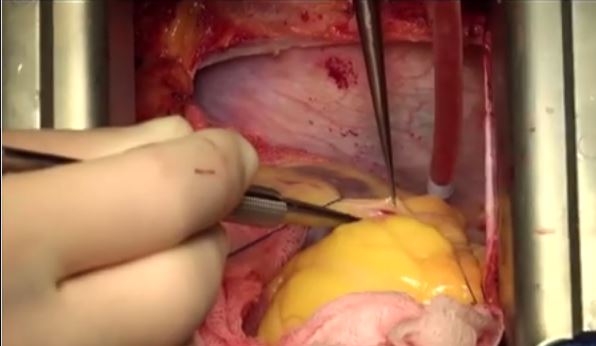
This video is part of a series demonstrating cardiothoracic surgery performed by left-handed surgeons. This video shows a left-handed proximal anastomosis. Only 7-11% of the population is left handed. Surgical trainees who are left-handed are often at a disadvantage when starting their training, as right-handed trainers may have never seen a specific surgery performed by…
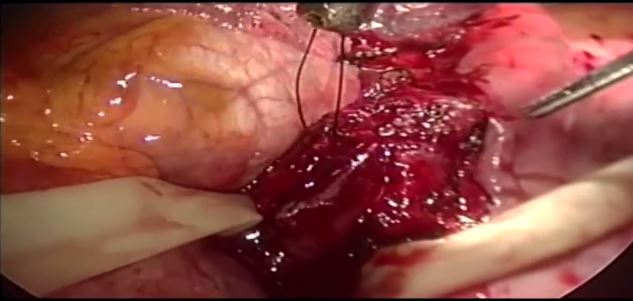
J. Matthew Reinersman presents a new technique that combines peroral endoscopic myotomy (POEM) and laparoscopic dor fundoplication. This presentation was originally given at the 27th Annual Meeting of the General Thoracic Surgical Club. This content is published with the permission of GTSC.
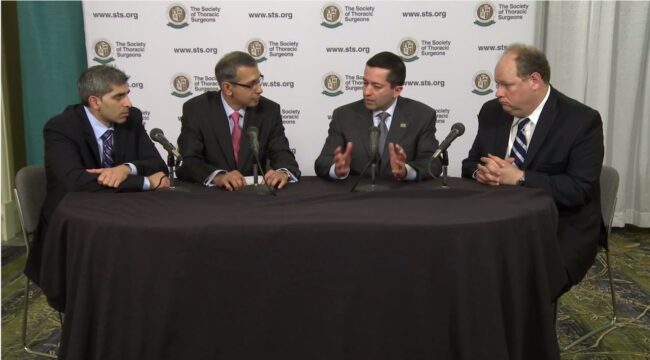
Filmed at the 2014 STS Annual Meeting in Orlando, Florida, this roundtable discussion focuses on the treatment of mitral valve disease. Vinod Thourani moderates the discussion with Gorav Ailawadi, Vinay Badhwar, and Michael Argenziano. The panelists debate repairing versus replacing mitral valves, as well as robotic versus minimally invasive valve surgery. The discussion concludes with…
David Sugarbaker, Director of the International Mesothelioma Program, discusses the use of extrapleural pneumonectomy in the treatment of mesothelioma. This presentation was originally given at the 27th Annual Meeting of the General Thoracic Surgical Club. This content is published with the permission of GTSC.
From 2011-14, Thor Sundt, MD served as President of the CTSNet Board of Directors. In this interview, filmed at the 2014 AATS Annual Meeting in Toronto, Canada, Dr. Sundt reflects on his time as CTSNet president, developments over the past several years, and the organization’s future. Please click here for more information on the CTSNet Strategic Plan.
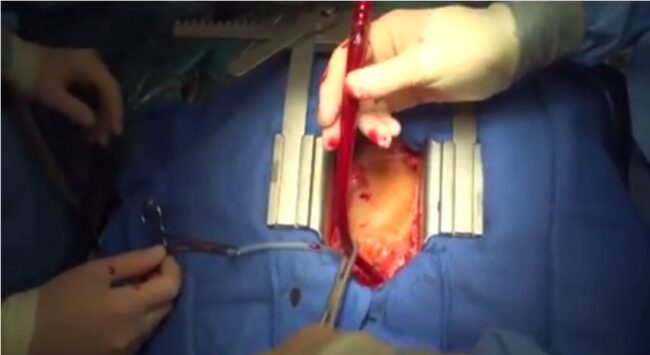
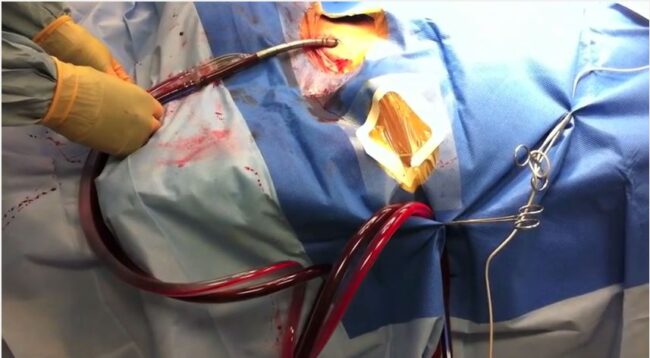
This video is part of a series demonstrating cardiothoracic surgery performed by left-handed surgeons. This video shows a left-handed cannulation. Only 7-11% of the population is left handed. Surgical trainees who are left-handed are often at a disadvantage when starting their training, as right-handed trainers may have never seen a specific surgery performed by a…
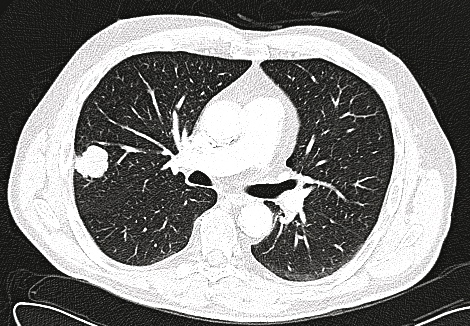
Betty Tong, Co-Director of the Lung Cancer Screening Program at Duke University Medical Center, discusses the process of establishing a lung cancer screening program. This presentation was originally given at the 27th Annual Meeting of the General Thoracic Surgical Club. This content is published with the permission of GTSC.
The patient is a 61-year-old caucasian male with a history of progressive dysphagia, and a 25-pound weight loss in the last year. Through a standard posterolateral thoracotomy in the 6th intercostal space, the authors carefully dissected down to the neck of the epiphrenic diverticulum. After recognizing and preserving the anterior vagus nerve, which was crossing…
At the culmination of years of formal training, cardiothoracic surgery residents are faced with the reality of entering individual practice. Making this transition smoothly, the value of early mentorship, and other pearls are discussed in this roundtable discussion, which was filmed at the 2014 STS Annual Meeting. Vinay Badhwar moderates this discussion with Ara A.…
This video is part of a series demonstrating cardiothoracic surgery performed by left-handed surgeons. This video shows a left-handed PDA distal anastomosis. Only 7-11% of the population is left-handed. Surgical trainees who are left-handed are often at a disadvantage when starting their training, as right-handed trainers may have never seen a specific surgery performed by…
This video shows how to place a patient on veno-venous ECMO. The author uses an Avalon catheter inserted into the right jugular vein. The Avalon catheter has an inflow lumen that takes blood from the IVC and SVC, and an outflow lumen that delivers blood towards the tricuspid valve. In this video, the author demonstrates…
Partial anomalous pulmonary venous connections (PAPVC) are a very heterogeneous group of lesions, in which at least one pulmonary vein is draining into the systemic venous system. These congenital lesions are frequently associated with atrial septal defects (ASD), typically the sinus venous type of defect.The type of correction must be determined based on the site…