Content from the Journal of the American Neurological Surgeons.
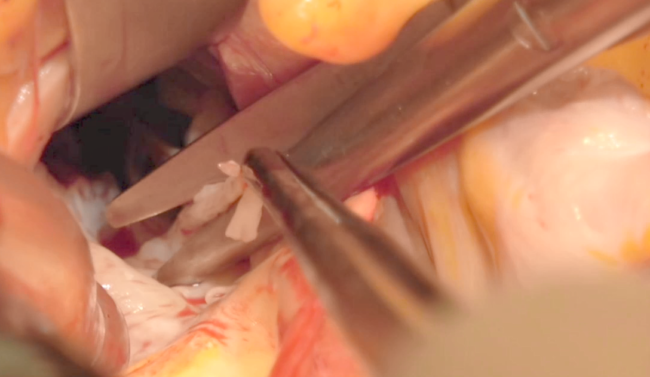
In patients with hypertrophic obstructive cardiomyopathy, sparing the mitral valve can be a great challenge for the cardiac surgeon. In fact, the anatomy of this disease is greatly inconstant with the left ventricular outflow tract (LVOT) obstruction resulting from septal hypertrophy and from several abnormalities of the mitral valve apparatus that are variably expressed in…
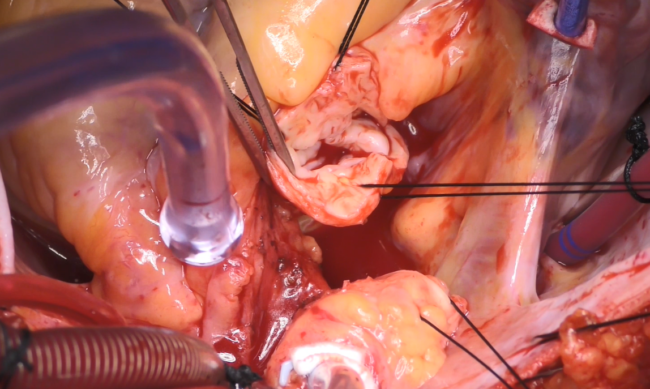
Supravalvular aortic stenosis is usually diagnosed and corrected in childhood. An adult patient with Williams syndrome presented with shortness of breath and was found to have severe supravalvular aortic stenosis and significant stenosis of the left anterior descending artery from a myocardial bridge. In this video, the authors detail the surgical technique for correction of…
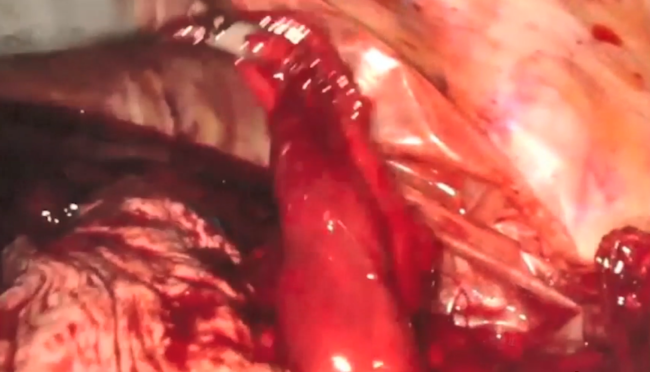
Hemothorax is second only to rib fractures as the most common complication in patients with chest trauma (1). Hemothorax following valve replacement utilizing a minithoracotomy approach on the opposite side is a rare complication of minimally invasive valve replacement. Retained clot with hemothorax can be evacuated by video-assisted thoracoscopic surgery (VATS), but 26.5% require a…
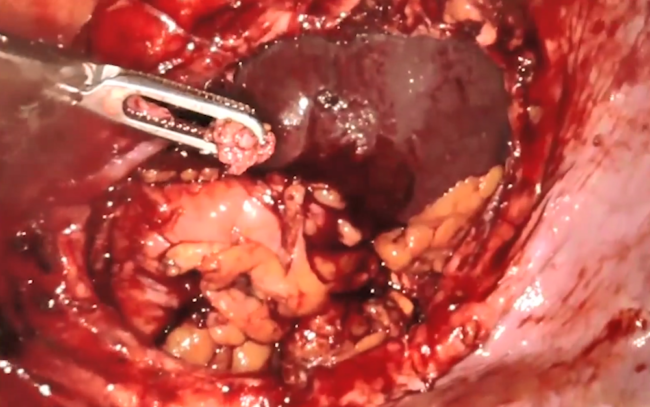
Solitary fibrous tumors (SFT) are rare neoplasms representing less than 5% of pleural tumors (1, 2). Sixty to eighty percent of SFTs arise from the visceral pleura (3, 4), but they can also arise from the parietal pleura and intrapulmonary (5). Primary therapy for SFT is wide surgical resection to reduce local tumor recurrence. Smaller…
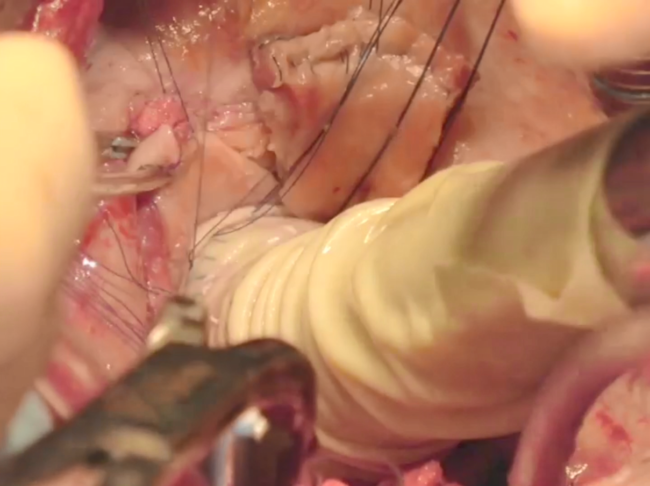
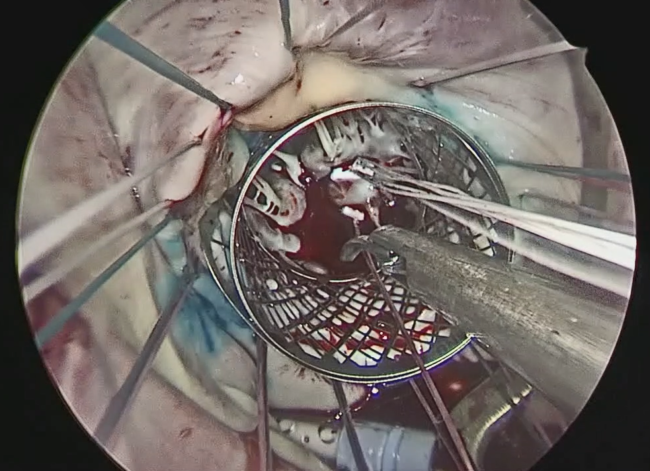
Bentall surgery, often required in patients with an aortic valve prosthesis infection, represents a great surgical challenge. Extensive periannular abscess with annular destruction and friable infected tissues may hamper a solid root reconstruction. Graft dehiscence, mitral valve distortion or dysfunction, and tension or kinking at the reimplanted coronary arteries represent the major technical concerns in…
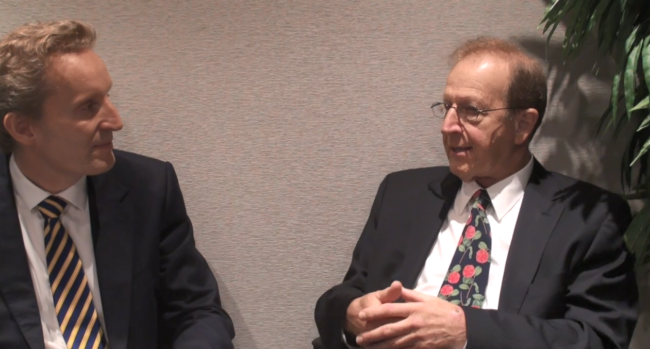
In this Giants of Cardiothoracic Surgery interview, Joel Dunning of the James Cook University Hospital in Middlesbrough, UK, speaks with Joel Cooper of the Hospital of the University of Pennsylvania in Philadelphia, USA. They discuss the road of research and learning that allowed Dr Cooper’s team to perform the first successful lung transplant, how this…
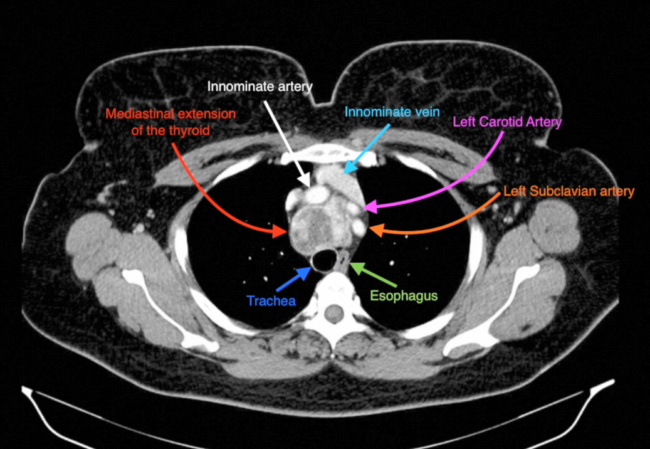
Objectives Retrosternal thyroid goiters may occur in the anterior, middle, and posterior mediastinum. Symptomatic retrosternal thyroid goiters are usually amenable to resection via a cervical incision. Sternotomy and thoracotomy are typically employed for retrosternal goiters not amenable to a cervical approach alone. The authors demonstrate a robot-assisted approach for the resection of a retrosternal thyroid…
Impaction of a foreign body in the bronchus is common. Flexible bronchoscopy with use of a cryoprobe can be conveniently used to remove an impacted foreign body in the bronchus. This video demonstrates this process. Sometimes the diagnosis can be missed. Surgeons should have a suspicion of a foreign body whenever there are atelectatic changes…
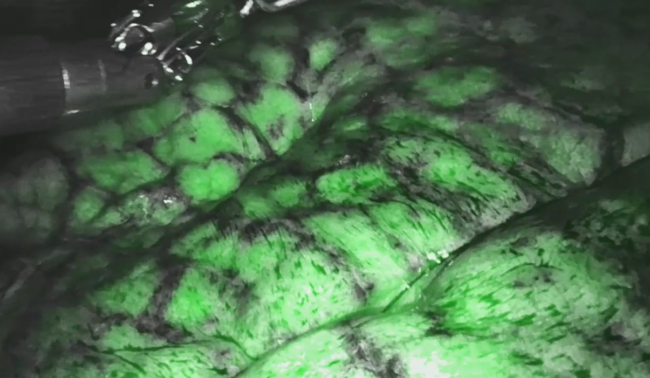
The authors demonstrate a robot-assisted lung volume reduction surgery (LVRS), performed for a 71-year-old man who was an ex-smoker with severe chronic obstructive pulmonary disease (COPD) (FEV1, 0.68 L or 22%; DLCO, 51%; MRC Dyspnea scale, 4). Extensive preoperative investigation included high resolution computed tomography with StratX lung report, bronchoscopy with Chartis balloon pressure assessment,…
This video demonstrates a totally thoracoscopic procedure for left atrial appendage closure in a patient with a contraindication to percutaneous left atrial appendage closure. The procedure highlights the videoscopic approach, procedural details, and postoperative echocardiographic control. Suggested Reading Caliskan E, Sahin A, Yilmaz M, et al. Epicardial left atrial appendage AtriClip occlusion reduces the incidence…
Unilateral phrenic nerve injury often results in symptomatic hemidiaphragm paralysis. Although diaphragmatic plication is a treatment option, phrenic nerve repair may also be considered in an attempt to restore function of the paralyzed hemidiaphragm and it may be the optimal first line treatment when feasible. Persistently symptomatic patients with phrenic nerve injury and favorable electrodiagnostic…
Filmed at the 2018 EACTS Annual Meeting in Milan, Italy, Vinicius Nina of the University Hospital of the Federal University of Maranhão in Brazil moderates a discussion on approaches for success in humanitarian heart surgery. Dr Nina is joined by Marcelo Cardarelli of the Inova Children’s Hospital in Falls Church, Virginia, USA, and William Novick of the…
A six-month-old girl presented with inspiratory stridor, difficulty feeding, and recurrent lower respiratory tract infections. On evaluation, she had a double aortic arch forming a vascular ring, compressing the esophagus and trachea. Surgical division of the vascular ring was planned to relieve the compression of the esophagus and trachea. A left posterolateral thoracotomy was done.…
The patient was a 38-year-old man with dyspnea on exertion class II and severe mitral regurgitation seen on transthoracic echocardiography. Intraoperative transesophageal echocardiography (TEE) revealed a flail A2/A3 segment and posteromedial commissure and a P3 segment prolapse. The chest was entered in the fourth intercostal space through a 3 cm right periareolar working incision. A…
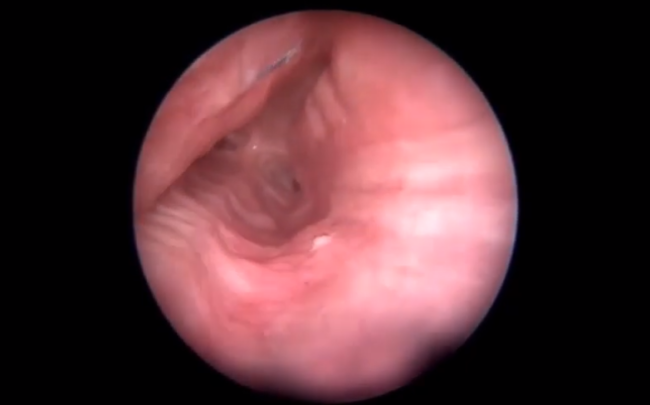
The authors present the bronchoscopic findings from a 58-year-old woman who was diagnosed with relapsing polychondritis. This video shows the results of a patch tracheoplasty, four years after the operation. The trachea and upper airways seemed normal, but the orifices of both main bronchi were significantly narrowed.
The patient was a 65-year-old man with a newly identified systolic murmur in the mitral position on routine examination, who was asymptomatic without history of atrial fibrillation, pulmonary hypertension, or left atrial enlargement. His echocardiogram showed severe mitral regurgitation with an anteriorly-directed jet and a posterior segment flail. Three-dimensional transesophageal echocardiography (TEE) showed a posterior…