Content from the Journal of the American Neurological Surgeons.
A 2.7 kg neonate who was born at 35 weeks’ gestation had a fetal diagnosis of double outlet right ventricle (DORV). He had repeated and prolonged cyanotic spells after birth, and attempts to open the ductus arteriosus with prostaglandins had failed. He required intubation and paralysis to prevent the repeated cyanotic spells. A decision was…
The surgical approach to tumors in the left secondary carina is complex due to their close proximity to the great vessels and the heart. The authors propose that the tumors in the left main bronchus can be divided into medial or lateral, depending on their relationship to the descending aorta, with the aorta being considered…
As 2025 comes to an end, the CTSNet editor team reflected on another year of incredible cardiothoracic content. The Editor-in-Chief Joel Dunning and the senior editors handpicked a collection of top content, showcasing the most innovative, fascinating submissions of 2025. Discover the best articles, videos, and interviews of the year chosen by the CTSNet editorial…
Throughout the past year, CTSNet JANS editors have excelled in curating important and engaging cardiothoracic surgery journal articles and news. They have highlighted critical topics, including the first fully robotic heart transplant in the United States performed without opening the patient’s chest and bioprosthetic vs mechanical aortic valve replacement in patients 40 to 75 years…
This year, videos related to thoracic and congenital surgery on CTSNet showcased a diverse range of procedures, from step-by-step pulmonary thromboendarterectomy for chronic thromboembolic disease to the Ross procedure using the right atrial appendage valve instead of a homograft. Continue reading for a brief recap of the most popular thoracic and congenital videos on CTSNet…
Anomalous origin of the right coronary artery from the pulmonary artery (ARCAPA) is a rare congenital coronary artery anomaly, accounting for less than 0.002 percent of all congenital heart defects. Unlike its more frequently encountered counterpart—anomalous left coronary artery from the pulmonary artery (ALCAPA)—ARCAPA often remains undetected due to its frequently asymptomatic presentation, particularly in…
This year showcased an impressive variety of innovative clinical videos in cardiac surgery. The most popular videos covered a range of cardiac procedures, from robotic beating-heart totally endoscopic coronary bypass to how to perform an upper ministernotomy. Read on for a glance at each procedure and be sure to explore the complete catalog of cardiac…
CTSNet is proud to produce high-quality podcasts, including The Beat, The Atrium, and the recently added, The Cardiac Recovery Room. As the year ends, we’re highlighting the top podcast episodes from The Atrium and The Beat. However, be sure to check out the first two episodes of The Cardiac Recovery Room today! Keep reading to…
This year, CTSNet released more educational content, featuring interviews, clinical videos, webinars, and more than ever. As the end of 2025 approaches, CTSNet editors and staff are reflecting on the most popular content shared across CTSNet’s global platform. Read on to find out which video topped the list, who our leading contributor was, and other…
This video presents a case of combined endoscopic aortic valve replacement (AVR) and left internal mammary artery (LIMA) to left anterior descending artery (LAD). Patient Profile The patient was a 68-year-old male with a history of severe aortic stenosis (AS) and triple vessel coronary artery disease. Over the years, he has undergone multiple coronary stenting procedures.…
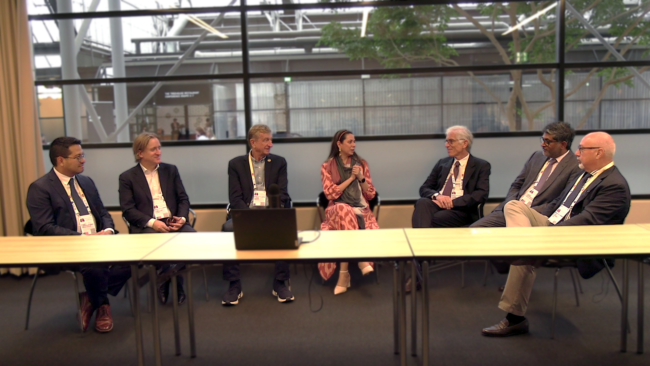
In this roundtable, cardiac surgeon and CTSNet Senior Editor Dr. Lorena Montes spoke with the board members of the Endoscopic Cardiac Surgeons (ECS) Club about minimally invasive endoscopic and robotic surgery. The members included CTSNet Senior Editor Mario Castillo-Sang (Saint Elizabeth Healthcare), Piotr Suwalski (National Medical Institute of the Ministry of Interior and Administration, Center…
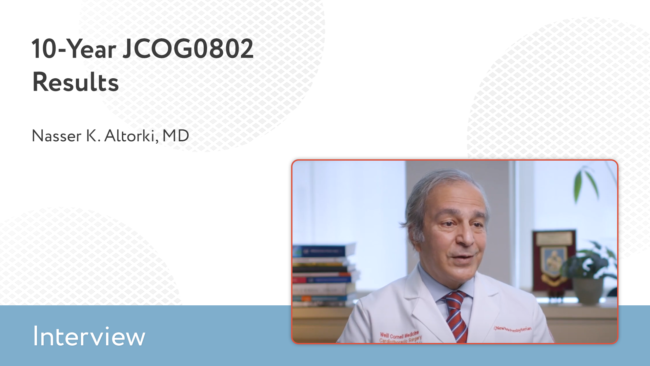
In this exceptional interview, CTSNet Editor-in-Chief Joel Dunning speaks with Dr. Nasser Altorki, thoracic surgeon at Weill Cornell Medicine in New York, and thoracic surgeon and CTSNet Senior Editor Leanne Ashrafian about the 10-year results from the JCOG0802 trial. They discuss key aspects of the trial, including the noninferiority primary endpoint. Dr. Altorki shares his…
This video is one of the top 10 entries from the 2025 Endoscopic Cardiac Surgeons Club Video Competition. More videos featuring these outstanding presentations will be showcased in the coming weeks. This video demonstrates the technique of using a periareolar incision around the nipple for access to perform endoscopic mitral valve surgery, a method that has…
This video is one of the top 10 entries from the 2025 Endoscopic Cardiac Surgeons Club Video Competition. More videos featuring these outstanding presentations will be showcased in the coming weeks. In this video, the team from Berlin Heart Center demonstrates a complex mitral valve repair in a 41-year-old male patient with P2 and P3 prolapse…
This video is one of the top 10 entries from the 2025 Endoscopic Cardiac Surgeons Club Video Competition. More videos featuring these outstanding presentations will be showcased in the coming weeks. In this video, the authors describe the repair of an anterior mitral leaflet damaged by endocarditis using a periareolar incision The patient was a 65-year-old male…
This video demonstrates the repair of a post-infarction ventricular septal defect (VSD). Initially, attempts were made at closure in the catheterization lab, but this was unsuccessful, and there was also severe tricuspid regurgitation, so the patient was brought to the operating room. A femoral venous cannula was placed to allow the inferior vena cava (IVC)…