Content from the Journal of the American Neurological Surgeons.
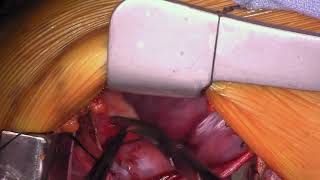
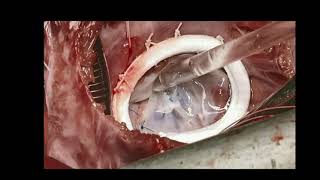
An eight-year-old female presented with at least a moderate size paramembranous ventricular septal defect (VSD) and large left-to-right shunt. This closure procedure was performed via a vertical right axillary thoracotomy (VRAT) under general anesthesia and selective lung isolation. The patient is positioned in the left lateral decubitus with the right hip rotated forty degrees to…
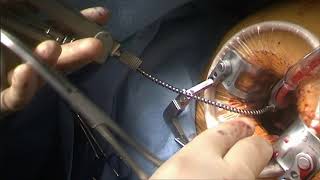
This video demonstrates the setup for a minimally invasive mitral valve surgery in a step-by-step approach. Femoral cannulation is done through an oblique incision in the right groin. Both the femoral vein and femoral artery are exposed, and a purse string suture 5-0 Prolene is taken in both vessels. The Seldinger technique is used where…
Surgical repair of a cardiac type total anomalous pulmonary venous connection (TAPVC) is a simple yet challenging surgical procedure, especially when done in a neonate. The goal of the surgery is to create an unobstructed communication of the pulmonary veins to the left atrium. It is a standard, time tested, technique to treat this important…
CTSNet associate editor Joel Dunning sits down with Dr. Sameh Said, associate professor at the University of Minnesota, who has contributed more than twenty-five videos to CTSNet. Dr. Said’s Ross Procedure After Previous Aortic Valve Repair in an Adult is a popular one. In the interview Dr. Dunning and Dr. Said discuss the ins and outs of some of his more popular articles, as…
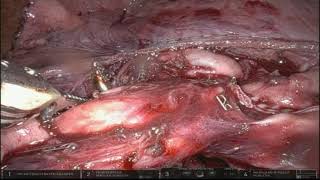
Introduction Operating in a post-surgical field has inherent technical challenges. Often, tissue preservation is important because prior excision can leave the remaining anatomy limited. In select cases, the enhanced abilities afforded by robotic-assisted surgery allow for critical tissue preservation compared to standard laparoscopic techniques. Methods A 76-year-old male presented with an incidentally found and enlarging…
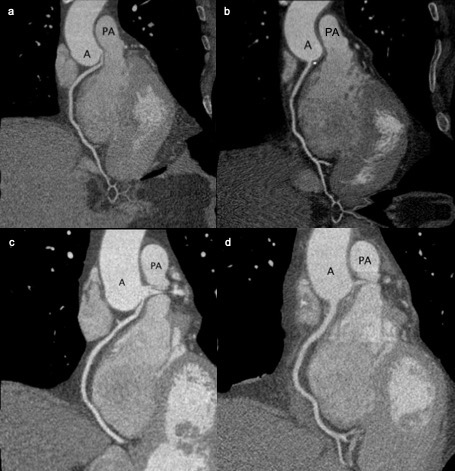
Background Historically, direct reimplantation is a technique that requires a partial aortotomy and xeno-pericardial patch (1). A recent report outlined a simplified approach for the reimplantation of a right anomalous aortic origin of a coronary artery (AAOCA) that outlined a skeletonized technique that employs the principles of a standard aortic anastomosis in coronary artery bypass…
Longstanding tricuspid valve regurgitation (TR), either of functional or organic origin, might lead to severe right ventricular (RV) dilatation and/or dysfunction. The chordal shortening caused by papillary muscle displacement secondary to marked RV dilatation results in severe leaflet tethering and progressive lack of coaptation, which makes the tricuspid valve repair surgery much more complicated. The…
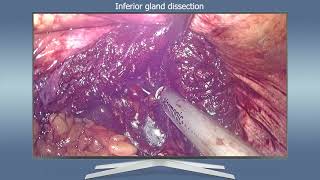
Objective Metastasis from non-small cell lung cancer (NSCLC) is traditionally considered as a contraindication to surgery. Favourable long-term survival following staged lung resection and resection of synchronous isolated adrenal metastasis has been reported in N0 patients. Considering the retroperitoneal location of the adrenal gland, the transdiaphragmatic approach offers an attractive alternative to standard approaches to…
This is the archived version of the webinar that concluded the Guest Editor Series, “Lung Cancer Screening – Health Care Disparities.” The panelists discuss the various videos contributed to the series regarding disparities in the detection and treatment of lung cancer in the United States. For access to all the videos in the Guest Editor…
This CTSNet virtual Roundtable invites experts from the Multidisciplinary Thoracic Oncology Program of the University of North Carolina at Chapel Hill to discuss health care disparities in the treatment of advanced lung cancer. Participants are Dr. Brittney Williams, fourth-year general surgery resident; Dr. M. Patricia Rivera, pulmonologist and Director of the UNC Lung Cancer Screening…
Lung cancer is the leading cause of cancer death (1). Unfortunately, lung cancer affects certain populations disproportionately in terms of risk, screening, detection, and treatment. For example, smoking increases the risk of getting lung cancer by 10 times, and those in lower income brackets and of lower education level are 2 to 3 times more…
The Home Owner’s Loan Corporation was created in the 1930s in the United States to rescue the housing market in the wake of the Great Depression. Government-backed home loans were offered, but were limited only to white Americans. Maps of urban areas were created to assess the inherent risk of investment and those areas with…
Lung cancer is the leading cause of cancer death in the United States, and it is estimated that smoking is the cause in approximately 80-90% of cases. Traditionally, tobacco prevention and cessation interventions have been the focus of efforts designed to decrease lung cancer incidence and mortality; unfortunately, these programs are not always successful, and…
In the United States, lung cancer is the second most common cancer and the leading cause of cancer mortality. Among those diagnosed, African American and black men have both the highest incidence rate and the highest age-adjusted mortality rate. Additionally, although this population has comparable rates of tobacco use to other demographics, they still have…
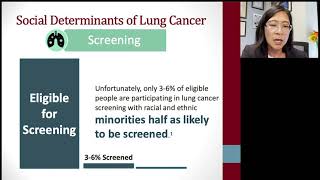
Health care disparities affect cancer screening (1). While lung cancer screening improves rates of cancer-specific mortality and is recommended for high-risk patients (2), barriers to screening still exist. First, the safety net patients may be at higher risk of harboring lung cancer. Some of the known risk factors of lung cancer such as ethnic background,…
For the CTSNet Guest Editor Series, Lung Cancer Screening – Health Care Disparities, Virginia Litle, MD, brought together video presentations and discussions to broaden our perspectives on disparities regarding the detection and treatment of lung cancer in the United States. Learn more about Dr. Litle by viewing her Featured Profile interview. There are six contributed videos…


 welcomes you to the new, improved website!