Content from the Journal of the American Neurological Surgeons.
A 57-year-old man presented with a two-year history of progressively worsening exertional dyspnea. Computed tomography revealed a 50 mm fusiform ascending aortic aneurysm. Echocardiography showed a heavily calcified bicuspid aortic valve with severe stenosis (peak/mean gradient 87/60 mmHg, aortic valve area 0.6 cm²) and preserved left ventricular ejection fraction (55 percent). Surgical Technique …
The authors present the case of a 71-year-old female former smoker who was referred for persistent right dorsal thoracic pain. Computed tomography (CT) and positron emission tomography (PET) scans revealed a 39 mm hypermetabolic tumor (SUVmax 10) in the apical segment of the right upper lobe, with direct invasion of the second rib. Preoperative staging, including endobronchial ultrasound-guided transbronchial needle aspiration (EBUS-TBNA), confirmed N0 status. With a clinical stage IIB (cT3N0M0) tumor, the patient…
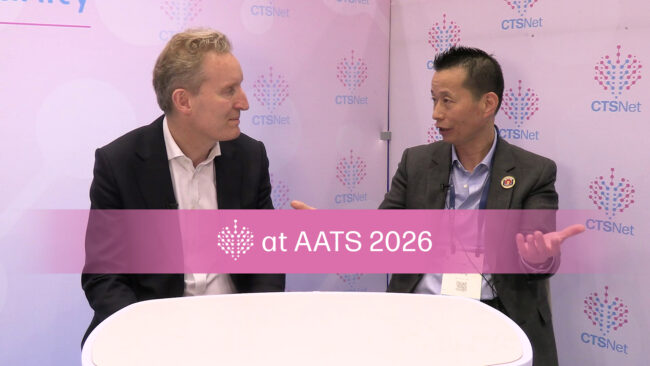
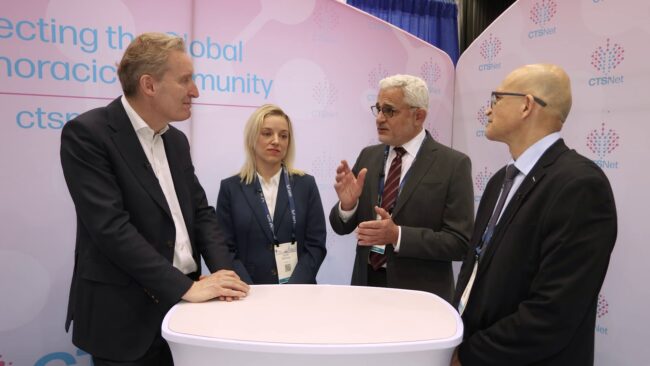
At the 2026 American Association for Thoracic Surgery (AATS) Annual Meeting, CTSNet Editor-in-Chief, Joel Dunning, a cardiothoracic surgeon at James Cook University Hospital in Middlesbrough, UK, engaged in a discussion with Dr. Bo Yang, a cardiovascular and thoracic surgeon at the University of Michigan Health in Ann Arbor, Michigan, USA, about aortic root enlargement. They explored Dr. Yang’s participation in a debate regarding the use of aortic root enlargement for…
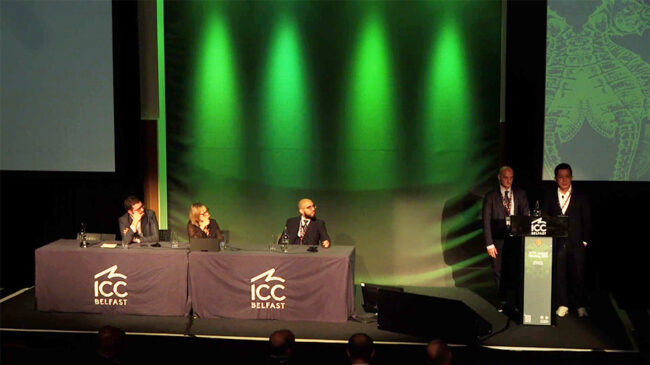
At the Society for Cardiothoracic Surgery in Great Britain and Ireland Annual Meeting, leading surgeons presented on and debated over segmentectomy vs wedge resection. Dr. Alessandro Brunelli, a consultant thoracic surgeon and Honorary Clinical Associate Professor at St. James’s University Hospital, Leeds, UK, spoke on the topic of “Segmentectomy Is the Operation of Choice for Peripheral <2cm Stage I NSCLC.” He addressed the results of…
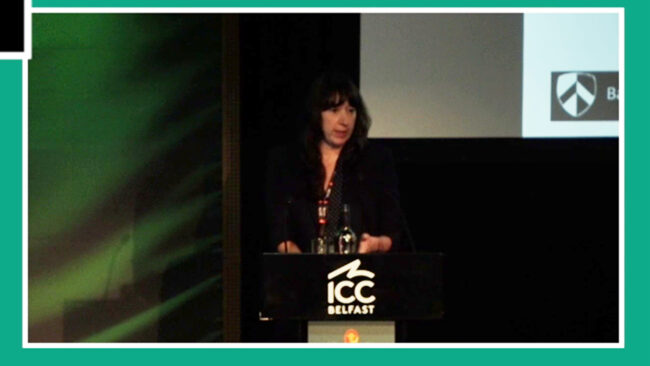
At the Society for Cardiothoracic Surgery in Great Britain and Ireland Annual Meeting, leading surgeons presented on the management of early-stage non-small cell lung cancer (NSCLC). Dr. Henrietta Wilson, a consultant thoracic surgeon at Barts Thorax Center, London, UK, delivered a presentation on “Are All Segments Equal?” She explored lung resection data and explored whether postoperative pulmonary function (PPF) varies depending on the segmentectomy and patient. She also discussed the JCOG0802 trial, preservation…
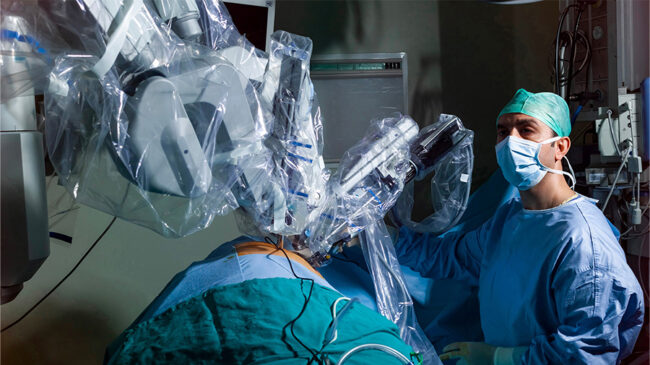
The authors present a robotic-assisted right bilobectomy performed for coexisting right upper lobe bronchiectasis and synchronous middle lobe adenocarcinoma, highlighting the management of dual pathology in the setting of dense inflammatory adhesions. A 45-year-old male with a longstanding history of cough and dyspnea was found to have localized bronchiectasis in the right upper lobe along with a suspicious lesion in…
At the Society for Cardiothoracic Surgery in Great Britain and Ireland Annual Meeting, leading surgeons presented on aortic dissection. Dr. Martin Czerny, a consultant cardiovascular surgeon at University Hospital Freiburg, Germany, delivered a presentation titled “Non-A Non-B Aortic Dissection: The Enemy of Both Worlds.” He explored the aorta as an organ, delving into the understanding of disease mechanisms and the German Registry for Acute Aortic Dissection…
Background and Rationale Coronary artery bypass graft (CABG) surgery remains a cornerstone treatment for advanced coronary heart disease. However, the long-term efficacy of CABG is frequently compromised by the failure of saphenous vein grafts (SVGs). Unlike arteries, veins are not physiologically adapted to the high-pressure arterial environment, leading to pathological tissue remodeling, neointimal hyperplasia, and…
Anatomic segmentectomy has emerged as an effective option for the management of early-stage lung cancer; however, the division of intersegmental parenchyma remains technically challenging. The authors describe and illustrate the exclusion technique, a bronchus-last strategy that utilizes an endoleader catheter to guide parenchymal division and simplify segmentectomy. Methods The exclusion technique involves dissection and division…
This is a case presentation of an eight-day-old female who presented with an anomalous left pulmonary artery (LPA) diagnosed by fetal ultrasound. A preoperative transthoracic echocardiogram demonstrated an anomalous LPA located 4 mm above the ascending aortic sinotubular junction, with right ventricular dilation, a mildly diminished right ventricular (RV) systolic volume of 29.6 percent, and RV hypertension (HTN) of 36.36 mmHG. Additionally, there was a patent right ductus arteriosus. This diagnosis was confirmed with a sagittal computed tomography angiography (CTA) scan. Due…
This video demonstrates a simplified ring-only mitral valve repair technique for patients with symmetrical bileaflet mitral valve prolapse, annular dilatation, and centrally directed multiple jets of mitral regurgitation. The technique is particularly suitable for minimally invasive mitral valve repair and serves as an alternative to sliding plasty in selected cases. The operative strategy was based on the implantation of the largest available annuloplasty ring to…
A 9-day-old neonate weighing 2.2 kg, who had passed the neonatal screen for critical congenital heart disease, was re-admitted with heart failure symptoms, including lethargy and failure to thrive. A murmur was heard, and a transthoracic echocardiogram confirmed a large aortopulmonary window (APW) and the origin of the right coronary artery (RCA) from the main pulmonary artery (ARCAPA). Through standard median sternotomy, cardiopulmonary bypass was initiated. After achieving…
Robotic thoracic surgery provides superior precision and enhanced ergonomics compared to video-assisted thoracoscopic surgery, primarily due to its three-dimensional visualization and wristed instruments. These advantages facilitate meticulous dissection and more comprehensive lymphadenectomy in complex resections, ultimately contributing to improved surgical outcomes (1). As an advanced evolution of minimally invasive surgery, single-port robotic surgery offers several advantages over multiport robotic…
At the 2026 American Association for Thoracic Surgery (AATS) Annual Meeting, CTSNet Editor-in-Chief, Dr. Joel Dunning, a cardiothoracic surgeon at James Cook University Hospital in Middlesbrough, UK, engaged in a discussion with Dr. Husam Balkhy, Professor of Surgery and the Director of Robotic and Minimally Invasive Cardiac Surgery at the University of Chicago Medicine in Chicago, Illinois, USA. Joining them were Drs. Sarah Nisivaco, a research assistant at the University of Chicago Medicine, and Bob Kiaii, a…
At the 2026 American Association for Thoracic Surgery (AATS) Annual Meeting, CTSNet JANS Editor Dr. Mateo Marin-Cuartas, a cardiac surgeon at Leipzig Heart Center, Germany, spoke with Dr. Michael Borger, Chair of the University Clinic for Cardiac Surgery and the Medical Director at the Leipzig Heart Center. Their conversation focused on the effects of mitral surgery on ventricular arrhythmias in patients with arrhythmic mitral valve prolapse. During their discussion, they explored what mitral valve…
Diaphragmatic defects involving the central tendon are uncommon and may present diagnostic uncertainty, particularly when identified incidentally on imaging. Surgical management can be technically challenging due to attenuated tissue quality and close proximity to vital structures, including the liver and inferior vena cava. The authors present a video case report with intraoperative footage of a patient undergoing robotic repair of diaphragmatic herniation through a fenestrated…