Content from the Journal of the American Neurological Surgeons.
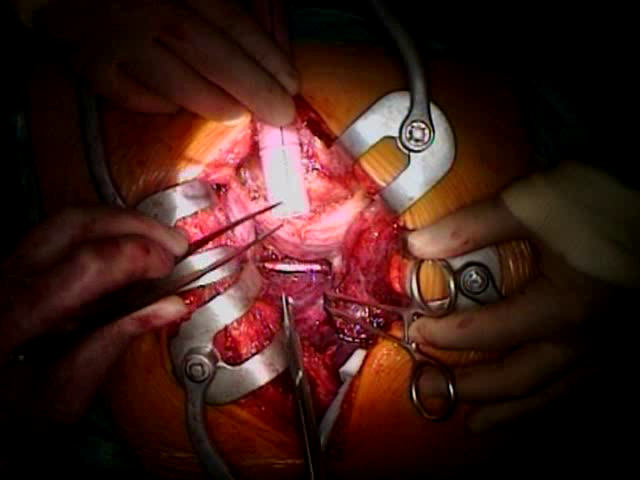
In this article the authors describe the steps in performing TEMLA as it is currently practiced in their institution. Videos are included to enhance its utility. Patient Selection Transcervical extended mediastinal lymphadenectomy (TEMLA) was developed to enhance lymph node sampling obtained by conventional mediastinoscopy1. Even though mediastinoscopy is accurate, false positive and false negative results still occur2. In an…
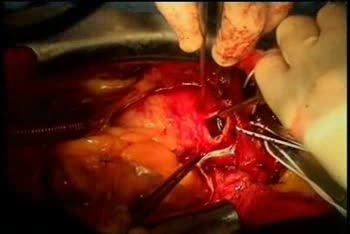
UPDATE: A follow-up video has been added that demonstrates how to manufacture the chordae system. The AHA/ACC guidelines for treatment of valvular heart disease state that mitral valve repair is the treatment of choice for patients with symptomatic severe MR. However, it is unfortunate that in USA and Europe the valve is repaired in only 50%…
Introduction Chordomas are rare, slow-growing neoplasms derived from notochord remnants which form the early spine in fetal development. Most of the notochord is replaced by spine during the first six months of maturity, but small areas can remain and form chordomas accounting for 1-4% of all skeletal tumors [1]. These occur in the mid-line of…
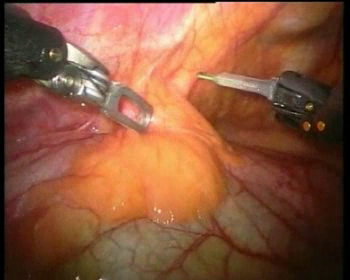
Patient Selection Surgical interruption of intrathoracic autonomic neural pathways has several useful clinical applications, particularly thoracic sympathectomy for upper limb hyperhidrosis and splanchnicectomy for relief of pancreatic pain. The advent of video-thoracoscopy has lead to an explosion in the application of this minimally invasive technology for this purpose. Endoscopic thoracic sympathectomy (ETS) has been proved…
Introduction Recent developments in cardiac care have led to new therapies integrating surgical procedures with skin incisions and interventions, e.g. transcatheter techniques with the puncture of a vessel. To allow these procedures, integrated operating rooms have to be installed. These hybrid operating rooms need in excess of surgical equipment high-end imaging equipment equivalent to the…
Patient Selection Flail chest complicates about 10% to 20% of patients with blunt chest trauma and is associated with a mortality rate ranging from 10% to 35% [1-4]. The management of severe flail chest has gradually changed over years, as a consequence of improved ventilatory techniques and better understanding of the pathophysiology of the complex…
Ralph J. Damiano, Jr., MD, is the John M. Shoenberg Professor of Surgery and chief of cardiac surgery at Washington University School of Medicine. He received his medical degree from Duke University and went on to complete his general surgery and cardiothoracic surgery training at Duke University Medical Center, working for James Cox, the founder…
Dr. Juro Wada passed away on February 14, 2011 at his home in Tokyo, Japan. He was 88 years old. Dr. Wada was a pioneer in cardiothoracic surgery in Japan and was well-known among American and European surgeons by the nickname of “Jelly Wada”. Dr. Wada was also a confident and energetic teacher and mentor.…
Job Satisfaction Survey Assessment This survey was designed to evaluate the effects of increasing clinical workload, growing pressures for documentation and other paperwork, and decreasing income on a variety of aspects related to job satisfaction. The components of professional activity were scored by 250 respondents using a range of responses from 1 (very dissatisfied) through…
Replacement of the aortic valve remains an effective treatment of severe aortic stenosis (AS). The authors provide a brief introduction into catheter-based approaches for the treatment of severe AS, with a focus on the operative techniques. Introduction Replacement of the aortic valve remains an effective treatment of severe aortic stenosis (AS). With the aging population,…
Side-graft right axillary artery cannulation with a lateral anterior approach through the deltoid-pectoral groove, as shown in the video, is an easy technique to establish arterial inflow for cardio-pulmonary bypass in the treatment of type-A aortic dissections and aortic arch aneurysms. Between October 2008 and November 2009, 18 patients underwent right axillary artery cannulation using…
Systematic nodal dissection is increasingly becoming an integral part of VATS lobectomy for early lung cancer. This video gives details demonstrating the author’s technique of en-bloc mediastinal nodal dissection, which is a modification of the original Naruke technique. The azygos vein and the ligamentum arteriosum are always preserved. The relevant anatomical details of the thoracic…
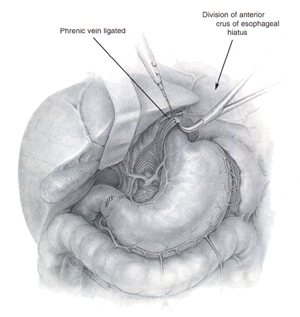
Patient Selection Figure 1. Barium swallow demonstrating a giant paraesophageal hernia. Gastroesophageal reflux disease is extremely common in North America. The majority of these patients will have a simple type I hiatus hernia. The approach to this repair is usually by laparoscopic Nissen fundoplication. Much less frequently patients will present with a giant paraesophageal hernia…
Dr. Mack began his practice in Dallas in 1982 and soon became involved in the creation and development of minimally invasive surgical techniques including video assisted thoracic surgery (VATS). He was also instrumental in the development of endoscopic spine surgery and has continued research on endoscopic applications of cardiac surgery. Michael Mack, MD, has been a…
As one of the country’s current leaders in the field of thoracic surgery, Mark B. Orringer, MD, has focused much of his academic career on the diagnosis and treatment of benign and malignant esophageal disease. He has developed two leading esophageal operations: the combined Collis-Nissen hiatal hernia repair and transhiatal esophagectomy without thoracotomy. Dr. Orringer…
David P. Taggart, MD, reviews the Guidelines on Myocardial Revascularization, developed in 2010 by the European Society of Cardiology (ESC) and the European Association for Cardio-thoracic Surgery (EACTS). Dr. Taggart is a cardiac surgeon at the John Radcliffe Hospital in Oxford. After becoming a consultant, he completed a PhD and wrote a systematic review on…