Content from the Journal of the American Neurological Surgeons.
In 1984, Nikaidoh described the concept of aortic translocation for the management of transposition of the great arteries (TGA) with a ventricular septal defect (VSD) and pulmonary stenosis (PS). Patients with TGA/VSD/PS or double-outlet right ventricle (DORV) with malposed great vessels and PS who also present with a restrictive or inlet-type VSD, a hypoplastic right…
En bloc rotation of the outflow tracts offers a complete anatomic repair of complex transposition of the great arteries, with growth potential in all tubular structures and the option of preserving the native pulmonary valve in appropriate cases. It was first published by Dr Yamagishi and colleagues (2003) under the name “half-turn truncal switch procedure.”…
For CTSNet’s first Congenital Guest Editor Series, Advances in Surgical Treatment of Complex Conotruncal Malformations, we asked Dr Viktor Hraska of the Herma Heart Center at the Medical College of Wisconsin to bring together videos from experts focused on techniques for improving patient outcomes in the face of these rare but serious conditions. Dear Reader,…
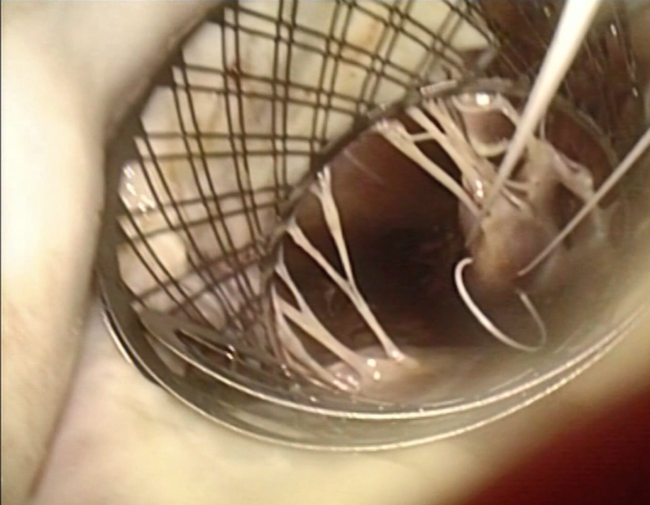
The authors present the surgical treatment performed for a 75-year-old woman with severe aortic and mitral stenoses due to postradiation therapy. There was severe mitral annular calcification in both the anterior and posterior annulus. She had severe mitral and tricuspid regurgitation and her right coronary artery (RCA) was occluded. During the preoperative evaluation, she was…
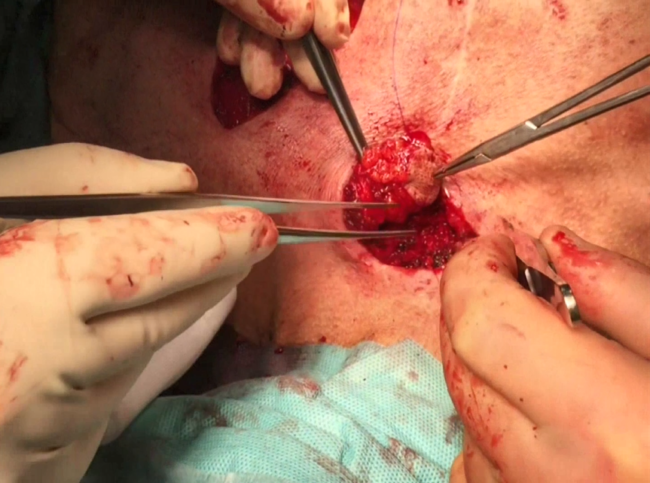
Introduction Glomus tumors (GT) are rare benign neoplasms mostly affecting the deep dermis of extremities, and they constitute less than 2% of all soft tissue tumors. GTs can sporadically appear extracutaneously in the gastrointestinal tract, bone, cervix, and ovary, but GT occurrence in major airways is extremely rare. Only about 40 cases have been reported…
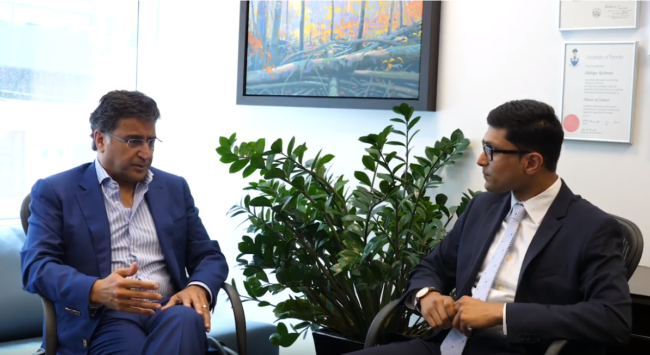
In this Giants of Cardiothoracic Surgery interview, Vaibhav Gupta of the University of Toronto in Ontario, Canada, speaks with Shaf Keshavjee of the Toronto General Hospital about his career and his experience as a surgeon-scientist. They discuss Dr Keshavjee’s training in the University of Toronto surgeon-scientist program, balancing time between clinical and research responsibilities, and…
Introduction Tracheocutaneous fistula (TCF) is one of the most feared complications after prolonged tracheostomy. Problems related to the TCF include the increased possibility of respiratory infections, difficulty in phonation, ineffective coughing, skin irritation, cosmetic problems, limitations in swimming and bathing, and social problems. Its incidence ranges widely from 3.3% to 43%, and the persistence of…
The authors demonstrate a video-assisted minimally invasive mitral valve repair via an anterolateral right minithoracotomy. The patient was a 54-year-old man who was referred to the authors’ department with severe dyspnea. Echocardiography revealed impaired left ventricular function and severe mitral valve regurgitation due to posterior mitral leaflet and posteromedial commissure prolapse, in addition to ruptured…
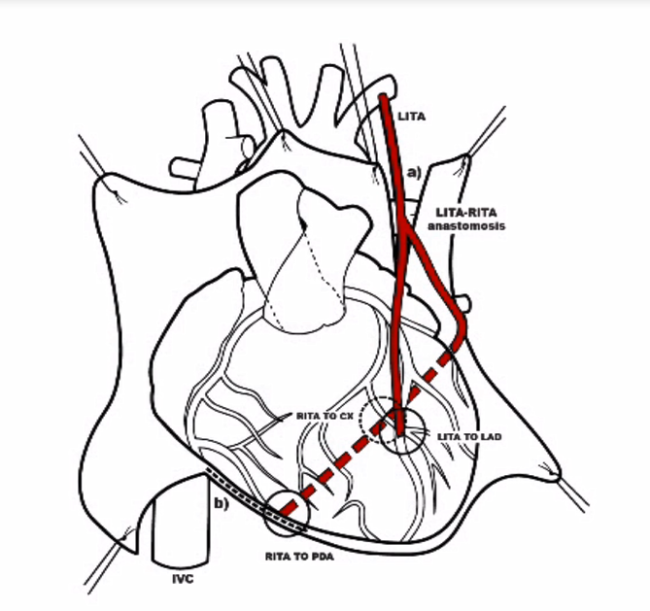
The use of both internal thoracic arteries (ITAs) has been shown to provide a decreased risk of death, need for reoperation, or need for percutaneous coronary intervention when compared with one ITA in combination with vein grafts. Inadequate length of the free right ITA (RITA) has often limited the ability to bypass the posterior marginal…
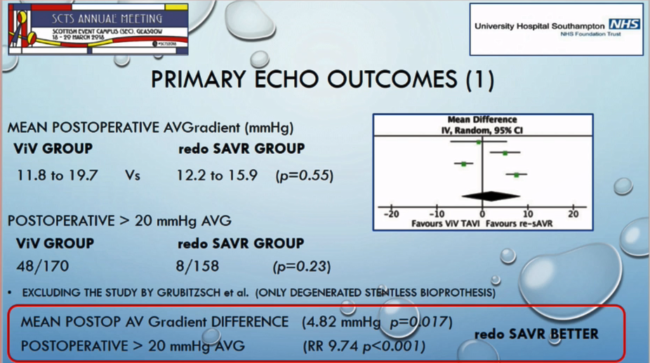
Clifford W. Barlow of the Southampton General Hospital in the United Kingdom presents a discussion on the optimal treatment for failing surgical prosthetic valves within the context of aortic valve disease. This presentation was originally given during the SCTS Ionescu University program at the 2018 Annual Meeting of the Society for Cardiothoracic Surgery in Great…
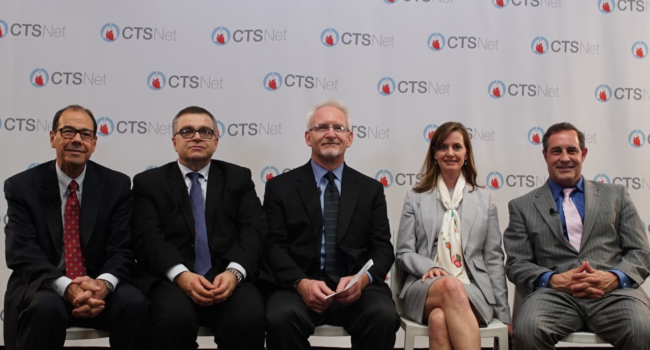
Mark Ferguson of the University of Chicago presents a discussion on technical innovations in minimally invasive thoracic surgery. He is joined by Thomas D’Amico of Duke University Medical Center in Durham, North Carolina; Gaetano Rocco of the National Cancer Institute, Pascale Foundation in Naples, Italy; Robert Cerfolio of the University of New York University Langone…
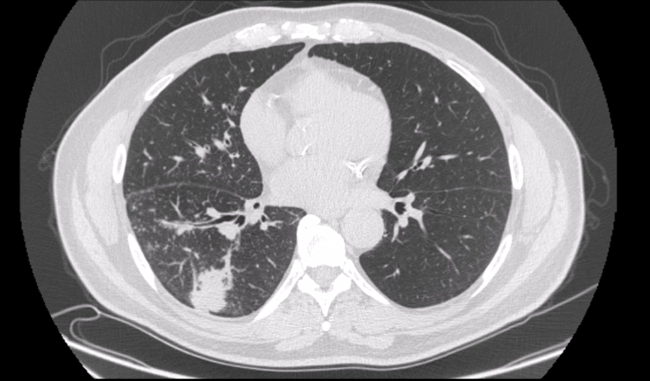
A 53-year-old man with no comorbidity was referred to the authors’ unit because of a multifocal wild-type adenocarcinoma of the right lung. A positron emission tomography scan was negative for metastasis and an endobronchial ultrasound-guided transbronchial needle aspiration staging of the mediastinum showed no lymph node involvement. After a multidisciplinary meeting, a right pneumonectomy indication…
The patient was a 35-year-old woman. She had a cardiovascular history of obesity and an ischemic stroke with a right brachiocrural focus and expressive aphasia in 2012-2013. She continues to have a slight sequel in speech. The transthoracic echocardiogram showed a pedicled image adhered to the ventricular surface of segment P2 of the mitral valve…
Objective The authors present a video-assisted thoracoscopic surgical (VATS) technique for diaphragmatic plication due to phrenic nerve paralysis. The primary goal of this procedure is to decrease abdominal compression over not only the lower pulmonary lobe, but also the pericardial sac. The authors believe that the pericardial compression is also responsible for these patients’ decreased…
The 2018 Annual Meeting of the International Society for Minimally Invasive Cardiothoracic Surgery (ISMICS) took place in Vancouver, Canada, in June. Among the meeting sessions were the Subramanian Innovation Award Presentations, where three finalists presented minimally invasive cardiothoracic surgery innovations in competition for $5,000 to support the implementation of their innovation. The Subramanian Innovation Award…
Alan J. Bryan of the Bristol Heart Institute in the UK argues that on-pump coronary bypass surgery is as good an option as off-pump surgery for patients with high surgical risk. He focuses on the evidence available to compare on-pump and off-pump coronary bypass grafting and also comments on the application of hybrid robotic approaches.…