Content from the Journal of the American Neurological Surgeons.
Currently in its 32nd year, the Birmingham Review Course is the longest-running course in the cardiothoracic specialty. The 2025 course promises an immersive learning experience featuring didactic lectures and interactive seminars on cardiac and thoracic topics, along with opportunities to engage with an international faculty. The 2025 Birmingham Review Course will take place from September…
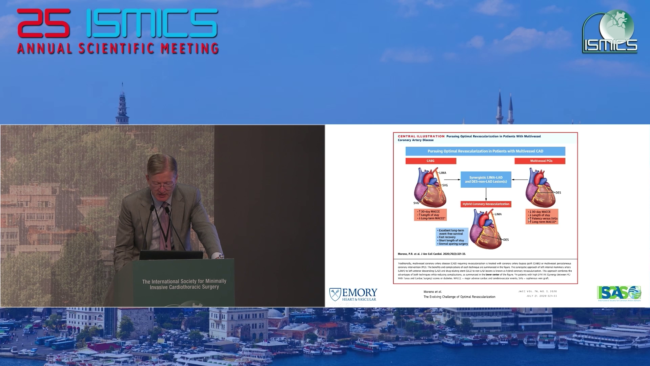
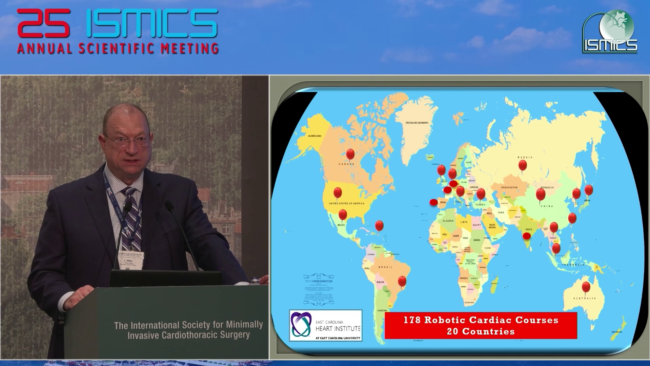
In May 2025, the International Society for Minimally Invasive Cardiothoracic Surgery brought together professionals in the field of cardiothoracic surgery to discuss and share knowledge on minimally invasive techniques. Watch for more ISMICS 2025 videos in the coming weeks. At the International Society for Minimally Invasive Cardiothoracic Surgery Annual Scientific Meeting 2025, Dr. John…
The patient was a 72-year-old female who presented with exertional dyspnea. Transthoracic echocardiography revealed rheumatic changes involving both the aortic and mitral valves, with findings of severe aortic stenosis and moderate mitral regurgitation. The patient was positioned supine with a pillow placed behind her back to elevate the chest, and the right arm was lowered…
Join the global cardiothoracic community for the 40th EACTS Annual Meeting where you’ll have the opportunity to connect with leading experts, explore pioneering innovations and scientific breakthroughs, and experience unparalleled opportunities for collaboration and exchange. Secure your place today and take advantage of the early bird registration rates before July 1, 2026. Register Your Place…
This video submission is from the 2025 CTSNet Instructional Video Competition. Watch all entries from the competition, including the winning videos. Preoperative Transesophageal Echocardiogram (TEE) Pre-procedure intraoperative TEE revealed left ventricular ejection fraction (LVEF) of 50 percent, severe aortic regurgitation, large vegetations on the aortic valve and the tricuspid valve, and a communicating abscess between the…
In this video, Dr. Vince Gaudiani demonstrates his closure technique for an upper ministernotomy. He frequently employs this approach with a femoral venous cannula and often also uses a femoral arterial cannula. This technique is applicable for a range of aortic and mitral operations. However, it is important to understand how to close the sternotomy…
This video submission is from the 2025 CTSNet Instructional Video Competition. Watch all entries from the competition, including the winning videos. The patient was a 43-year-old male with no past medical history who developed persistent dyspnea after a viral illness. Workup was notable for an elevated left hemidiaphragm on chest X-ray. After a trial of conservative…
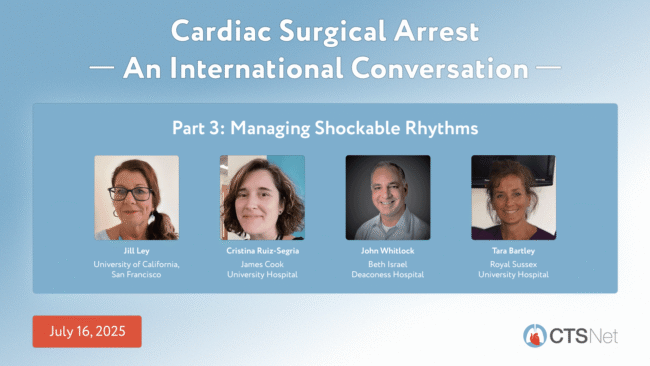
This ongoing discussion of cardiac surgical resuscitation (CSR/CALS) management is a five-part series led by Jill Ley, Nurse Educator at Essentials of Cardiac Surgical Resuscitation. The series features a panel of international experts including Tara Bartley, Corporate Lead for Advanced Practice, University Hospitals Sussex; Cristina Ruiz-Segria, Surgical Care Practitioner, Jame Cook University Hosptial; and John…
A 44-year-old male with past medical history of mechanical aortic valve replacement presented with methicillin-sensitive Staphylococcus aureus (MSSA) bacteremia secondary to a dialysis fistula infection. He developed complete heart block, which required temporary transvenous pacing wires placement. During surgery, the prosthetic aortic valve was explanted, and a large abscess cavity was observed underneath the left…
This video submission is from the 2025 CTSNet Instructional Video Competition. Watch all entries from the competition, including the winning videos. Adult patients with Ebstein’s anomaly remain a challenging subset to manage. In this video demonstrates a one-and-a-half ventricle repair combined with aortic valve repair. A 25-year-old female presented with dyspnea on exertion and easy…
Cardiac surgeons frequently encounter transposition of the great arteries (TGA) and total anomalous pulmonary venous connection (TAPVC). Coexisting transposition of the TGA and TAPVC is a rare combination, with the infracardiac variety being even rarer. So far, only seven cases have been described in literature with combined infracardiac TAPVC and TGA, with only one case…
This video submission is from the 2025 CTSNet Instructional Video Competition. Watch all entries from the competition, including the winning videos. In this video, the authors discuss the surgical repair of post-infarction ventricular septal defects (VSD) using a double patch sandwich technique with simultaneous left ventricular (LV) aneurysmal repair. Patient 1 was a 60-year-old male with…
In May 2025, the International Society for Minimally Invasive Cardiothoracic Surgery brought together professionals in the field of cardiothoracic surgery to discuss and share knowledge on minimally invasive techniques. Watch for more ISMICS 2025 videos in the coming weeks. At the International Society for Minimally Invasive Cardiothoracic Surgery Annual Scientific Meeting 2025, Dr. L.…
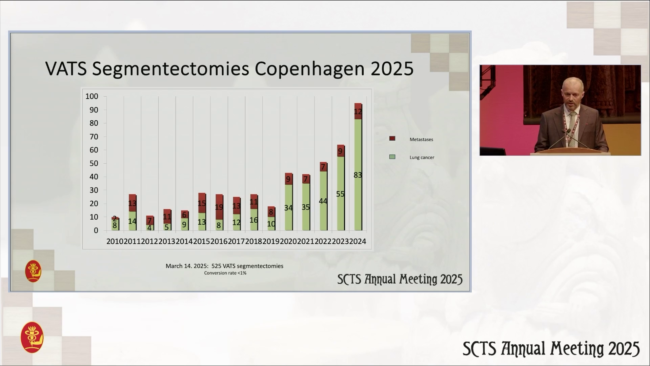
In March 2025, the Society for Cardiothoracic Surgery in Great Britain and Ireland held its annual meeting, bringing together professionals in the field of cardiothoracic surgery to discuss the latest advancements in technologies and techniques. Watch for more SCTS 2025 videos in the coming weeks. At the Society for Cardiothoracic Surgery in Great Britain…
Minimally invasive cardiac surgery is increasingly becoming a standard approach for the treatment of various cardiac pathologies. Minimally invasive techniques are well established for isolated procedures such as mitral and/or tricuspid valve repair, aortic valve replacement (1), and coronary artery bypass grafting (CABG) (2), particularly when involving the left internal mammary artery (LIMA) to the…
This video submission is from the 2025 CTSNet Instructional Video Competition. Watch all entries from the competition, including the winning videos. This video shows the technique for harvesting the left internal mammary artery (LIMA) through a left minithoracotomy using thoracoscopic assistance. The authors recommend using a 30-degree or zero-degree scope and a retractor kit. The procedure…