Content from the Journal of the American Neurological Surgeons.
Surgical stapling devices have been used in Thoracic surgery for over 20 years and have proven as reliable as suturing for the bronchus, pulmonary artery, pulmonary vein or lung parenchyma. They have allowed for the widespread application of thoracoscopy to complex procedures within the chest. Introduction Surgical stapling devices have been used in Thoracic surgery…
Bronchoscopic alternatives to lung volume reduction surgery (LVRS) have been recently proposed; the airway bypass [1-3] and bronchoscopic lung volume reduction (BLVR) are certainly one step beyond current LVRS practice. In particular, BLVR with one–way valves has been attempted in the experimental laboratory [4] and in selected clinical settings [5-8]. The one–way valve allows air…
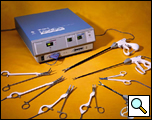
Various diathermy techniques have been proposed to reduce intraoperative blood loss in surgery. In particular, standard bipolar technology is able to coagulate small vessels, with a diameter ranging from 1 mm to 3 mm, but it has some disadvantages, including sticking, charring, and significant thermal spread [1,2]. A new electrothermal bipolar tissue sealing system (LigaSure,…
Operative Steps The patient is anesthetized in the supine position and intubated with a single lumen endotracheal tube. Defibrillator patches are placed on the patient’s back and anterior left chest wall. A transesophageal echo Doppler probe is placed to assess the pathoanatomy of the aortic valve disease and assist in removing air from the heart…
Operative Steps The patient is positioned supine, anesthetized and intubated with a single lumen endotracheal tube and then prepped and draped in the usual fashion. Defibrillator patches are placed on the patient’s back and anterior left chest wall. A transesophageal echo probe is placed to assess the pathology of the mitral valve disease and assist…
Operative Steps Modified Subcoronary Implantation AortotomyPartially transect the aorta in a horizontal fashion 1.5 to 2 cm above the right coronary. Looking inside the aorta, extend the incision to the left ending 1.5 to 2 cm above the left coronary ostia, and to the right, ending 1.5 to 2 cm above the left non-coronary commissure…
Patient Selection Introduction In the past 15 years valve-preserving aortic replacement has evolved into an increasingly accepted alternative to composite replacement of aorta and valve. Preservation of the native valve has the obvious advantage of obviating the need for anticoagulation, and there is increasing evidence that it minimizes the overall incidence of valve-related complications. Two…
Patients are selected for bilateral closed chest pulmonary vein (PV) isolation, left atrial appendage excision, directed partial cardiac denervation, and PV electrocardiograms (MiniMAZE-Wolf technique), based on the following criteria… Patient Selection Patients are selected for bilateral closed chest pulmonary vein (PV) isolation, left atrial appendage excision, directed partial cardiac denervation, and PV electrocardiograms (MiniMAZE-Wolf technique),…
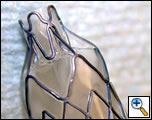
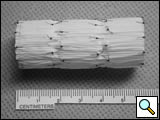
Patient Selection Editor’s Note The technique proposed by Dr. Song provides an elegant solution to a problem of increasing magnitude : How do we stent a descending thoracic aorta which measures less than 24mm in diameter? The off-label use of abdominal aortic or peripheral vascular stents has certainly produced good results in the hands of…
Patient Selection Figure 1: The Jarvik 2000 Flowmaker Left Ventricular Assist Device. Left ventricular assist devices (LVAD) are now part of the routine armamentarium of surgeons for mechanical support of the failing heart. Despite improving perioperative and long-term results over the last decade [1-3], LVAD use is still associated with significant morbidity and mortality. Traditional…
Patient Selection Traumatic thoracic aortic transection (TSXN) is a potentially lethal injury that occurs following blunt injury to the chest, most commonly as the result of motor vehicle crashes or falls [1]. Endograft repair of thoracic aortic TSXN is increasingly utilized as a less invasive alternative to open surgical repair [2]. Currently available thoracic endografts,…
Operative Steps Upon Arrival Call transplant center to indicate arrival at the site of donor harvest. Ascertain the organs to be taken and specific plans for each donor retrieval team. Assess patient’s hemodynamic status. If necessary, optimize hemodynamic status by volume loading and weaning beta adrenergic pressers and beginning alpha agents to maintain perfusion. Review…
Operative Steps Incision A midline sternotomy is generally employed A minimal approach using a lower ½ sternotomy may also be employed. Cardiopulmonary bypass The operation is performed on cardiopulmonary bypass using a single venous cannula (two stage) with oxygenated blood return to the ascending aorta. Two venous cannulae are employed in cases of extensive infection…
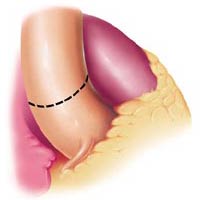
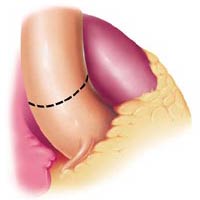
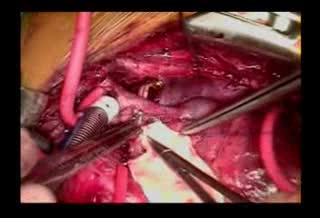
Partial anomalous pulmonary venous connection of the left upper lobe to a vertical vein is a rare congenital anomaly which can give rise to significant left-to-right cardiac shunting. We present the surgical technique employed in addressing this lesion through a left thoracotomy and include a video demonstration of the procedure. Introduction Partial anomalous pulmonary venous…
Introduction Dr. Gerbode first described a left ventricle (LV) to right atrial (RA) shunt in 1958. These defects are usually congenital, but cases of acquired defects secondary to aortic or tricuspid valve endocarditis have been described. The acquired defect differs from the congenital defect in that it is a direct communication between the left ventricle…