Content from the Journal of the American Neurological Surgeons.
For this CTSNet Guest Editor Series, Surgical Management of Acute Aortic Dissections: Tricks and Tips to Simplify the Operation, we asked Konstadinos A. Plestis, MD, to bring together videos that highlight techniques to effectively treat this lethal disease. A series video will be released each day through December 7. Video titles are listed below this…
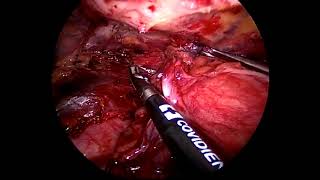
The second of twelve videos in a CTSNet series on Thoracic Surgical Oncology – Technical Approaches by Professor Tristan D. Yan is presented here. To see the complete list of videos in the Thoracic Surgical Oncology video series, click here. This video, narrated by Joel Dunning of Middlesbrough, UK, demonstrates a fascinating case of robotic…
The authors present a repeat median sternotomy with a Ross procedure after previous aortic valve (AV) repair. This was a 31-year-old man with a BMI of 29 kg/m2 who presented with exertional dyspnea and fatigue. His past medical/surgical history was significant for congenital bicuspid AV stenosis for which he underwent balloon aortic valvuloplasty at 10…
Cardiac surgeons frequently deal with transposition of the great arteries (TGA) and total anomalous pulmonary enous Cocnnection (TAPVC), common cyanotic congenital heart diseases (CHD). However, the association of TGA with TAPVC is rare. It is a medical condition that arises when the pulmonary venous blood is delivered to the systemic ventricle without pulmonary over circulation.…
A 2 kg girl was transferred from another hospital to the ICU of Siyami Ersek Thoracic and Cardiovascular Surgery Training and Research Hospital with a preliminary diagnosis of a hypoplastic left ventricle (AA/MA) and supracardiac TAPVR. The echocardiography showed mitral atresia, aortic atresia, 1 mm diameter ascending aorta, and mild stenosis in a vertical vein…
Myocardial bridge refers to the intramuscular course of portion of the LAD, resulting to its luminal compromise during systole, and therefore symptoms of myocardial ischemia. Patients with myocardial bridge present with atypical angina, persistent over months or years, and are aggravated by a strong psychological component. Often, patients symptoms cannot be objectified, and they feel…
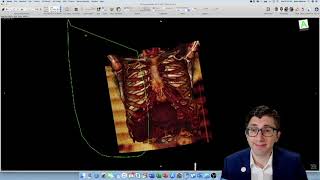
Over the last 20 years, there has been an exponential growth in technological capabilities in medicine. The quality of imaging and diagnostic tools has increased drastically. Advanced imaging and reconstruction of CT scans is now routinely utilized in many surgical specialties, and in cardiothoracic surgery specifically, it is commonly utilized in structural heart programs. Adoption…
CTSNet hosted a live event on November 18 that aimed to shed light on important recent developments in lung cancer treatment. The recording is now available. Moderated by David Jablons, MD, University of California San Francisco, who was joined by an esteemed panel, this live event presented data about the development of a molecular assay…
The authors present a case of a full-term female neonate, weighing 3.1 kg, who was diagnosed postnatally with a partial sternal cleft. Cardiac evaluation demonstrated a PDA and PFO. CT and US confirmed 2-3 gap between the costal cartilages. Clinical exam was otherwise unremarkable. The patient underwent primary repair of the cleft at 5 days…
This operative video demonstrates the technique for an epicardial pacemaker implantation in a newborn through a manubrium sparing sternotomy. The patient was a 6-day-old girl born to a mother who was a case of SLE. The antenatal fetal echo confirmed bradycardia, and the child was delivered at term with a birth weight of 2.6 kgs.…
The authors present the case of an 80-year-old woman with a large anterior mediastinal mass compressing her right ventricle outflow tract as an incidental finding. The resection of the mass was performed through a subxiphoid uniportal approach while the patient was on spontaneous ventilation. No opioids were used. The mass, which turned out to be…
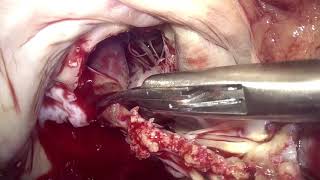
Severe mitral annulus calcification (MAC) is associated with increased cardiovascular morbidity and mortality in patients undergoing mitral valve replacement. It poses a significant challenge for even the most experienced surgeons, and multiple techniques have been proposed to address this challenging problem. In high-risk patients, an alternative to conventional surgical techniques involves the placement of a…
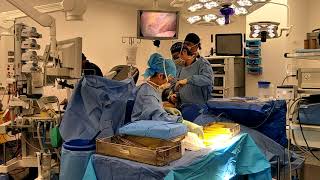
Welcome to this series of CTSNet videos titled Thoracic Surgical Oncology – Technical Approaches, by Professor Tristan D. Yan. The Royal Prince Alfred Hospital and Chris O’Brien Lifehouse provide the largest thoracic oncology service in New South Wales, Australia. To introduce this video series, Professor Yan will take you through a day of thoracic surgery…
Professor Tristan D. Yan, a consultant cardiovascular and thoracic surgeon based at the Royal Prince Alfred Hospital in Sydney, Australia, prepared a series of twelve surgical videos on the technical aspects within thoracic surgical oncology for educational purposes. Aspects of these videos are quite unique in that they cover a wide range of clinical pathology…
Summary The catheter-based mitral intervention, particularly MitraClip, has become an important alternative to surgical repair or replacement of the mitral valve in patients with significant mitral regurgitation. The field of mitral valve intervention is rapidly evolving and thus requires more frequent updates of details and precision of cardiac imaging for the needs of the intervention.…
Repair of the mitral valve which is partly destructed by an infective process is a big challenge in infants and small children. This is mainly because of the delicate nature of the mitral structure in this age group, and also limitations to use artificial chords and annuloplasty rings. However, complex repair is usually the only…