Content from the Journal of the American Neurological Surgeons.
Objective The arterial switch operation has now largely replaced the atrial switch procedures developed by Mustard and Senning in the management of d-transposition of the great arteries (D-TGA) (1, 2). Currently, most patients who undergo the arterial switch operation survive into adulthood, with a 20-year survival rate of nearly 90 percent (3). However, pathologies of…
This video is part of CTSNet’s 2024 Resident Video Competition. Watch all entries into the competition, including the winning videos. Pectus excavatum is a thoracic deformity with mainly aesthetic repercussions in mild to moderate cases; however, in more serious cases, it can affect cardiorespiratory function, and hemodynamic compromise may occur. The use of different surgical techniques…
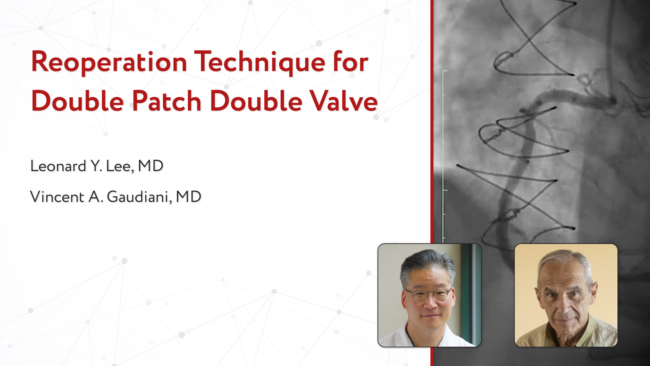
In this series, CTSNet invites top cardiothoracic surgeons from around the world to engage in in-depth discussions about important topics in the field of CT surgery by examining specific cases in detail. Watch for more insightful master class videos in the coming weeks. In this in-depth discussion, CTSNet Senior Editor Dr. Vince Gaudiani and Dr.…
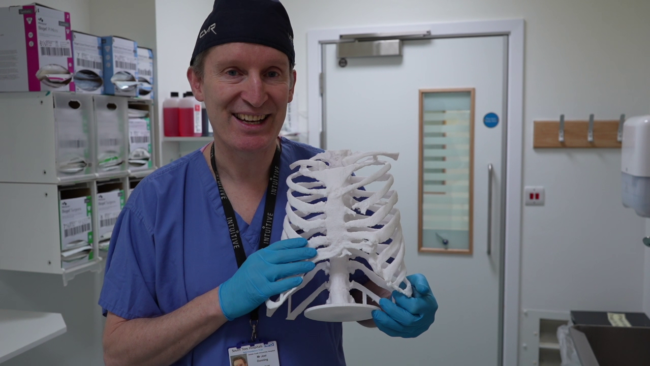
This video from CTSNet Editor-in-Chief Dr. Joel Dunning presents a repair for acquired asphyxiating thoracic dystrophy involving a person who underwent a Ravitch operation at the age of four. Unfortunately, this intervention inhibited the growth of the thoracic cavity, resulting in severe shortness of breath due to a very small thoracic cavity. The third to…
In this CTSNet series, Dr. Mario Castillo-Sang presents innovative, totally endoscopic cardiac procedures for a variety of conditions. Stay tuned for more series videos in the coming weeks. The authors present the case of a totally endoscopic atrial septal defect (ASD) closure and tricuspid valve repair in a 28-year-old male who had presented with…
In this new CTSNet President’s Series, Dr. Husam Balkhy, president of ISMICS, showcases cutting-edge, totally endoscopic cardiac procedures from the University of Chicago. Watch for more videos in this series coming soon. The first case involves an 82-year-old man who underwent MitraClip implantation for severe mitral regurgitation (MR) six months ago. The second case is a 75-year-old…
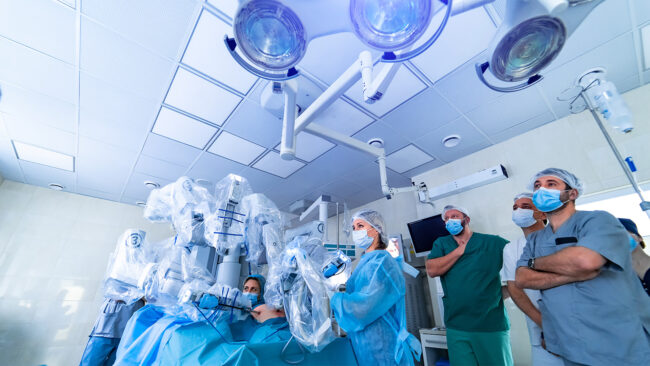
Introduction Due to certain limitations of video thoracoscopy compared to robotics, such as the mobilization of forceps and 3D vision, the robotic technique has been gaining ground and showing promising results. Several authors have demonstrated the safety and feasibility of resection in locally advanced lung cancer using a robotic-assisted approach (2, 3). In this video,…
In this video, Dr. Vince Gaudiani demonstrates his technique for managing a complex case of endocarditis in a 59-year-old patient with a history of aortic and ascending aortic replacements. The video begins with a discussion about how to avoid pushing infected material to the patient’s brain or down the coronaries. Procedure After clamping and administering…
In this CTSNet series, Dr. Mario Castillo-Sang presents innovative, totally endoscopic cardiac procedures for a variety of conditions. Stay tuned for more series videos in the coming weeks. The patient was a 48-year-old female who presented with dyspnea on exertion and fatigue. Her transesophageal echocardiogram (TEE) showed a P2 central to medial segment prolapse and P3…
This introductory video describes the Gaudiani technique for a straightforward aortic valve replacement. The patient presented with aortic valve regurgitation, as well as a left bundle branch block (LBBB) and an ejection fraction of 25 percent The LBBB causes delayed contraction, promoting the placement of wires in both the right ventricle and left ventricle. Two of…
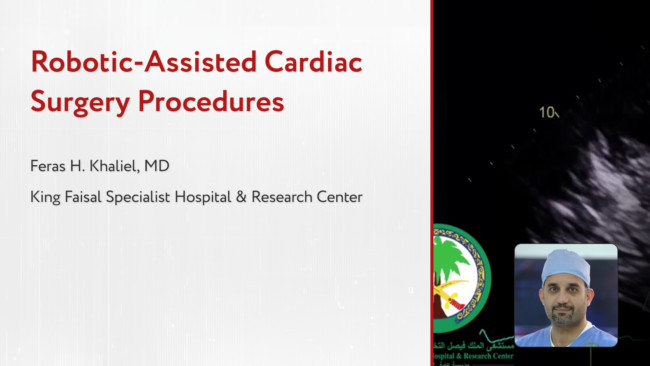
CTSNet Editor-in-Chief Dr. Joel Dunning recently had the opportunity to speak with Dr. Feras Khaliel, Chief of Cardiac Surgery at King Faisal Specialist Hospital and Research Center. They explored three innovative cases of robotic cardiac surgery that Dr. Khaliel performed, including severe aortic stenosis with severe ascending aortic dilatation; and a robotic procedure involving aortic…
This video is part of CTSNet’s 2024 Resident Video Competition. Watch all entries into the competition, including the winning videos. In this video, the authors present their robotic-assisted technique for esophageal reconstruction in the substernal position. The patient was a 66-year-old female with a history of dysphagia, who was admitted with shortness of breath and hemoptysis…
Rhabdomyomas account for 45 percent of the 0.2 percent incidence rate of pediatric primary cardiac tumors (2). While many undergo involution and do not require surgical intervention, a rare few can be obstructive, as seen in this neonate’s case (3). This case demonstrates the removal of an infantile rhabdomyoma causing left ventricular outflow tract obstruction. …
The authors present a case involving a 63-year-old male patient with severe aortic stenosis who was treated with aortic valve reconstruction using the Ozaki technique. Harvesting of Anterior Pericardium and Fixation in Glutaraldehyde Solution At least 7×8 cm of anterior pericardium was harvested, cleaned of fat and other redundant tissues, and then fixed in a…
In this CTSNet series, Dr. Mario Castillo-Sang presents innovative, totally endoscopic cardiac procedures for a variety of conditions. Stay tuned for more series videos in the coming weeks. The authors present a totally endoscopic approach for transcatheter aortic valve replacement (TAVR) direct implantation in mitral annular calcification (MAC) with an inferior vena cava (IVC)…
This video is part of CTSNet’s 2024 Resident Video Competition. Watch all entries into the competition, including the winning videos. Whole body perfusion utilizing two cannulas for the upper and lower body halves enables continuous oxygen supply to the brain, kidneys, and intestinal organs while avoiding cooling to a low core temperature during aortic arch reconstruction…