Content from the Journal of the American Neurological Surgeons.
The authors previously demonstrated the feasibility of the Ross procedure following a bioprosthetic aortic valve replacement (1). In this case, they showed its feasibility after a previous mechanical valve replacement. An 11-year-old boy, born with congenital aortic stenosis, underwent three previous sternotomies. The first two were for aortic valvotomy and valve repair, and the third…
This video is part of CTSNet’s 2025 Resident Video Competition. Watch all entries into the competition, including the winning videos. In this video, the authors present a lower lobe lung volume reduction surgery (LVRS) case from their high-volume center, focusing on the surgical approach and key technical steps. The patient was a 54-year-old female with chronic obstructive pulmonary disease…
The patient was suffering from hemolysis and mitral regurgitation. A hemisternotomy was performed after femoral vein cannulation. A new cross-clamp was used and is shown in the video. Cardioplegia was given, and the left atrial appendage was removed. The aorta was retracted so that the roof of the left atrium was visible and then opened with…
This video is part of CTSNet’s 2025 Resident Video Competition. Watch all entries into the competition, including the winning videos. The authors present a case of extended thymectomy with en bloc left upper lobectomy, performed at Erasmus Medical Center in Rotterdam, The Netherlands. Thymomas are rare epithelial tumors that arise from the thymic gland. They usually…
Allograft root replacement remains the gold standard treatment for aortic root abscess but is often avoided due to its technical complexity. Patch repair of the aortic root is often done poorly, resulting in patient-prosthesis mismatch and early reoperation for valve dehiscence or reinfection. However, as demonstrated in the following cases, patch repair can be a…
In this fascinating interview, CTSNet Editor-in-Chief Joel Dunning spoke with Dr. Michael Lanuti, Director of Thoracic Oncology in the Division of Thoracic Surgery at Massachusetts General Hospital and an Associate Professor at Harvard Medical School, and thoracic surgeon and CTSNet Senior Editor Leanne Ashrafian about Dr. Lanuti’s thoughts on the JCOG0802 trial and how he believes the wrong parameters were measured. They discussed local recurrence rates, pulmonary function, and the subtypes of adenocarcinoma. Additionally, they explored how to apply…
This video is the third-place winner from CTSNet’s 2025 Resident Video Competition. Watch all entries into the competition, including the other winning videos. The patient was a 63-year-old man with multiple comorbidities who was transferred to the authors’ facility in cardiogenic shock after a non-ST-elevation myocardial infarction (NSTEMI) with a type A dissection. He also…
This video is the second-place winner from CTSNet’s 2025 Resident Video Competition. Watch all entries into the competition, including the other winning videos. In this video, the authors demonstrate their technique involving the combined Mustard procedure and en bloc rotation of the outflow tracts in a seven-year-old child with congenitally corrected transposition of the great arteries, ventricular septal defect,…
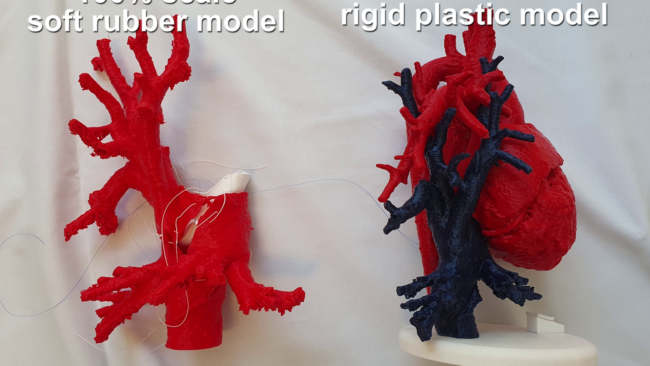
Over the past decade, 3D printing has become a valuable adjunct for simulation and preoperative planning in congenital heart surgery (3). However, its broader adoption is often constrained by cost (3). The authors describe a pragmatic, low-cost pipeline that relies on open-source segmentation software and affordable consumer-grade printers while maintaining clinical utility. The program began…
This is the winning video from the 2025 CTSNet Resident Video Competition. Watch all entries into the competition, including the second and third place winners. Click here to watch Dr. Karan Shekar’s interview with CTSNet Editor-in-Chief Joel Dunning. Background Supracardiac total anomalous pulmonary venous return (TAPVR) is a rare congenital cardiac anomaly characterized by the anomalous drainage of all pulmonary veins…
Introduction Mucoepidermoid carcinoma of the bronchial tree is a rare pulmonary neoplasm, accounting for less than one percent of all lung malignancies (1–3). It typically arises from the submucosal glands of the tracheobronchial tree and is more frequently encountered in younger patients. Low-grade tumors usually present as centrally located endobronchial lesions and demonstrate excellent prognosis…
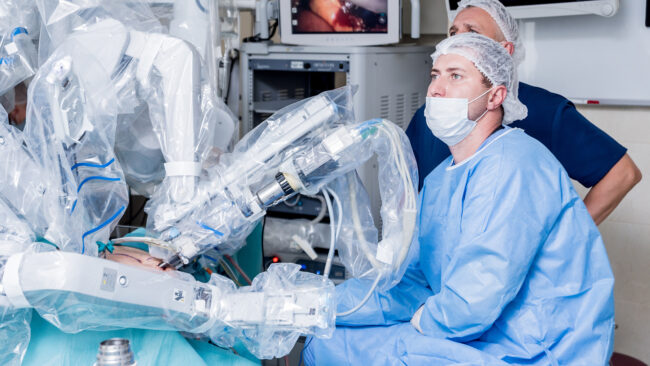
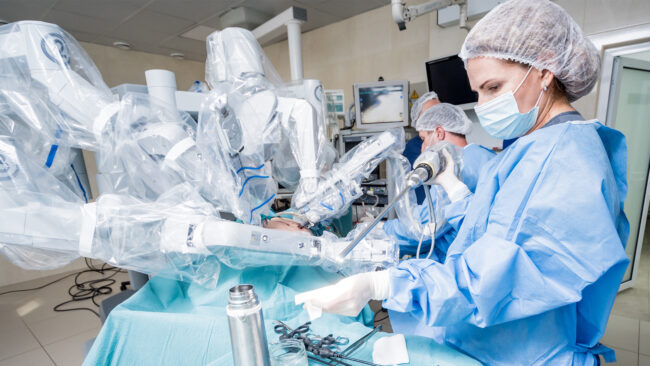
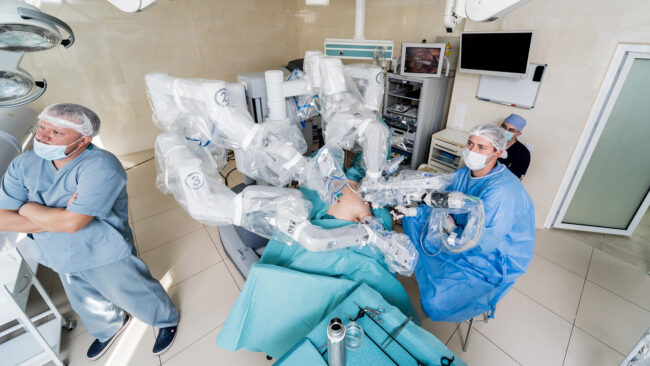
Introduction This video shows a clipless technique for internal thoracic artery harvesting during robotic-assisted coronary artery bypass. Patient Data A 49-year-old male presented to the authors with stable angina. Coronary angiography revealed double vessel disease involving the proximal left anterior descending artery (LAD) and circumflex artery. The Heart Team made the decision to proceed…
In this study, the authors aimed to demonstrate their new approach to mediastinal pathologies with CO₂ insufflation, showing how they preserved both phrenic nerves. In comparison to the uniportal subxphoid approach, the surgeons completely removed pericardial fatty tissue. Disclosure A Wolf brand imaging system was used. Disclaimer The information and views presented on CTSNet.org…
In this remarkable interview, CTSNet Editor-in-Chief Joel Dunning and thoracic surgeon and CTSNet Senior Editor Leanne Ashrafian spoke with Dr. Gavin Wright, thoracic surgeon and Director of Surgical Oncology at St Vincent’s Hospital Melbourne, Australia, about his thoughts on the JCOG0802 trial and why he prefers segmentectomy over lobectomy. They discussed the findings of the JCOG0802 trial and compared it to the CALGB…
This video presents the case of a 65-year-old woman with a T2aN0M0 centrally located right upper lobe lung cancer. She had good performance status and excellent pulmonary function. Preoperative bronchoscopy demonstrated a tumor obstructing the right upper lobe bronchus with extension into the right main bronchus. The video begins following the removal of the station…
This video demonstrates a technique for performing minimally invasive, totally arterial coronary artery bypass grafting on a beating heart. The surgeons used a left-sided minithoracotomy (6-7 cm) in the fifth intercostal space. Thereafter, both internal thoracic arteries were harvested: the left one as an in situ graft and the right one to form a Y…