Content from the Journal of the American Neurological Surgeons.
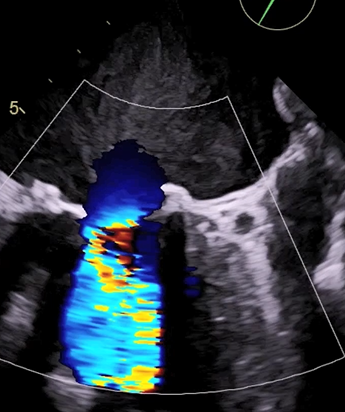
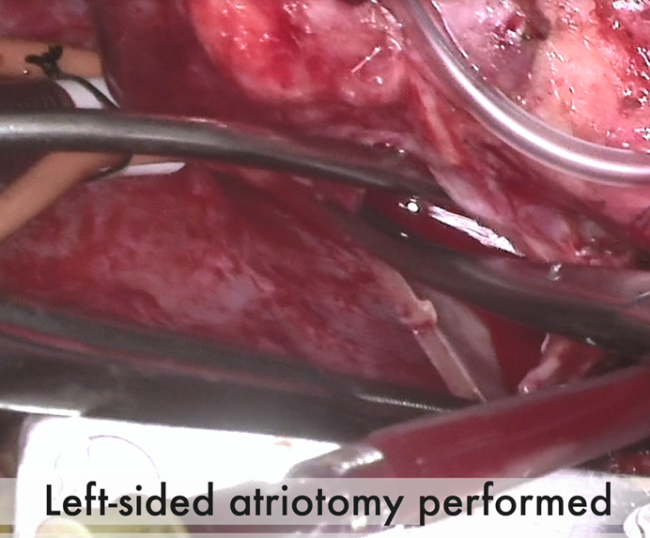
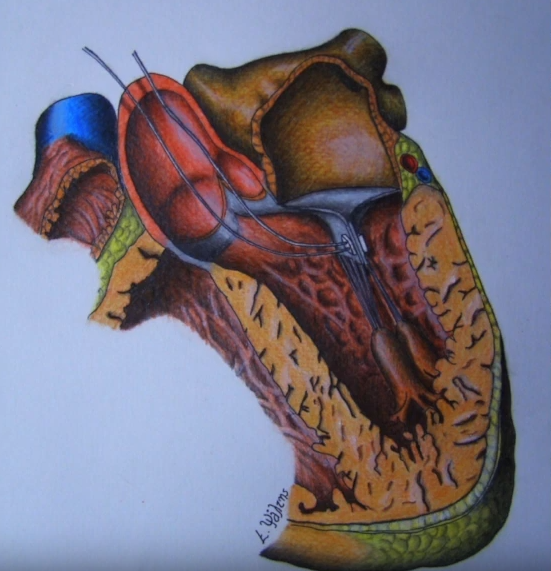
The authors were faced with a patient who had previous double aortic and mitral valve replacements with two bioprosthesis (Perimount aortic 25 mm and Perimount mitral 29 mm) and presented with double structural valve degeneration. The patient was a 78-year-old woman who had major dyspnea and presented in 2019 with several hospitalizations for left heart…
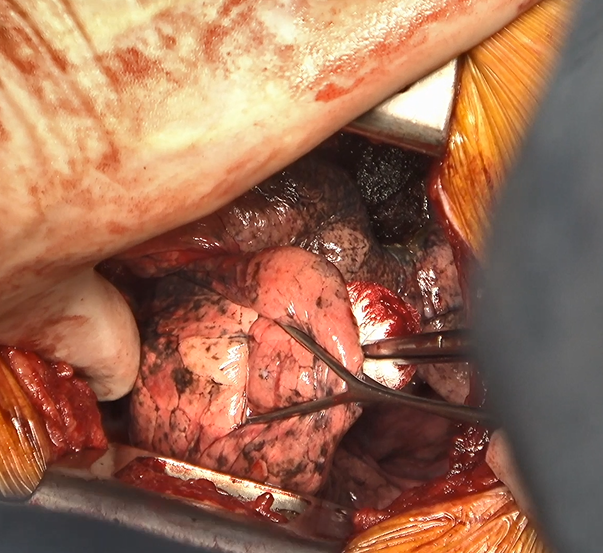
Laser-assisted metastatectomy is a safe and validated technique for facilitating the resection of a large number of pulmonary metastases whilst maximizing lung tissue preservation (1). Here the authors present an open laser-assisted metastatectomy using the LEONARDO® Dual Wave 200W laser system, which is the first time this device has been used in the UK. The…
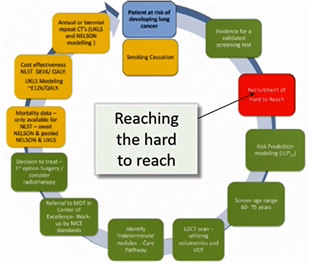
Richard Booton of the Manchester University NHS Foundation in the United Kingdom presents a discussion on lung health checks and lung cancer screening. He discusses screening criteria, setting up lung health check stations for the community, and the results of their screening trials. This presentation was originally given during the SCTS Ionescu University program at…
The patient was a 3-year, 1-month-old 12.2 kg girl with an antenatal diagnosis of complex congenital heart disease consisting of (S,L,L) dextroversion (atrial situs solitus with apex rightward) with a large inlet ventricular septal defect (with straddling tricuspid valve), severe right ventricular hypoplasia, and pulmonary atresia. On day of life six, the patient underwent a…
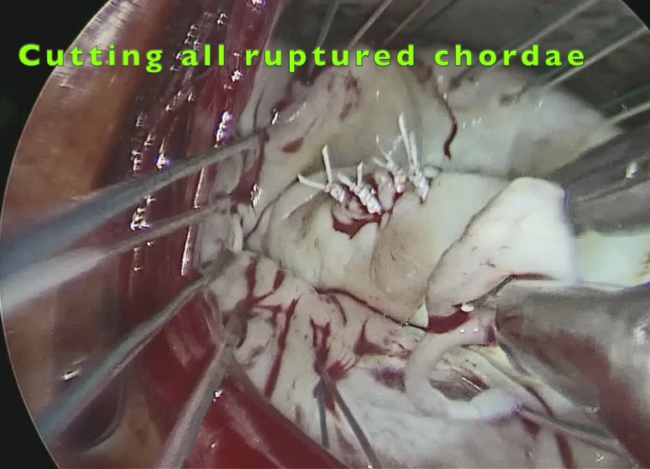
The authors present the case of complex mitral valve pathology resulting from healed endocarditis. The patient was a 52-year-old otherwise healthy man who presented with severe dyspnea on exertion and fatigue. He carried a diagnosis of remote bacterial endocarditis from a dental infection, which was treated with IV antibiotics. At presentation, his echocardiogram showed a…
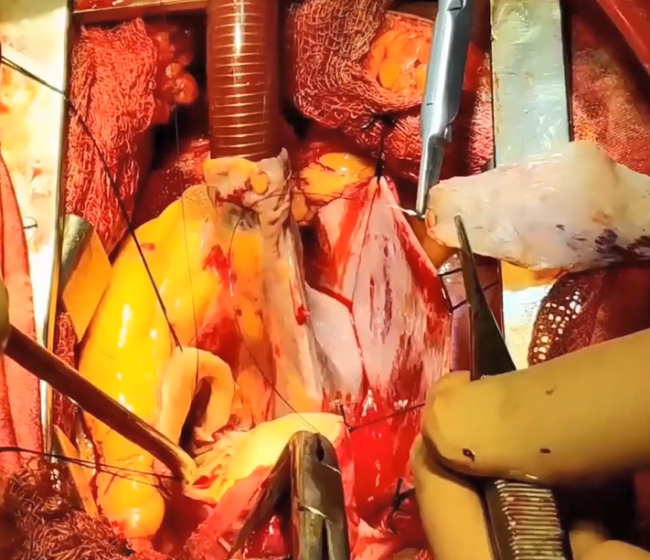
Small aortic root enlargement using the modified Manouguian technique for mechanical valve implantation is challenging, especially in the presence of calcified aortic annuli (1, 2). To augment the benefits of the modified Manouguian technique, the authors used a pericardial patch and performed a modification in the aortotomy incision – without entering into the left atrium…
IntroductionVascular ring is a congenital anomaly of the aortic arch that compresses the esophagus and/or trachea. It can be asymptomatic for life and not require any intervention. On the contrary, there are some vascular rings that are associated with respiratory (frequent infections, stridor, cough, distress) and esophageal (difficulty feeding, gastroesophageal reflux, dysphagia) symptoms. The most…
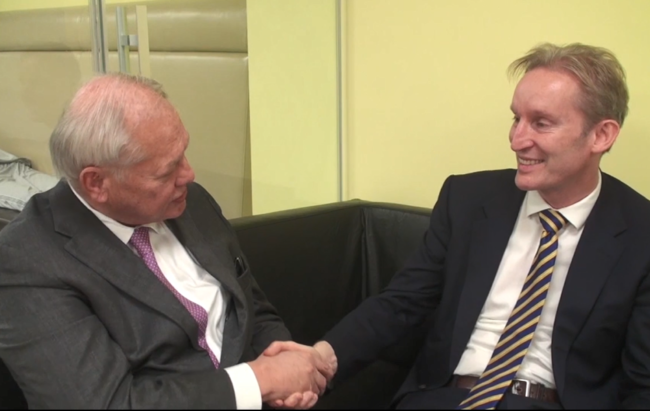
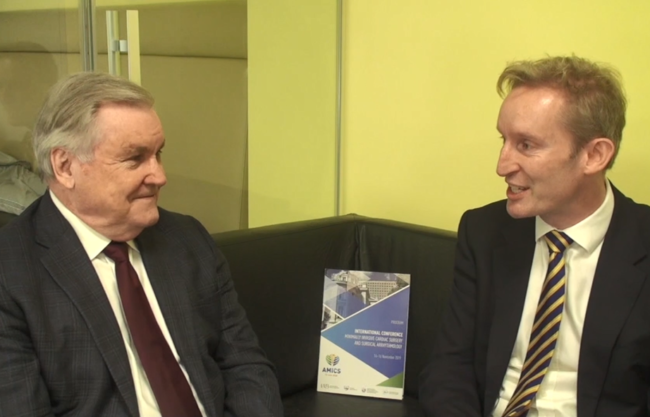
In this Giants of Cardiothoracic Surgery Interview, Joel Dunning speaks with W. Randolph Chitwood Jr., the first surgeon to perform robotic mitral valve operations in the United States, and he has trained over 600 surgeons on this technique. He has also been the president of ISMICS, the Heart Valve Society, and the Society of Thoracic…
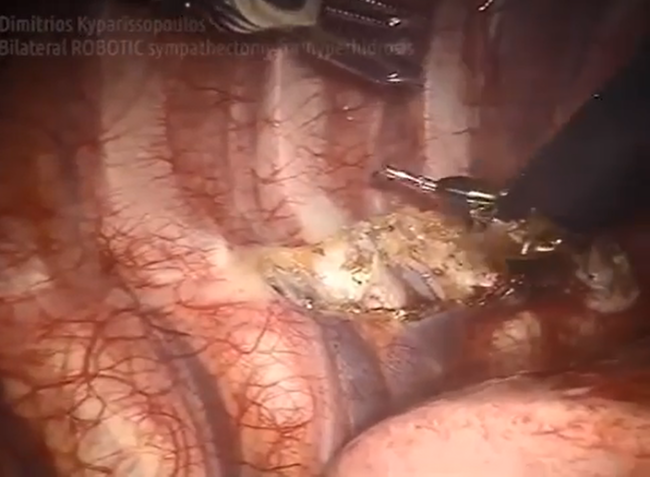
Hyperhidrosis is a relatively common disorder which produces a lot of unhappiness and psychological stress to otherwise healthy individuals. Patients suffer from excessive sweating of the underarms (axillary hyperhidrosis) or of the palms and soles of the feet (palmar and plantar hyperhidrosis). Underarm problems tend to start in late adolescence, while palm and sole sweating…
The authors present the case of a 77-year-old woman in NYHA class 3, due to severe AS and severe secondary MR. The operation was performed with the authors’ totally endoscopic technique, which has been previously published on CTSNet (1-4). A 3D 30-degrees Karl Storz endoscope was used. Under stereoscopic vision, the mitral valve was approached…
An 11-month-old boy presented with features of congestive cardiac failure. On clinical examination, the lower limb pulses were feeble when compared to the upper limb pulses. The baby was investigated for coarctation of aorta. Echocardiography made the diagnosis of coarctation of aorta, with severe pulmonary arterial hypertension. The patient also had a small atrial septal…
Betsy Evans of Leeds General Infirmary in the United Kingdom presents a discussion on TAVI and surgery for prosthetic valve failure. She discusses the background of biological valve implant rate, rate of TAVI, and structural valve deterioration and treatment options. She focuses on two treatment techniques: redo AVR surgery and the TAVI valve-in-valve procedure. This…
This video demonstrates the first VATS left upper lobectomy using ArtiSential® wristed instruments. For the first time in VATS, there are now instruments that are as versatile as robotic instruments. These instruments have the additional advantage of tactile feedback, the ability to do one’s own staple firings, and allow the surgeon to be with the…
Case The patient is a 59-year-old woman with severe tricuspid regurgitation from a septal leaflet restriction by a pacemaker lead implanted for sick sinus syndrome. The patient complained of fatigue and leg swelling. Workup demonstrated normal coronaries, normal left ventricular ejection fraction, and good function of the mitral valve. She was offered a fourth space…
The patient was a 23-month-old, 11.7 kg girl with an antenatal diagnosis of hypoplastic left heart syndrome (mitral stenosis/aortic stenosis). Transthoracic echocardiogram demonstrated a hypoplastic, non-apex forming left ventricle with moderate dysfunction and evidence of extensive endocardial fibroelastosis (EFE). Initial left ventricular volume was measured at 17 ml/m^2. The mitral valve was hypoplastic and stenotic.…
In this Giants of Cardiothoracic Surgery interview, Joel Dunning speaks with James L. Cox, creator of the Cox maze procedure for the treatment of atrial fibrillation. Dr Cox recounts the creation of the Cox maze operation and the evolution to modern atrial fibrillation surgery, as well as the future of this treatment. He also calls…