Content from the Journal of the American Neurological Surgeons.
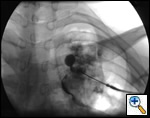
Patient Selection The definitive treatment of symptomatic aspergilloma is surgical resection. Patients with aspergilloma who present with hemoptysis are at risk of death due to massive hemoptysis and/or respiratory insufficiency caused by aspirated blood. Catheter embolization of bronchial arteries can be used to control acute bleeding (Figure 1), but is not durable. Likewise, intracavitary instillation…
Dr. Robert J. Jensik passed away March 8, 2008 at the age of 92. He fought a very courageous battle against a Guillain-Barre syndrome over a period of six months. He was most active until the time of his illness; playing golf, swimming and attending thoracic conferences. Dr. Jensik’s education and surgical training were most…
Dr. James W. Brooks, Emeritus Professor of Surgery at the Medical College of Virginia, passed away on September 27, 2008 at the age of 86 after a brief illness. Born on February 20, 1922 to Samuel Carroll and Linda Carruthers Brooks in Round Hill, Virginia, he was subsequently raised in Winchester, Virginia. Following his high school…
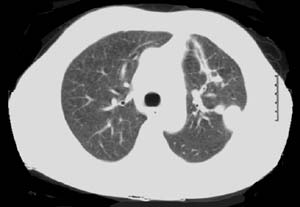
Patient Selection Figure 1 A typical CT scan of a patient eligible for nodulectomy. When an isolated pulmonary nodule is lying deep to a flat surface of the lung, VATS wedge resection using the conventional endoscopic staple-cutter is often technically difficult. Even if this could be done, it usually sacrifices more functional lung tissue than would…
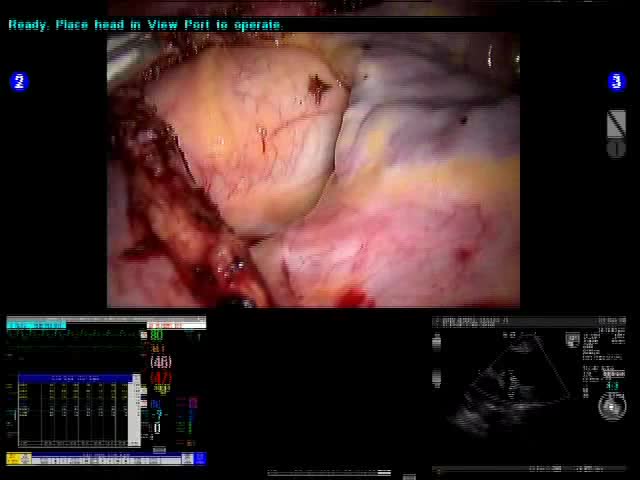
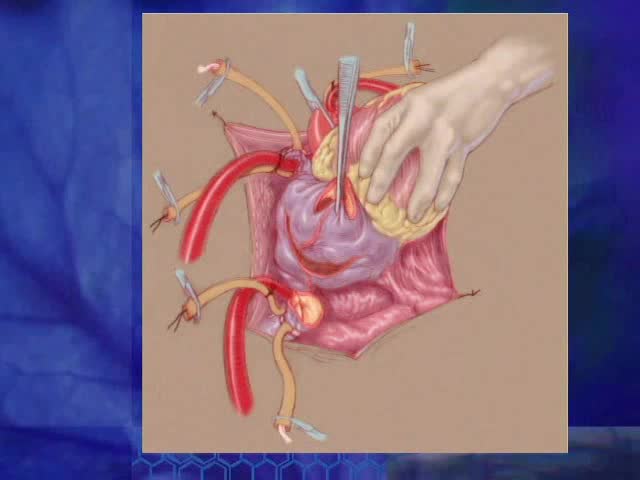
In this video a multidisciplinary team approach is demonstrated to close coronary fistula in a 79-year old patient. All steps from diagnosis to treatment of this rare clinical case are shown in this video presentation. First the right sided fistula is treated by PCI. The result of this coiling procedure is evaluated by means of…
Dr. David C. Sabiston, Jr., died on January 26th, 2009 after a long illness. Echoes of these words will always live in the hearts and minds of those of us he trained at Duke University. Born in 1924 in Eastern North Carolina’s Onslow County, he rose to become one of the most respected and powerful…
The field of cardiothoracic surgery is undergoing a transition. Arguably, the entire field of medicine is undergoing an even more significant one. The majority of young medical students are choosing their lifetime professions based on the potential for integrating their professions with an enjoyable and fulfilling lifestyle. This represents a paradigm shift. In the past,…
It was a deep loss for society when Richard Powell Anderson tragically died January 18, 2009. Those of us who knew him well remember him as Dick. I believe he would like to be recalled by that name because he was inherently quiet, unassuming and informal. In his enormous contributions to cardiothoracic surgery and medicine,…
STSA Surgical Motion Picture 2008 Annual Meeting
STSA Surgical Motion Picture 2008 Annual Meeting
STSA Surgical Motion Picture 2008 Annual Meeting
STSA Surgical Motion Picture 2008 Annual Meeting
Pulmonary sequestrations are rare congenital malformations of lung tissue that do not connect normally to the tracheobronchial tree and receive systemic blood supply … Although 10-15% of patients may remain asymptomatic, most experts recommend resection to establish a diagnosis and prevent future complications. Introduction Pulmonary sequestrations are rare congenital malformations of lung tissue that do…
Traumatic subclavian artery transection is a potentially lethal injury following either blunt or penetrating injury to the chest. In one series [1], it accounted for 9 of 39 (23%) cases of overall thoracic vascular injuries and 9 of 411 (2.1%) of overall vascular injuries and has the potential to result in hemothorax or exsanguinations with…
STSA Surgical Motion Picture 2008 Annual Meeting