Content from the Journal of the American Neurological Surgeons.
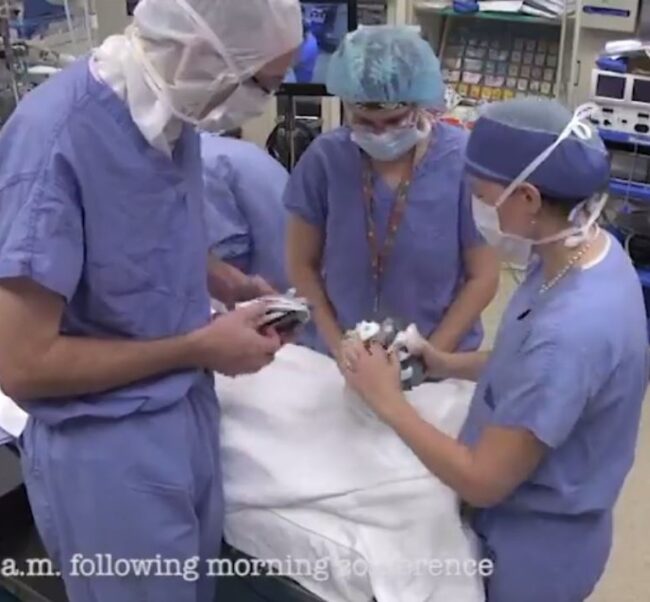
CTSNet published over 200 pieces of educational clinical content in 2015. As the year comes to a close, the CTSNet editorial team presents the five most popular pieces of clinical content published in 2015. 1. A Day in the Life of a Thoracic SurgeonShanda Blackmon 2. Re-do Surgery for Type A Aortic Dissection: Aortic Rupture During SternotomyJeng…
CTSNet published over 200 pieces of educational clinical content in 2015. As the year comes to a close, the CTSNet editorial team presents the five most popular roundtable discussions published in 2015. 1. Ethics Debate: Must Surgeons in Training Programs Allow Residents to Operate on Their Patients?Robert Sade, Richard Ohye, James Jaggers 2. Sponsored Roundtable: Improving Hemodynamics…
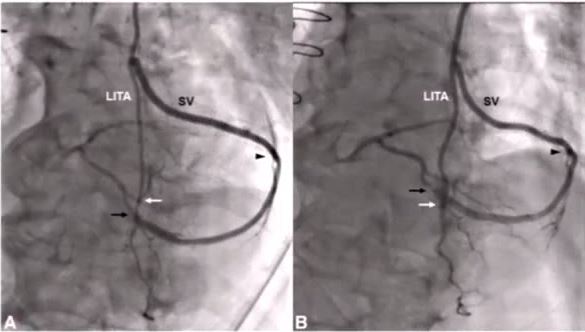
CTSNet published over 200 pieces of educational clinical content in 2015. As the year comes to a close, Arie Blitz, CTSNet Deputy Editor, presents his choices for the most interesting content of 2015. Can a Single ITA Composite Graft Adequately Supply the Heart?Marc Ruel Transcatheter Mitral Valve Repair: An OverviewAlec Vahanian Bicuspid Aortic Valve Repair…
CTSNet published over 200 pieces of educational clinical content in 2015. As the year comes to a close, Joel Dunning, CTSNet Co-Editor, presents his choices for the most interesting content of 2015. Debate: Surgeon-Specific Outcomes ReportingLeanne Harling, Michael Mack, Stephen Westaby Giants Interview – Robert CerfolioJoel Dunning, Robert Cerfolio Interview with Shanda BlackmonJoel Dunning, Shanda…
CTSNet published over 200 pieces of educational clinical content in 2015. As the year comes to a close, Mark Ferguson, CTSNet Co-Editor, presents his choices for the most interesting content of 2015. A History of Thoracic Drainage: From Ancient Greeks to Wound Sucking Drummers to Digital MonitoringSarah Walcott-Sapp, Mithran Sukumar Minimally Invasive Resection of Chest Wall…
Of the 130 million babies born in the world every year, more than half a million will have congenital heart disease (CHD) requiring treatment. Only a small minority of these children will have access to surgical treatment. For others, the surgical “lottery” offered by charity medical missions is the only hope. This is an international…
A 65-year-old man was admitted with acute inferior wall myocardial infarction, and echo revealed moderate left ventricular dysfunction. He was stabilized on medical treatment. An angiogram showed severe triple vessel disease, and the authors recommended anaortic CABG using bilateral internal mammary arteries. Both internal mammary arteries were harvested and partially skeletonized. LIMA-RIMA composite Y grafts…
In this video, Tirone David gives an invited talk during the STSA 62nd Annual Meeting Postgraduate Program in Lake Buena Vista, Florida. Dr. David discusses the functional anatomy of heart valves and their role in surgical treatment, comparative results for various devices used in heart surgery, and repair versus replacement in the treatment of heart…
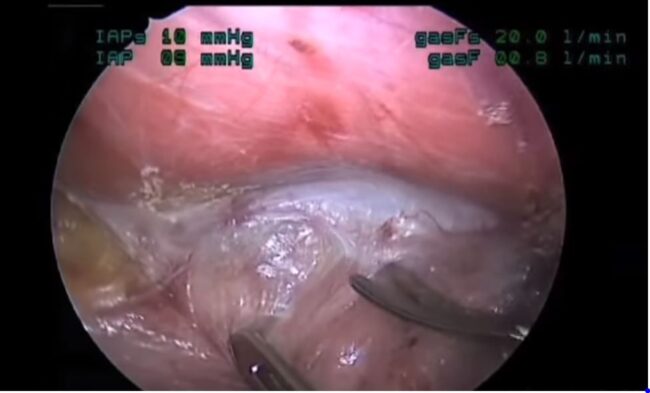
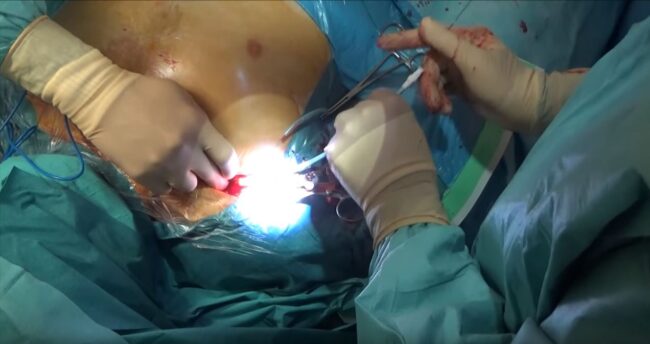
This video demonstrates an extended thymectomy through a subxiphoid port in a 51-year-old female patient, who presented with a 2.5 cm thymoma and myasthenia gravis. A 3.5 cm incision was made below the xiphoid process through the linea-alba. A single incision laparoscopic surgery trocar was inserted, and CO2 was insufflated. The dissection was completed under…
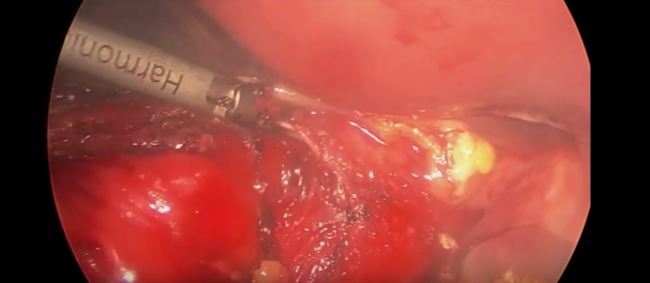
Many surgeons perform VATS thymectomy, however, complete dissection of the cervical horns is not often demonstrated. This video shows how the use of intrathoracic CO2 insufflation opens up the cervical space to allow for excellent visualization of the superior horns.
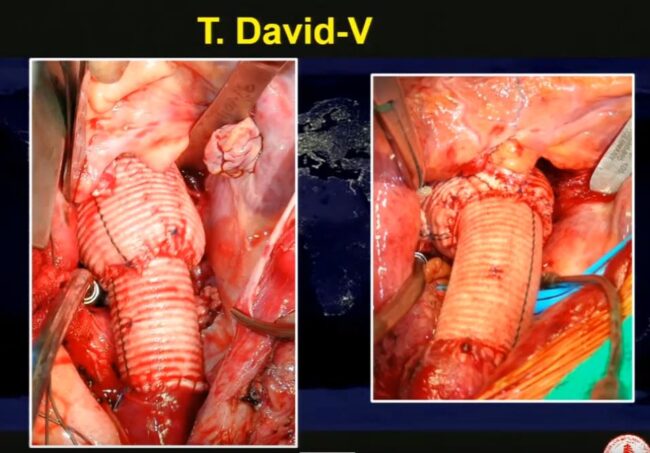
D. Craig Miller of Stanford University Medical School, Stanford, California, delivers a talk on his 22 years of experience with the Stanford valve-sparing aortic root replacement technique. Dr. Miller discusses the evolution of the Stanford procedure, including its origins in the Yacoub remodeling procedure and the David procedure. Dr. Miller also shares a step-by-step guide…
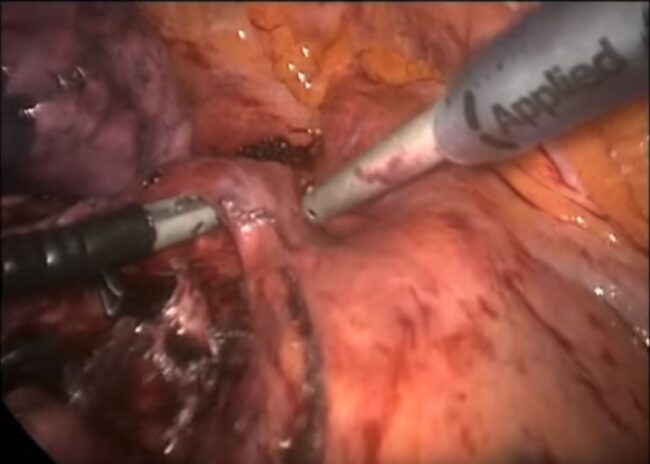
This video shows a laparoscopic resection of a symptomatic esophageal pulsion diverticulum arising from the abdominal esophagus, in a patient with hypertensive lower esophageal sphincter (HLES). Heller myotomy and Dor fundoplication were performed to correct the HLES and prevent diverticular recurrence.
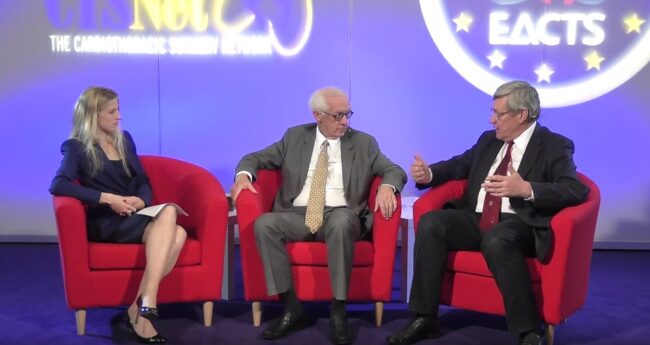
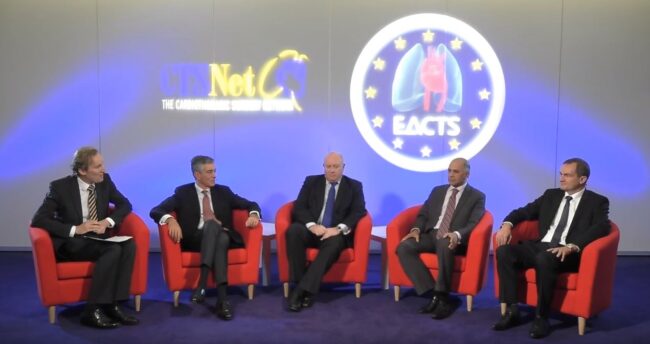
Filmed at the 2015 EACTS Annual Meeting in Amsterdam, The Netherlands, this roundtable discussion focuses on current developments and technological improvements in valve surgery. The roundtable is moderated by Joel Dunning, FRCS, PhD of James Cook University Hospital, Middlesbrough, United Kingdom. Mr. Dunning interviews current and future Presidents of CT surgery societies in Europe and…
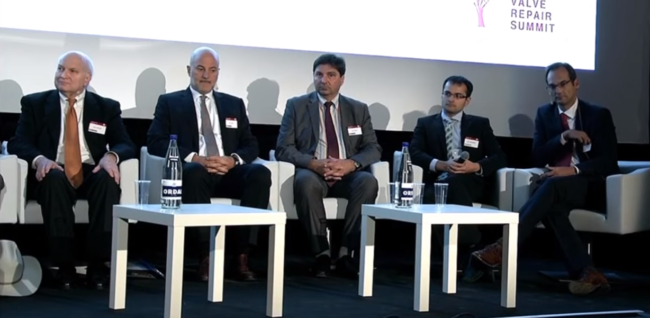
Filmed at the 2015 Aortic Valve Repair Summit, an international panel of experts discuss the management of the aortic root in acute aortic dissection. Mohamad Bashir of the Liverpool Heart and Chest Hospital, Liverpool, United Kingdom, moderates the discussion with Emile Bacha of Morgan Stanley Children’s Hospital of New York, United States; Alain Berrebi of…
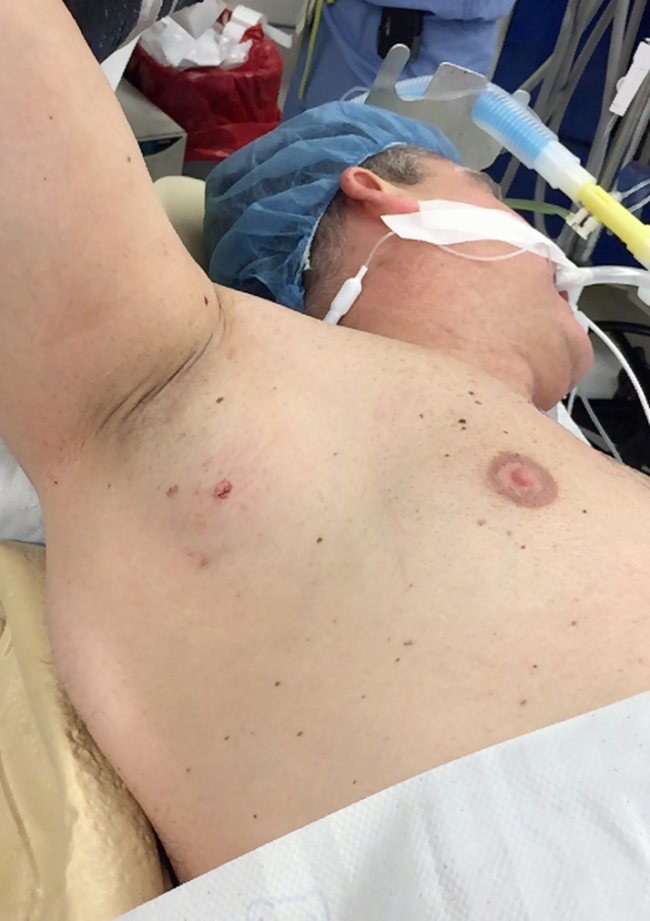
TAVR is now the gold standard in the treatment of aortic stenosis in high risk patients. The transfemoral approach has been shown to be a reliable access method for TAVR. However, in patients with severe PAD, this access may be very challenging. In this setting, the axillary approach may be indicated (1). The Edwards SAPIEN…
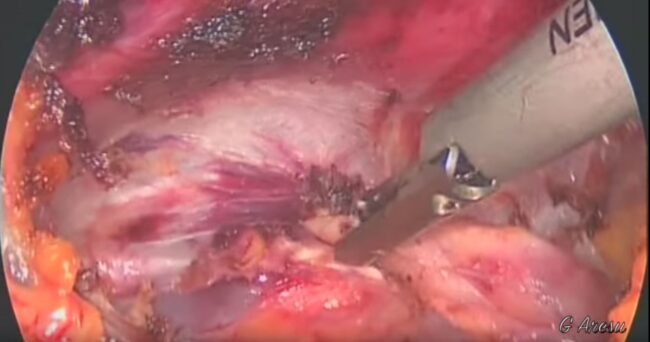
This video demonstrates a right upper lobe microlobectomy. It illustrates the complete division of the right upper lobe vein using only the Ethicon Enseal, a bipolar energy device. Only 5 mm instruments should be used in the intercostal spaces during a microlobectomy. For this reason, an energy device such as Enseal or Ligasure, may be…


 welcomes you to the new, improved website!