Content from the Journal of the American Neurological Surgeons.
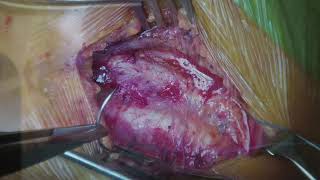
This video presents the diagnosis and treatment of slipped rib syndrome, a syndrome that is often missed. The Hansen’s repair is a novel and very simple way to address this problem. Slipped rib syndrome presents with significant pain over the anterior lower rib cage. It is worse on movement and the hook test reproduces the…
In this Giants of Cardiothoracic Surgery interview, Joel Dunning speaks with Patrick M. McCarthy, executive director of the Bluhm Cardiovascular Institute at Northwestern in Chicago, Illinois. They discuss Dr McCarthy’s training and mentorship, his techniques with mitral valve surgery, and how the field has changed over the course of his career. Disclaimer The information and…
Left anterior minithoracotomy represents a good alternative for pulmonary valve replacement via a minimally invasive technique. This minimal access approach can be performed safely in both primary and repeat operations on the right ventricular outflow tract (RVOT). An important prerequisite is the absence of intracardiac shunts and other concomitant cardiac pathology due to the limitations…
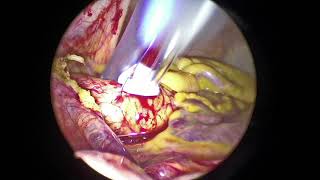
Procedure Through a partial superior periareolar skin incision, a small right anterolateral thoracotomy was performed at the 4th intercostal space and a 5 mm 0° thoracoscope was introduced through the same intercostal space 7 cm laterally. A 2 cm skin incision was used to gain access to the femoral artery and vein and then the…
The fourth of twelve videos in a CTSNet series on Thoracic Surgical Oncology – Technical Approaches by Professor Tristan D. Yan is presented here. To see the complete list of videos in the Thoracic Surgical Oncology video series, click here. This video tutorial demonstrates how to perform VATS lobectomy in a safe and simple way using…
Altmetric data “badges” are appended to new educational videos and articles published on CTSNet.org. Altmetric tracks the online impact of CTSNet videos and articles, including related social media activity, blog mentions, and other references, on a broad variety of web platforms. As the year comes to a close, the CTSNet staff present the five highest…
CTSNet produced its first live webinars this year and livestreamed an exciting selection of international events in 2020. As the year comes to a close, the CTSNet staff present the five most popular live events published in 2020. International Thoracic Oncology Symposium 2020By Marco Scarci Birmingham Review Course: AorticBy Maninder Kalkat Ancona Virtual Live Course: Minimally…
CTSNet published over 200 pieces of educational clinical content in 2020. As the year comes to a close, the CTSNet staff present the five most popular pieces of congenital content published during 2020. Pictured: “Surgical Repair for Coarctation of the Aorta” Surgical Repair for Coarctation of the AortaBy Debasis Das, Pradeep Narayan Double Switch Operation…
CTSNet published over 200 pieces of educational clinical content in 2020. As the year comes to a close, the CTSNet staff present the five most popular pieces of thoracic content published during 2020. Pictured: “COVID-19: Chest Drains With Air Leak – The Silent ‘Super Spreader’?” COVID-19: Chest Drains With Air Leak – The Silent ‘Super…
CTSNet published over 200 pieces of educational clinical content in 2020. As the year comes to a close, the CTSNet staff present the five most popular pieces of cardiac content published during 2020. Pictured: “How to Detect an Intramyocardial LAD on Coronary Angiography” How to Detect an Intramyocardial LAD on Coronary AngiographyBy Vasily Kaleda Demystifying…
From the Editor’s DeskMark K. Ferguson, MDEditor-in-Chief, CTSNet.org December 2020 Colleagues, This is the first in a series of regular communications in my role as CTSNet Editor-in-Chief. As background, I’m a thoracic surgeon at the University of Chicago and have been involved in leadership and editorial work at CTSNet since 2005, serving as editor since…
The third of twelve videos in a CTSNet series on Thoracic Surgical Oncology – Technical Approaches by Professor Tristan D. Yan is presented here. To see the complete list of videos in the Thoracic Surgical Oncology video series, click here. This 70-year-old man initially presented with dyspnea and presyncope. CTPA revealed a large obstructive mass within…
Patient selection A 57-year-old woman was initially admitted to hospital four months prior with a right temporal infarct with hemorrhagic transformation, complicated by venous sinus thrombosis. She required repeated craniotomies and a ventriculoperitoneal shunt. Supportive management involved placement of a feeding jejunostomy for nutritional support and a tracheostomy (TRACOE®twist Tracheostomy Tube), from which weaning off…
CTSNet hosted a live event on December 10 on the current Guest Editor Series topic “Surgical Management of Acute Aortic Dissections: Tricks and Tips to Simplify the Operation.” This series, developed by Guest Editor Konstadinos A. Plestis, MD, and entailing seven excellent clinical videos, highlights key techniques in difficult cases that can be replicated by…
This video demonstrates the standardized five steps for robotic left upper lobectomy with a robotic stapler. The surgery was performed for a 64-year-old man with a history of smoking and COPD, in whom the authors discovered a centrolobar nodule in the left upper lobe which fixed on a TEP Scanner. In this video, the authors…
Leanne Harling, MD, of the Imperial College, London, UK, and Jessica Luc, MD, of the University of British Columbia, Vancouver, Canada, moderate a discussion on the global experience of how to make the most of one’s training and successfully transition to practice. They are joined by an international panel of guests, and this discussion spans…