Content from the Journal of the American Neurological Surgeons.
In this new CTSNet President’s Series, Dr. Husam Balkhy, president of ISMICS, showcases cutting-edge, totally endoscopic cardiac procedures from the University of Chicago. Watch for more videos in this series coming soon. Introduction CryoMaze ablation for the surgical treatment of atrial fibrillation has been performed either as an isolated procedure or concomitant with other intracardiac procedures to…
Clinical Case A 46-year-old male with HIV and a history of gastroesophageal reflux disease currently being treated with Dolutegravir started experiencing intermittent hiccups eight months prior to this procedure. During the previous four months, the hiccups became persistent, occurring approximately 4-6 times per hour, significantly impacting his quality of life. The patient tried various treatments,…
The patient had a 23 mm mechanical MVR and LIMA to LAD and SV to OM1, eight months prior, but developed a large paravalvular leak that caused hemolysis, requiring regular transfusions. She was transferred to Dr. Vince Gaudianis’ hospital and underwent redo surgery. Femoral venous cannulation and direct aortic cannulation were performed, and the roof of the…
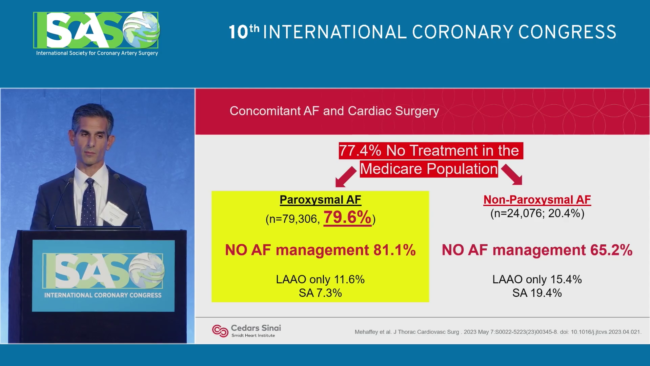
At the 10th Annual International Coronary Congress, renowned surgical experts gathered to discuss the latest developments and techniques in coronary surgery. Watch for more ICC 2024 videos in the coming weeks. At the 10th Annual International Coronary Congress, Dr. Armin Kiankhooy delivered a presentation on “Epicardial Ablation of AF During CABG: Evidence and Video Demonstration of…
Bronchopulmonary sequestration is a benign, uncommon pulmonary anomaly characterized by the presence of a mass separated from the normal bronchopulmonary tree and a systemic aortic arterial blood supply (1). Intralobar sequestration consists of a lung mass surrounded by normal pulmonary tissue and is four times more common than the extralobar type. In contrast, extralobar sequestration…
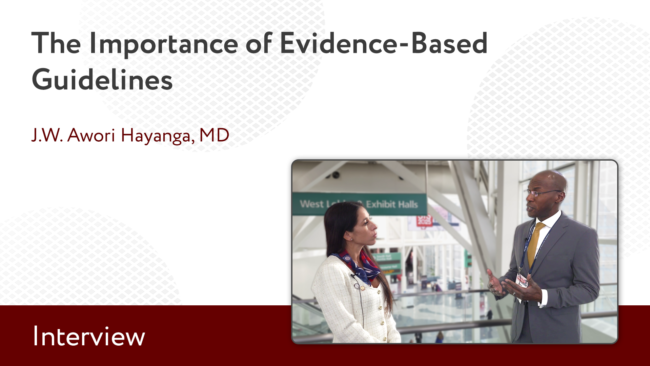
At the 61st STS Annual Meeting, CTSNet senior editors set out to interview the most knowledgeable CT surgeons from around the world. Watch for more interviews from the meeting in the coming weeks. At the 2025 STS Annual Meeting, CTSNet Senior Editor Dr. Mara Antonoff spoke with Dr. J. W. Awori Hayanga about the importance of…
This case involved the management of a 62-year-old male patient at high risk for recurrent laryngeal nerve injury during esophagectomy. He presented with invasive moderately differentiated squamous cell carcinoma of the mid-esophagus on EGD. He underwent neoadjuvant chemotherapy and radiation, as well as feeding gastrostomy tube placement preoperatively due to severe malnutrition. Based on preoperative…
In this video, Dr. Vince Gaudiani demonstrates how to replace a mitral valve that is severely calcified in both the anterior and posterior leaflets. Before the procedure began, the echocardiogram and angiogram were reviewed, clearly showing the heavily calcified mitral valve and its relationship to the circumflex coronary artery. The operation began with femoral venous…
In this new CTSNet President’s Series, Dr. Husam Balkhy, president of ISMICS, showcases cutting-edge, totally endoscopic cardiac procedures from the University of Chicago. Watch for more videos in this series coming soon. Introduction A 46-year-old male with chest pain was diagnosed with a myocardial bridge of his proximal/mid left anterior descending artery. He was recommended…
CTSNet is proud to present a video series curated by Husam Balkhy, MD, President of The International Society for Minimally Invasive Cardiothoracic Surgery (ISMICS). In this series, Dr. Balkhy presents totally endoscopic cardiac surgery procedures from the University of Chicago, covering topics including coronary bypass, mitral valve repair, adult congenital, arrythmia, aortic valve surgeries,…
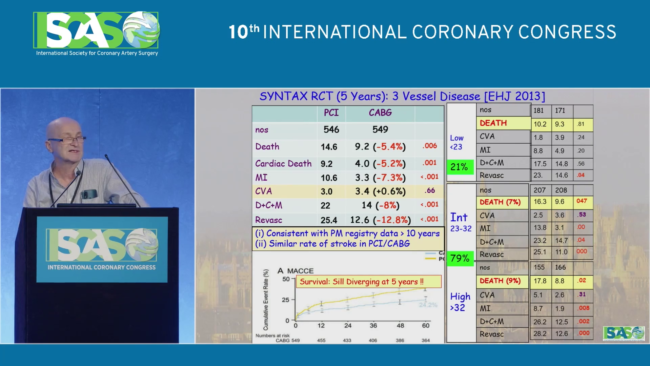
At the 10th Annual International Coronary Congress, renowned surgical experts gathered to discuss the latest developments and techniques in coronary surgery. Watch for more ICC 2024 videos in the coming weeks. At the 10th Annual International Coronary Congress, Dr. David Taggart delivered a presentation on “Maintaining CABG as a Gold Standard In 2024.” He explained three…
Schwannomas are benign nerve sheath tumors that most commonly occur singularly in otherwise normal individuals. Multiple schwannomas in a single patient are most often seen in neurofibromatosis type 2 (NF2), but several recent reports suggest that schwannomatosis may also be a distinct clinical entity (1). Most patients have peripheral nerve tumors presenting with pain, and…
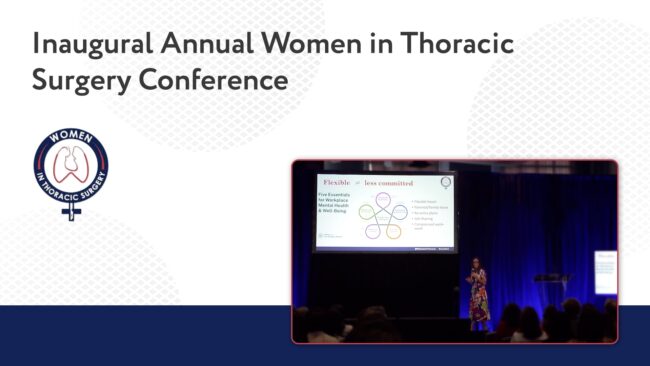
At the 2024 Women in Thoracic Surgery Inaugural Annual Conference, CTSNet interviewed some of the most accomplished women in cardiothoracic surgery from around the globe. Stay tuned for more interviews from the meeting. At the first annual Women in Thoracic Surgery (WTS) meeting, CTSNet had the opportunity to speak with some of the leading women in cardiothoracic…
This video presents the case of a 42-year-old female who had previously undergone two tricuspid valve replacement surgeries due to infective endocarditis in 2003 and 2016. This third 3D tricuspid valve replacement, performed totally endoscopically via the periareolar approach is the first case of its kind in Ukraine. The authors describe the details of the steps and…
In this video, Dr. Vince Gaudiani uses a pig heart to provide hints and tips on how best to perform a mitral valve replacement. He began by making an incision in the anterior leaflet taking care not to excise it. Instead, he used it to pull down the annulus so he could place the first…
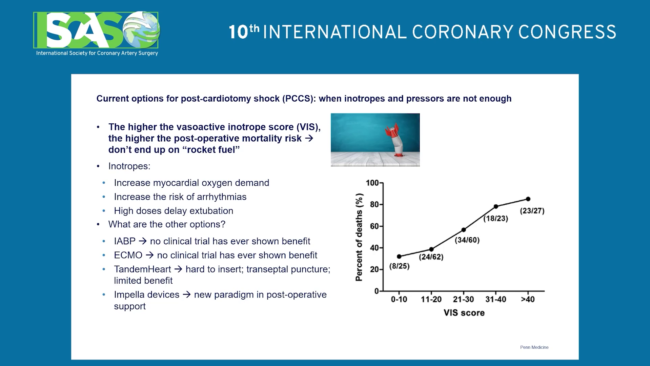
At the 10th Annual International Coronary Congress, renowned surgical experts gathered to discuss the latest developments and techniques in coronary surgery. Watch for more ICC 2024 videos in the coming weeks. At the 10th Annual International Coronary Congress, Dr. Marisa Cevasco delivered a presentation on “How I Use the Impella for On-Pump CABG in…