Content from the Journal of the American Neurological Surgeons.
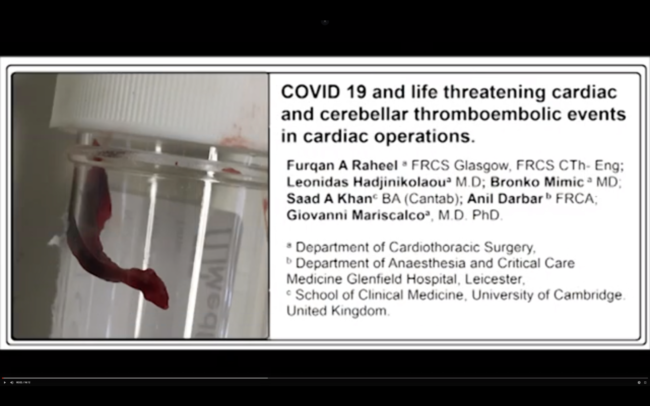
There are several reported cases that have showed that COVID-19 is a highly thrombogenic disease. The release of cytokines during cardiopulmonary bypass plus COVID 19 related thrombogenic factors can trigger life-threatening thromboembolic events as we have experienced with these two young patients. Myocarditis was rare in COVID-19 in an autopsy population of 277 subjects; however,…
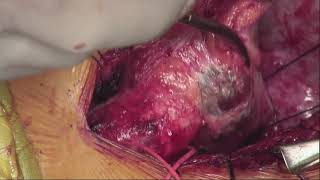
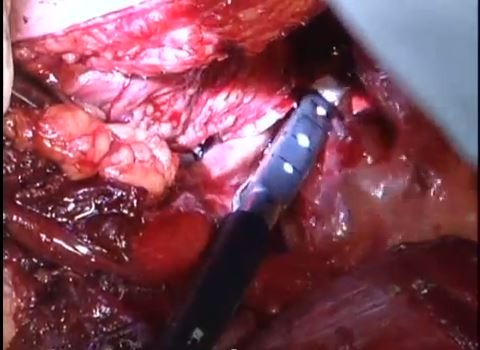
In this video, we are presenting the case of minimally invasive repair of the anomalous left coronary artery from the pulmonary artery in adult. A 29-year-old man has presented with ventricular fibrillation after physical training in the gym and was resuscitated with defibrillation. Echocardiography showed moderately depressed left ventricular function – 35% and mild mitral…
The Leadership Book Club, hosted by Ara Vaporciyan, program manager of the Department of Thoracic and Cardiovascular Surgery at the University of Texas MD Anderson, discusses the book Teaming: How Organizations Learn, Innovate, and Compete in the Knowledge Economy by Amy Edmondson. Dr. Vaporicyan is joined by panelists Vinod Thourani, MD, of the Piedmont Heart…
CTSNet and ASAIO collaborated to host an inaugural joint live webinar on April 22, 2021, entitled “ECMO for COVID-19 ARDS.” The recorded event is now available. Mark S. Slaughter, MD, editor-in-chief of the ASAIO Journal and professor and chair of Cardiovascular and Thoracic Surgery at the University of Louisville, presents the first ASAIO Journal and…
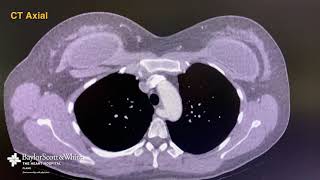
Aberrant right subclavian artery (ARSA) is a rare anomaly but is the most common congenital abnormality of the aortic arch with an incidence of 0.3-3.0% (1, 2). The vessel embryologically is the 4th branch of the aortic arch, most commonly passes behind the esophagus and crosses the midline between the esophagus and the vertebral column…
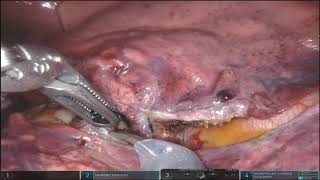
Welcome to the ninth of twelve videos that compose the series “Thoracic Surgical Oncology – Technical Approaches” by Professor Tristan D. Yan. To learn more about the series and see the complete list of videos, click here. This video demonstrates some basic robotic surgical techniques on right middle lobe lobectomy. The robotic endoscopic view is…
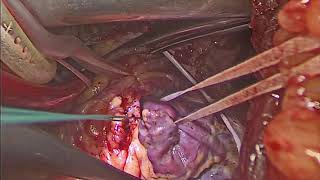
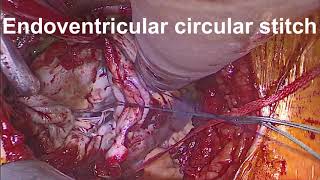
We are presenting the case of minimally invasive repair of large left ventricle inferior pseudoaneurysm and concomitant CABG procedure. The patient was a 63-year-old man who presented with shortness of breath and severe angina pectoris. The operation plan consisted of left anterior minithoracotomy in 4th intercostal space, left internal mammary artery harvesting, peripheral cannulation for…
We describe the subtle nuisances needed to perform a robotic right upper lobectomy using a fissure less technique to cut down on airleaks. We also describe and discuss the evolution of our technique which has helped us perform over 1000 robotic procedures at Moffitt Cancer Center. The description of lymph node dissection and removal is…
The authors present an off pump extracardiac non-fenestrated Fontan in a child with pulmonary atresia and intact ventricular septum. This is a 6-year old, 16-kg girl with a functional single ventricle. Her previous two palliations were a left MBT shunt followed by a bidirectional cavopulmonary anastomosis (Glenn). She presented with cyanosis (saturation of low-mid 70%)…
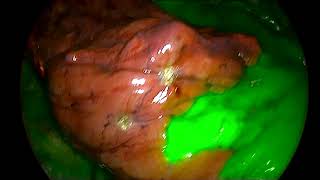
In these two videos, the authors present two demonstrations of near infra-red imaging technology to provide visualization of pulmonary anatomical segments for segmentectomy. Pulmonary segments are anatomically and functionally independent units of the lung but are macroscopically indistinguishable from other segments with the naked eye, making their isolated resection difficult.(1) This technique combines the use…
We previously described using a “Y” incision and rectangular patch to enlarge the aortic annulus by 2-3 valve sizes for aortic valve replacement (AVR) with bioprosthesis (1) or mechanical valve (2) in patients with trileaflet aortic valve (TAV). As we are becoming more experienced, we are able to enlarge the aortic annulus by 4 valve…
In this video, we show in a step-by-step fashion how we could perform what is, to the best of our knowledge, the first total arch replacement with Frozen Elephant Trunk (FET) without circulatory arrest (CA) in a patient with type A acute dissection. Our concept, based on the recognition of CA as the last important…
Repair of aortic coarctation in infants and small children is associated with high rates of reintervention due to recurrent coarctation and other aortic pathologies [1]. Use of a curved, geometrically optimized patch during extensive aortic reconstruction may decrease the risk of re-coarctation by minimizing kinking and anastomotic torsion. This video captures the conduct of a…
In this video, we present a patient with a recurrent paraesophageal hernia who underwent robot-assisted laparoscopic re-do paraesophageal hernia repair with Nissen fundoplication. The patient is a 76M with a past medical history significant for longstanding and symptomatic GERD, status post laparoscopic paraesophageal hernia repair and Stamm gastrostomy. He had a series of workups that…
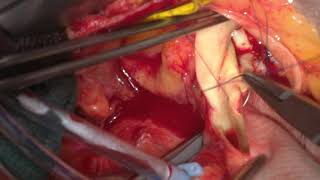
Left ventricular outflow tract aneurysm compressing the left main. A 44 –year-old male patient presented with shortness of breath and chest pain. ECG showed ST depression in the lateral leads. Echocardiogram showed subaortic aneurysm below the left coronary and non-coronary cusp with impaired LV function. Left coronary angiogram revealed 90% obstruction of Left Main due…
Introduction Valve sparing operations provide excellent long term results but are technically demanding and time consuming (1,2). An alternative approach is the “sleeve” technique (3). Since 2006, the authors have addressed aortic root disease with a modified sleeve procedure and have performed 180 interventions in such a way (3,4). Patient selectionThe procedure addresses aortic root…