Content from the Journal of the American Neurological Surgeons.
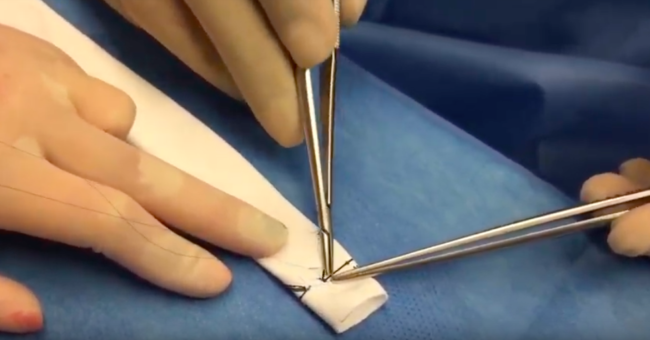
Nearly all conduits used for right ventricular outflow tract (RVOT) reconstruction require replacement because of stenosis or insufficiency, especially in infants and young children. Since the mid-1980s, cryopreserved homografts have been the conduit of choice in the United States for RVOT reconstruction. Since 2008, the authors’ institution has been using handmade bicuspid-valved polytetrafluoroethylene (PTFE) conduits…
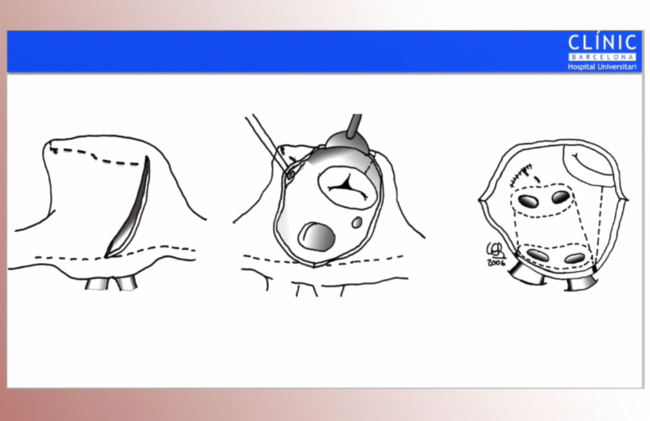
Manuel Castella of the University of Barcelona in Spain presents a discussion on addressing atrial fibrillation during mitral valve surgery. This presentation was originally given during the SCTS Ionescu University program at the 2018 Annual Meeting of the Society for Cardiothoracic Surgery in Great Britain and Ireland. This content is published with the permission of SCTS.…
Find it here: the 32nd EACTS Annual Meeting in Milan, Italy Watch previously streamed sessions here: Thursday, October 18th at 14:15 – 17:30 GMT + 2 (7:15 – 10:30 am CST)This session, moderated by Drs de Paulis and Sadaba, presents a practical approach to aortic valve repair. Friday, October 19th at 10:00 – 11:00 am…
Here, the authors describe the safe and effective use of a GelPOINT Alexis® wound retractor (Applied Medical) during a thoracoscopic CO2-aided advanced pulmonary resection. The procedure carried out was a right lower bilobectomy for non-small cell lung cancer (NSCLC). The authors applied a two-port anterior approach, using a 3 cm incision for the utility port…
Surgical exposure and cannulation of the femoral artery and vein is the standard approach for connection to the extracorporeal circulation in minimally invasive valve surgery. There are, however, potential downsides, such as the retrograde direction of arterial perfusion and the potential for local inguinal complications, such as lymphorrhea, irritation of the femoral nerve, or infection.…
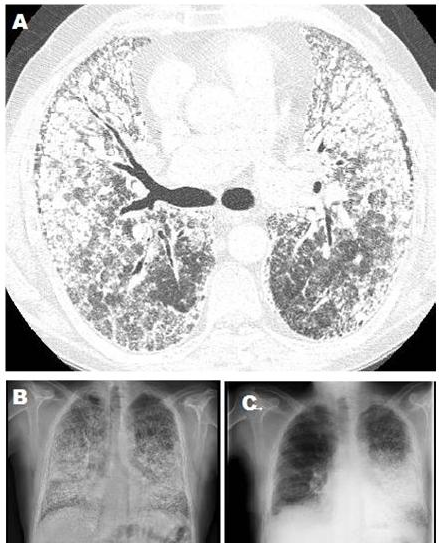
Background Pulmonary alveolar microlithiasis (PAM) is a rare lung disease characterized by widespread intra-alveolar accumulation of calcium phosphate deposits called microliths. Since the first macroscopic description of the disease by Malpighi almost 300 years ago, approximately 1,000 cases have been described worldwide, mainly in Asia and Europe, without clear gender predilection (1). PAM has a…
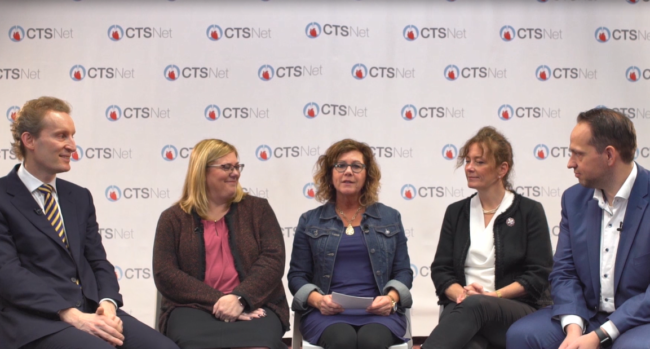
Filmed at the 2018 STS Annual Meeting in Fort Lauderdale, Florida, Jill Ley of the California Pacific Medical Center in San Francisco, California, USA, moderates a discussion on developing and fostering cardiothoracic surgical teams. She is joined by Patricia Keegan of the Emory Structural Heart Team in Atlanta, Georgia, USA, Tara Bartley of the Queen…
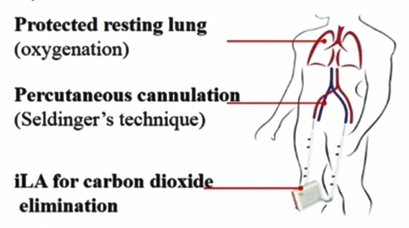
Donna Eaton of the Mater Misericordiae University Hospital in Dublin, Ireland, presents a discussion on the use of extracorporeal membrane oxygenation in thoracic surgery. This presentation was originally given during the SCTS Ionescu University program at the 2018 Annual Meeting of the Society for Cardiothoracic Surgery in Great Britain and Ireland. This content is published…
IntroductionCongenital heart disease in adults is a field in constant evolution, with a quest for optimal management of adult patients. In the authors’ part of the world, surgeons deal with all kinds of adult congenital heart diseases, such as atrial and ventricular septal defects, tetralogy of Fallot (TOF), and others. A study of adult TOF…
IntroductionChronic thromboembolic pulmonary hypertension (CTEPH) occurs in less than 3.8% of pulmonary embolism (PE) cases. It results from concomitant pulmonary vascular obstruction and small-vessel fibrointimal hyperplasia, which leads to elevated pulmonary artery pressures, elevated pulmonary vascular resistance, and subsequent right heart failure [1-4]. If left untreated, CTEPH is fatal. Medical therapy remains unsatisfactory. Pulmonary thromboendarterectomy…
This video demonstrates a posterolateral thoracotomy. The authors detail the procedure in a step-by-step fashion, using diagrams and surgical video to illustrate key technical elements. This video also shows a muscle-sparing approach to the posterolateral thoracotomy, preserving the serratus anterior. If a muscle-sparing approach is not desired, then the serratus muscle may simply be divided…
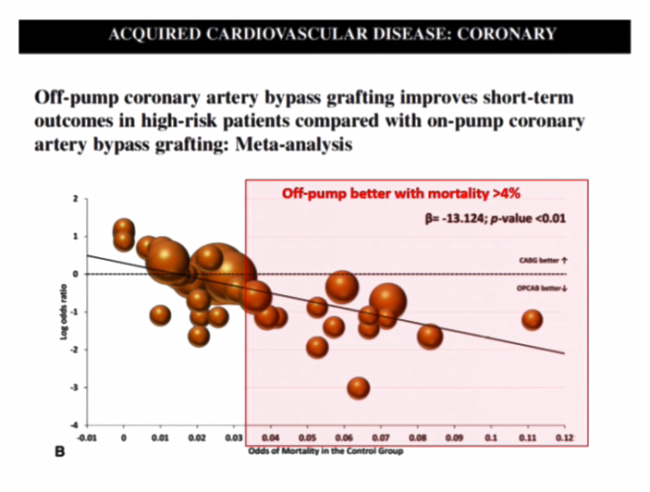
Umberto Benedetto of the Bristol Heart Institute in the UK presents a discussion on the benefits of off-pump coronary artery bypass surgery (CABG) for high risk patients, and presents long-term and short-term outcomes data for on-pump versus off-pump CABG. This presentation was originally given during the SCTS Ionescu University program at the 2018 Annual Meeting…
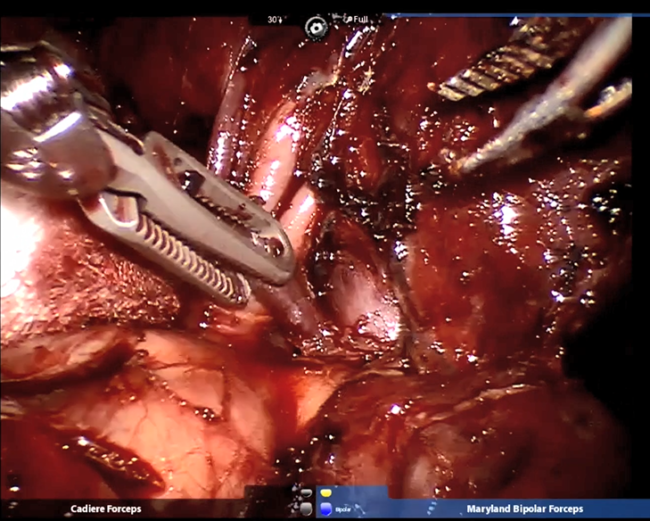
This video demonstrates a robotic right upper lobe segmentectomy using indocyanine green (ICG) guidance. The patient was a 73-year-old woman who had a previous left lower lobectomy for squamous cell cancer and removal of a malignant station L8 lymph node. She presented with a new nodule in the posterior segment of her right upper lobe,…
In the acute postoperative period after cardiac surgery, pacing wires can be inserted into the atria or ventricles to form an external artificial cardiac conductive system controlled by an external pulse generator. While the majority of patients do not require pacing, postoperative pacing wires are almost always positioned because of the risk of conductive abnormalities…
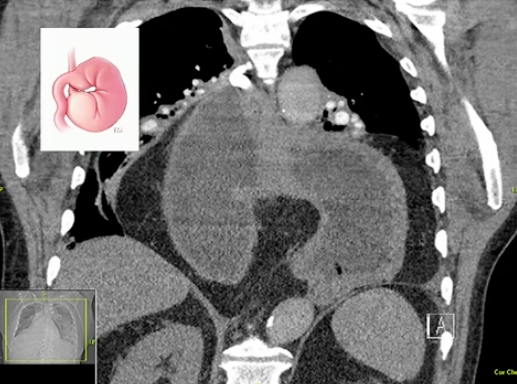
Paraesophageal hernias are complex and challenging when they occur with acute symptoms, in malnourished patients, or when there is gastric ischemia. Treatment should be individualized based on each patient’s clinical characteristics. Medical treatment is often offered to most patients without chronic symptoms. In elective patients with good preoperative performance, surgical repair should be performed to…
Find it here: The 5th International VATS Symposium in Monza, Italy. This postgraduate course emphasizes the use of video-based education and in-depth discussion of technical details. The theme of the 2018 meeting is “a special focus on segmentectomies: indications and surgical techniques.” No registration is necessary to participate in this livestreaming event. Questions posted to…