Content from the Journal of the American Neurological Surgeons.
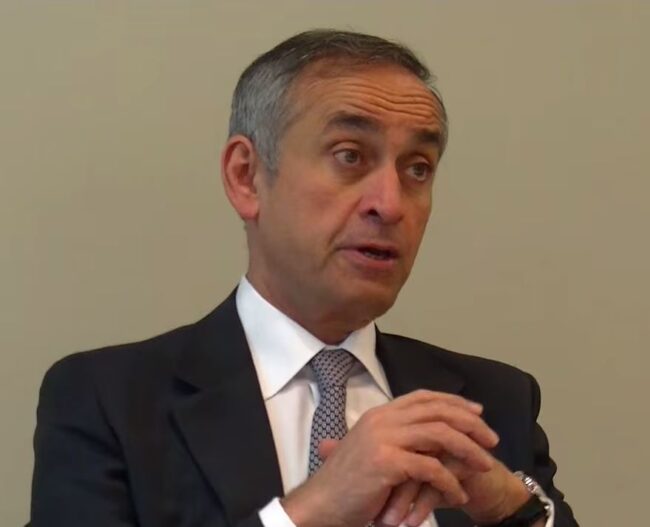
In this recent interview, Leanne Harling talks to Sir Ara Darzi, former Parliamentary Under-Secretary of the Department of Health, United Kingdom. Professor Sir Darzi discusses the current state of healthcare and strategies for fostering ongoing innovation across all the surgical specialties.
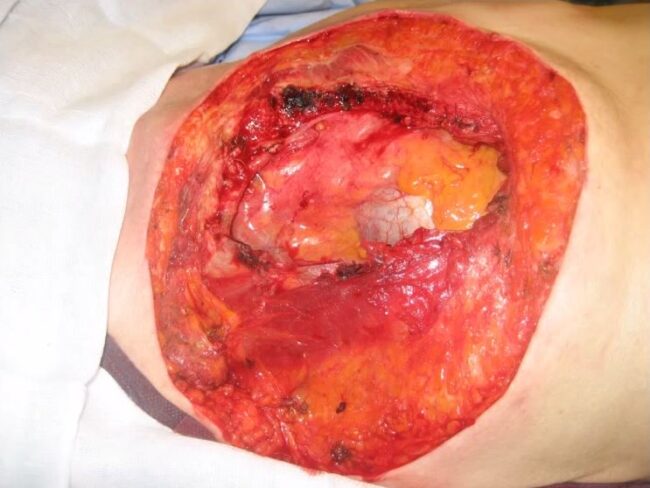
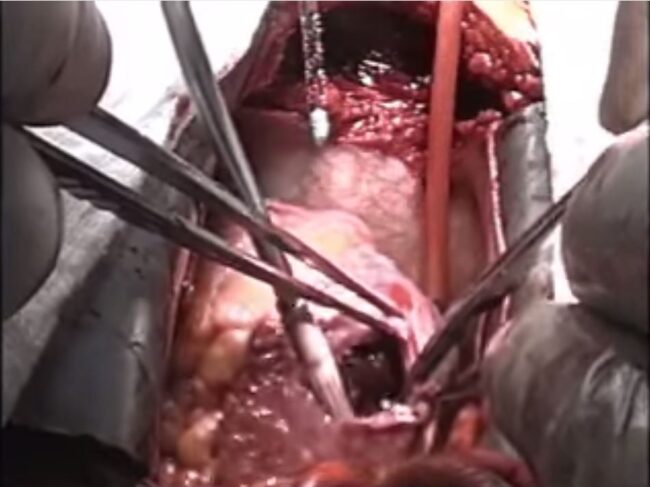
Radionecrosis of the chest wall requires wide resection of irradiated and infected tissue. Covering the wound with the omentum is a safe and reliable procedure, but, if the pleura has been opened the omentum will not provide airtightness. This video describes a simple trick to overcome this difficulty, allowing the use of the omentum in…
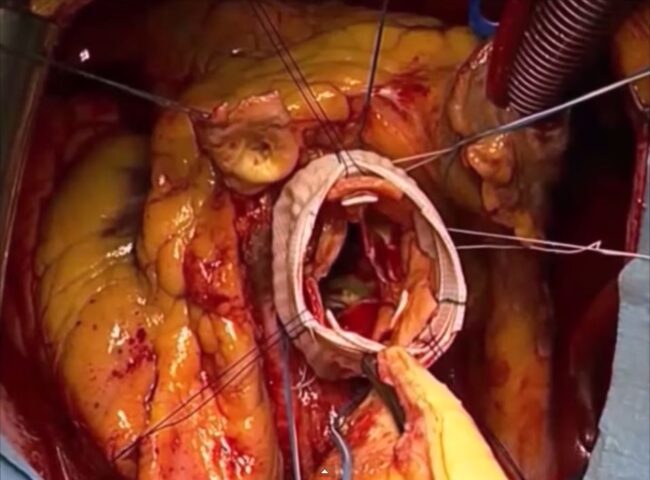
This video presents the case of a 37-year-old man diagnosed with tetralogy of Fallot (TOF) with absent pulmonary valve syndrome. He underwent surgery, and a bioprosthetic valve was placed at the level of the infundibulum. This is a novel technique that the authors believe can be safely used for reconstruction of the right ventricular outflow…
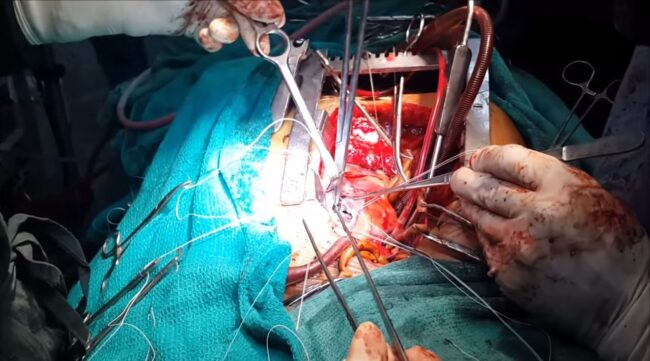
A 73-year-old male presented with an ascending and aortic arch aneurysm, and aortic valve insufficiency. The patient had no coronaropathy, and normal left ventricle function. He had hypertension. The diameter of the ascending aorta was 57 x 60 mm, and the aortic arch diameter was 54 mm on preoperatory angio-CT scan. Aortography confirmed the irregular…
In this recent interview with Joel Dunning, Robert Cerfolio discusses his philosophies regarding thoracic surgery and life. Dr. Cerfolio is a Professor of Surgery and the Section Chief of Thoracic Surgery at the University of Alabama at Birmingham, and a past president of the Southern Thoracic Surgical Association. Dr. Cerfolio shares his thoughts on building a…
Over the past 10 years, video-assisted thoracoscopic approaches (and more recently robot-assisted surgery) have replaced median sternotomy for resectable anterior mediastinal masses, including thymoma. Numerous studies confirmed that a minimally invasive approach for thymectomy, when compared to a standard sternotomy, results in less post-operative pain, better preservation of pulmonary function, and improved cosmetic outcomes (which…
Arie Blitz of the McAllen Heart Hospital, McAllen, Texas, discusses ventricular assist device (VAD) revolutions per minute (RPM) settings to maximize output and effectiveness. This educational presentation was originally given during the 9th annual New Orleans Conference. This content is published with the permission of the New Orleans Conference. For more information on the New Orleans…
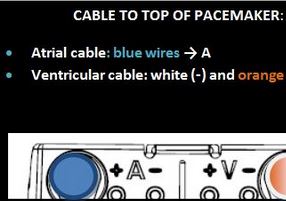
Determining the Stimulation Threshold NOTE: a paced rhythm must be present and patient stable From 100% pacing, gradually decrease output for A or V, while watching monitor until you lose capture Now gradually increase output until 1:1 capture returns – this is the stimulation threshold This is the lowest amount of energy that will reliably…
Duke Cameron of the Johns Hopkins Hospital, Baltimore, Maryland, discusses the surgical management of the aortic root in acute aortic dissection. Dr. Cameron reflects on the question: is an aggressive surgical approach advisable for patients with acute aortic dissection? This presentation was originally given during the SCTS Ionescu University program at the 80th Annual Meeting…
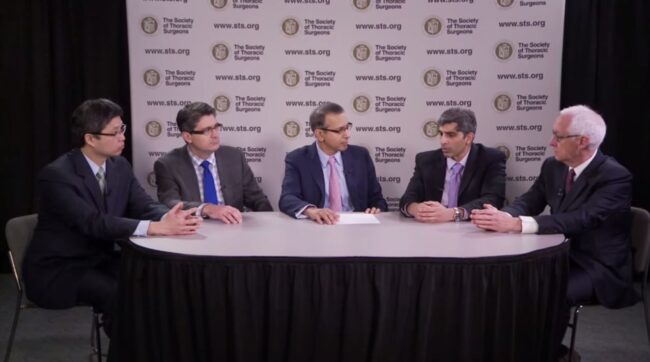
Filmed at the 2015 STS Annual Meeting in San Diego, California, this roundtable focuses on percutaneous mitral valve repair. Vinod Thourani moderates a discussion with Michael Mack, Wilson, Szeto, Eric Roselli, and Gorav Ailawadi. The panelists discuss the advent of percutaneous mitral valve repair technologies, the COAPT Trial, and indications for a percutaneous approach to…
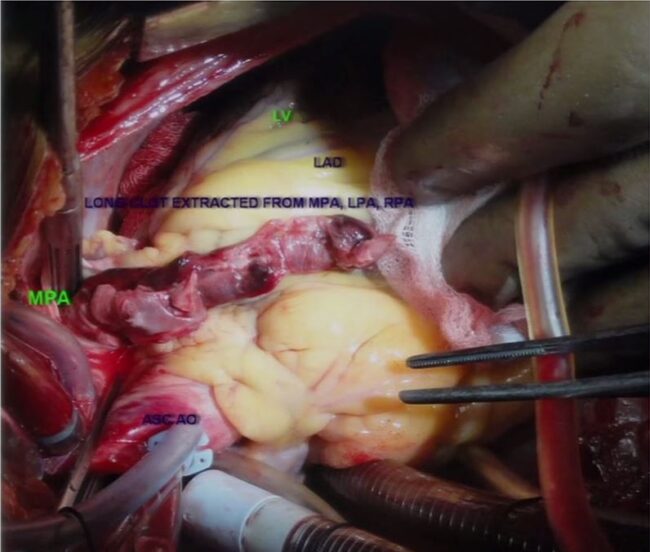
Mahesh Ramchandani of Houston Methodist Hospital, Houston, Texas, discusses the use of the AngioVac device for removal of unwanted intravascular material. This educational presentation was originally given during the 9th annual New Orleans Conference. This content is published with the permission of the New Orleans Conference. For more information on the New Orleans Conference, please click here.
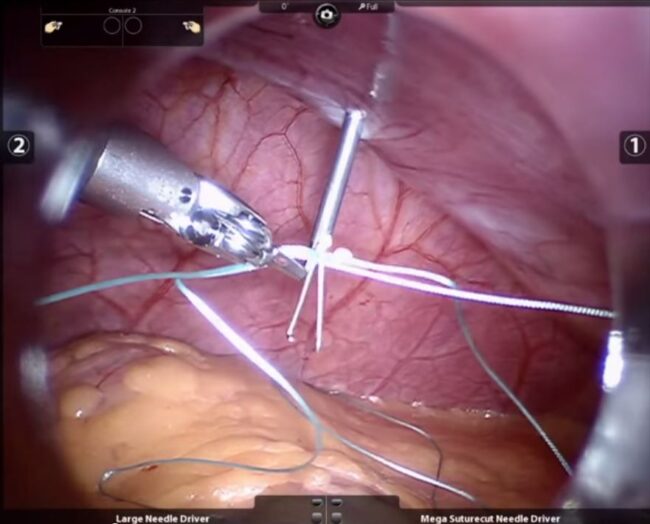
Diaphragm plication provides symptomatic palliation to patients who suffer from unilateral paralysis due to a variety of etiologies. Multiple approaches have been described, and include open and minimally invasive techniques via either trans-thoracic or transabdominal approaches. This video illustrates the author’s preferred laparoscopic technique, which takes advantage of the dexterity afforded by the surgical robot…
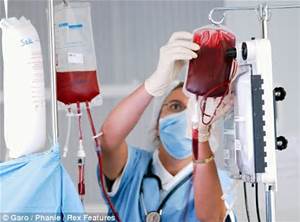
Supportive Data Perioperative bleeding, while universal after cardiac surgery, remains complex and is poorly defined. Current literature supports general strategies to maintain hemostasis and avoid transfusion, with sparse evidence to guide specific management in this population. While there is general agreement that blood transfusion poses adverse risks, severe anemia/hemorrhage may be fatal and the timely…
Atrial myxomas are the most common type of primary cardiac tumor, with over three-fourths occurring in the left atrium. In this case, a right atrial myxoma had grown to extremely large dimensions, but caused only minimal symptoms. This video demonstrates the surgical resection technique.
Olaf Wendler of King’s College Hospital, London, UK, discusses the surgical treatment of aortic infections, including aortic root endocarditis and mycotic aortic aneurysm. This presentation was originally given during the SCTS Ionescu University program at the 80th Annual Meeting of the Society for Cardiothoracic Surgery in Great Britain and Ireland. This content is published with…
Denton Cooley, founder of the Texas Heart Institute, was the first US surgeon to perform a heart transplant and implant an artificial heart. In this interview with Mohamad Bashir, Dr. Cooley discusses his incredible career. Dr. Cooley also shares his thoughts on inspiration, leadership, and the future of aortic surgery.