Content from the Journal of the American Neurological Surgeons.
The patient was a 13-year-old boy who was born with a congenital unicuspid or bicuspid aortic valve. He developed progressive aortic valve stenosis and became symptomatic. The decision was made to proceed with the Ross procedure. Through median sternotomy, cardiopulmonary bypass (CPB) was initiated via aortic and bicaval cannulation. After cardioplegic arrest, the autograft was…
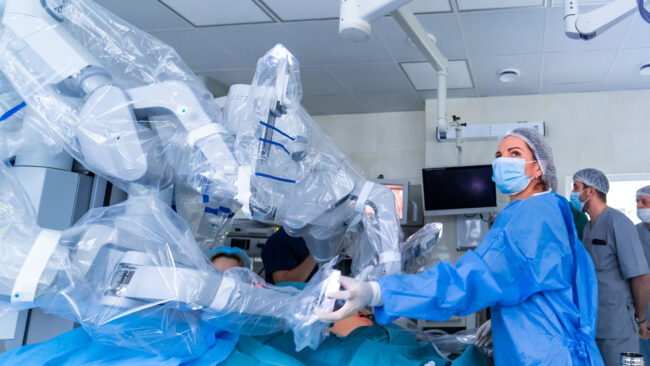
This video is part of CTSNet’s 2025 Resident Video Competition. Watch all entries into the competition, including the winning videos. In this video, the authors demonstrate a robotic-assisted thoracoscopic resection of a secretory intrapericardial paraganglioma. The purpose of this video is to review preoperative planning with a multidisciplinary team, robotic port placement, and surgical technique. A 42-year-old woman presented…
A 51-year-old nonsmoking female presented with recurrent pneumonia and a persistent cough. A chest computed tomography (CT) demonstrated an obstructive lesion in the left lower lobe bronchus with hyperinflation of the lower lobe. Positron emission tomography (PET)/CT revealed increased metabolic uptake at the lesion site, without evidence of distant metastasis. Bronchoscopic biopsy indicated a neuroendocrine…
This video is part of CTSNet’s 2025 Resident Video Competition. Watch all entries into the competition, including the winning videos. This is the case of a 27-year-old female with a past medical history of gastroesophageal reflux disease, cholelithiasis, and postpartum hemorrhage. She presented to the cardiologist’s office with an exacerbation of long-standing palpitations and sporadic postural dizziness that had…
Each month, thoracic surgeon and CTSNet Senior Editor Leanne Ashrafian spotlights unique surgical cases in cardiothoracic surgery through this Case of the Month series. For more videos in this series, click here. In this episode of the Case of the Month, thoracic surgeon and CTSNet Senior Editor Leanne Ashrafian is joined by Dr. John Pilling, a consultant thoracic surgeon at Guy’s and…
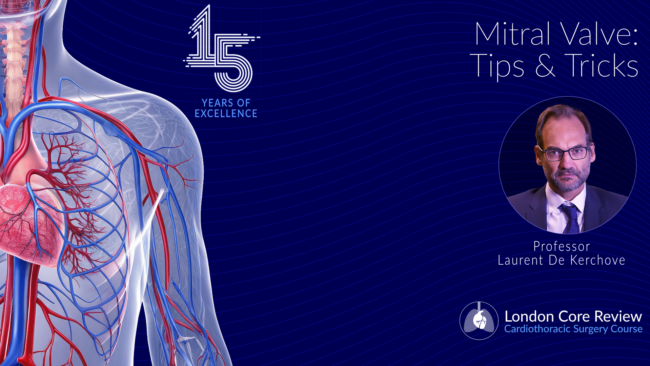
Click here to view all videos from the 2025 London Core Review Cardiothoracic Surgery Course and register for the 2026 session below. In this session from the 2025 London Core Review Cardiothoracic Surgery Course, Dr. Laurent de Kerchove, Head of Cardiothoracic and Vascular Surgery Department at Cliniques Universitaires Saint-Luc, Belgium, discusses tips and tricks…
This video is part of CTSNet’s 2025 Resident Video Competition. Watch all entries into the competition, including the winning videos. Clinical Vignette A 41-year-old male with a unicuspid aortic valve since childhood and an ascending aortic aneurysm was referred after developing worsening fatigue with exercise and occasional palpitations. The echocardiogram showed an ejection fraction of 50 to 55 percent, severe…
A 2.8 kg newborn with signs of congestive heart failure was admitted to the authors’ center. He was diagnosed with situs inversus totalis, dextrocardia, bilateral superior vena cava, atrial septal defect (ASD II), and biventricular anatomy. Additionally, there was mixed total anomalous pulmonary venous connection (TAPVC) with an obstructive horizontal vein draining into the right-sided…
This video is part of CTSNet’s 2025 Resident Video Competition. Watch all entries into the competition, including the winning videos. A 38-year-old male with a history of non-seminomatous germ cell tumor (NSGCT) of the anterior mediastinum, previously treated with four cycles of bleomycin, etoposide, and cisplatin, presented with a 4 cm residual mediastinal mass. Tumor markers prior to surgery…
A 20-year-old woman, weighing 50 kg, presented with exertional shortness of breath and palpitations. An echocardiogram showed a left ventricular tumor that distorted the left ventricular cavity. Cardiac computed tomography (CT) and magnetic resonance imaging (MRI) showed a well-circumscribed mass in the lateral wall of the left ventricle that had a density similar to fibroma,…
This presentation details a redo Commando procedure converting biological to mechanical valves in a patient in his early 40s with end-stage renal disease. Three years after his initial Commando procedure with aortic and mitral bioprostheses, he developed severe prosthetic valve dysfunction with extensive calcification, presenting with heart failure symptoms. Preoperative imaging showed mean gradients of…
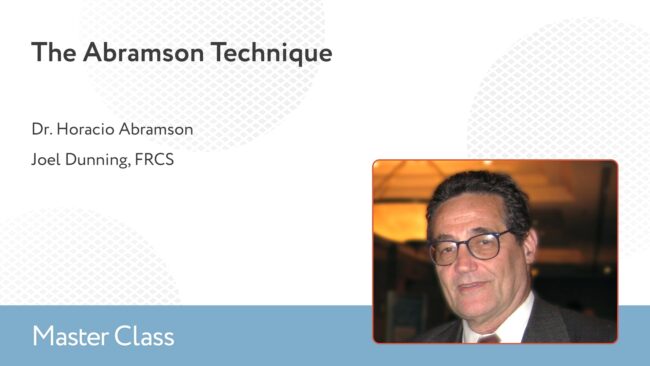
In this series, CTSNet invites top cardiothoracic surgeons from around the world to engage in in-depth discussions about important topics in the field of CT surgery by examining specific cases in detail. Watch for more insightful master class videos in the coming weeks. In this in-depth discussion, CTSNet Editor-in-Chief Joel Dunning and Dr. Horacio…
The authors present a case of endoscopic saphenous vein harvesting for coronary artery bypass grafting (CABG) using a reusable retractor with an open CO₂ insufflation system. Prior to the procedure, the venous system of the lower extremities was routinely evaluated using ultrasound. The saphenous vein was assessed for quality and suitability for endoscopic harvesting, and the…
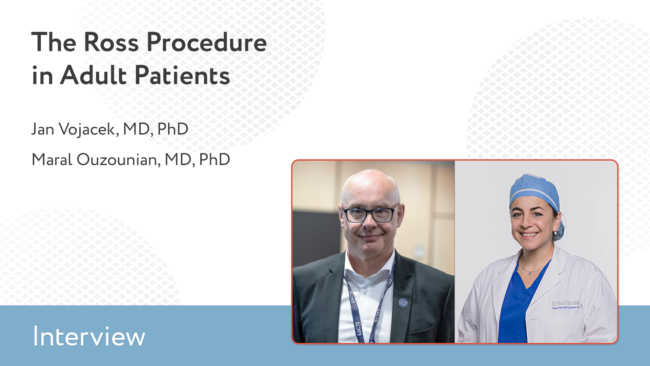
In this phenomenal interview, CTSNet Editor-in-Chief Joel Dunning speaks with Drs. Jan Vojacek, a cardiac surgeon in the department of cardiac surgery at University Hospital Hradec Kralove, Czech Republic, and president of the Czech Society for Cardiovascular Surgery, and Maral Ouzounian, cardiac surgeon and head of the division of cardiac surgery at the Peter Munk…
This video is part of CTSNet’s 2025 Resident Video Competition. Watch all entries into the competition, including the winning videos. In this video, the authors demonstrate the surgical steps of aortic arch vessel debranching through a cervical approach as the first stage in the hybrid treatment for complex aortic arch pathology. Treatment of thoracic aortic diseases poses a significant surgical…
Rib fractures have been reported to occur in 20 percent of patients with thoracic trauma (1). A second rib fracture indicates high-impact trauma and is usually associated with clavicle and scapular fractures. A fracture of the second rib is associated with high probability of injury to the subclavian vessels, branches of the brachial plexus, and…