Content from the Journal of the American Neurological Surgeons.
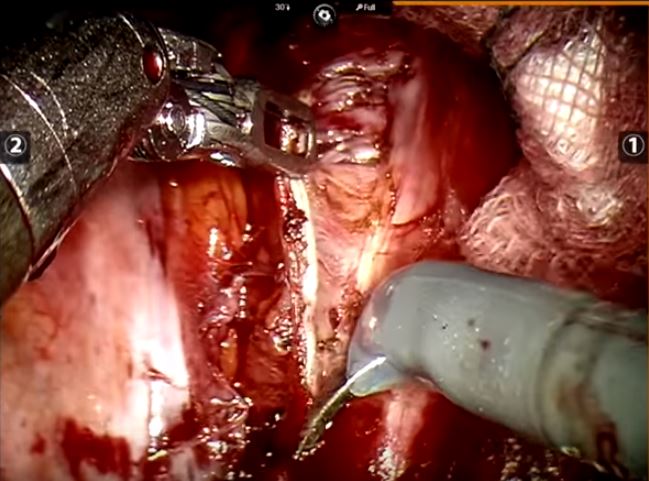
Robotic anatomic lung segmentectomy is a feasible and safe procedure. In patients with metastatic cancer to the lung who are eligible for surgery, anatomic segmentectomy may be beneficial as a way of optimizing future resection. In such cases, hilar node dissection often uncovers occult nodal involvement when the metastases are centrally located. In this video,…
This video shows an example of a transthoracic robotic resection of an esophageal leiomyoma. A 48-year-old male was admitted with the complaint of dysphagia. A thoracic CT scan revealed a lesion located at the carinal level of the esophagus. The endoscopic findings confirmed that a 6 cm leiomyoma with no mucosal invasion was obstructing 75%…
In a discussion filmed at the 2015 EACTS Annual Meeting in Amsterdam, The Netherlands, an international panel of experts considers the management of porcelain aorta. Mohamad Bashir of the Liverpool Heart and Chest Hospital, Liverpool, United Kingdom, is joined by Michael Borger of Columbia University Medical Center, New York, United States; Joseph Coselli of the Texas…
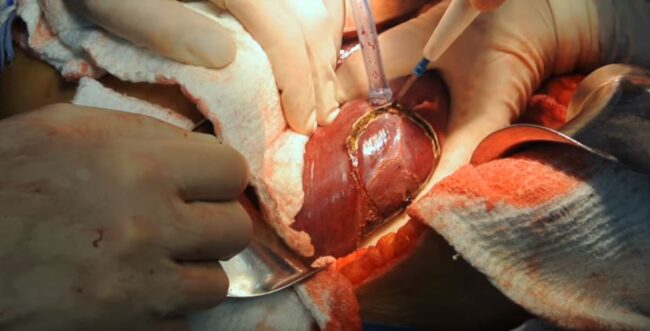
The resection of liver and lung metastases is recommended in select patients with metastatic colorectal or renal cell carcinoma. Although the metastasectomy may not be curative, a large retrospective analysis has revealed improved cancer-specific survival after treatment of the primary tumor and resection of the metastases. The aim of this video is to present a…
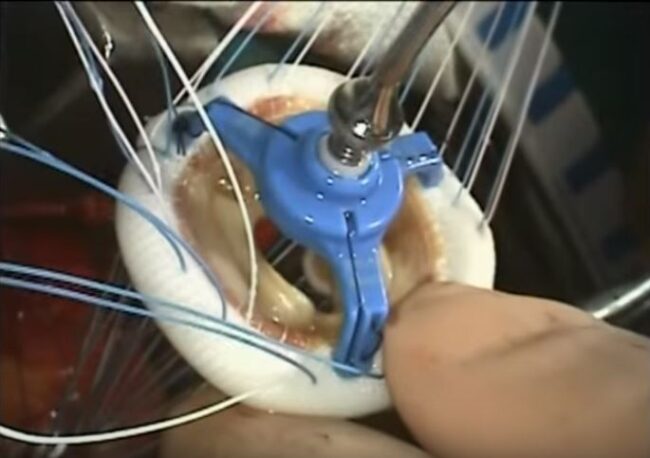
A 74-year-old female with severe left ventricular dysfunction and prior permanent pacemaker placement presented with endocarditis that involved her tricuspid valve and both pacemaker leads. This video shows the excision of the vegetation, tricuspid valve, and pacemaker leads, along with a tricuspid valve replacement and implantation of permanent epicardial pacing leads for biventricular pacing.
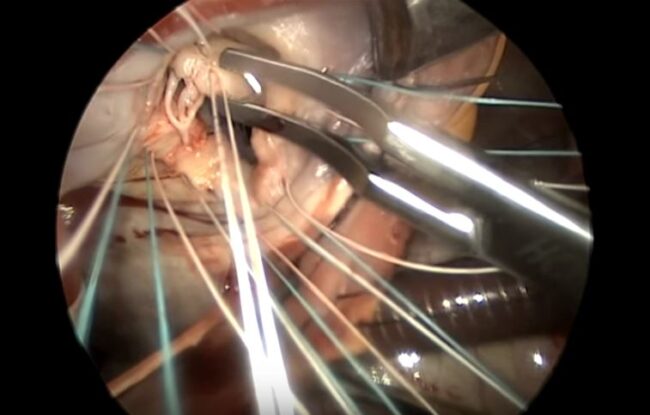
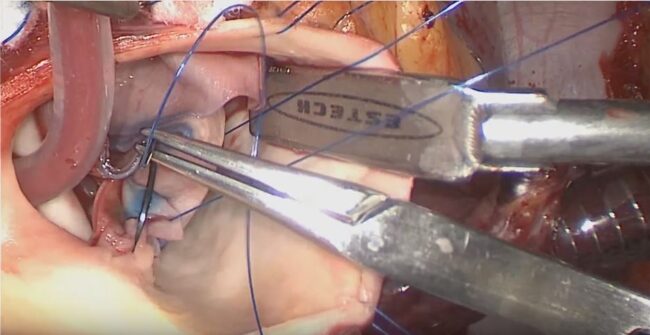
A 64-year-old woman with class III dyspnea was suffering from severe mitral regurgitation due to chordal rupture at the A2 segment. This video demonstrates the repair of the lesion using CV5 gore-tex to insert the neochorda into the segment.
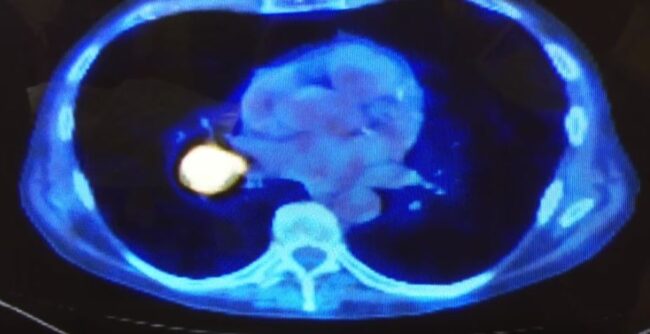
This video presents the case of a 52-year-old woman who underwent resection and consolidation chemotherapy for rectal cancer after neoadjuvant treatment in 2008. She presented five years later with a new 1.8 cm right lower lobe metabolically active nodule (SUV max 6.6) in the superior segment. The patient was never a smoker and had normal…
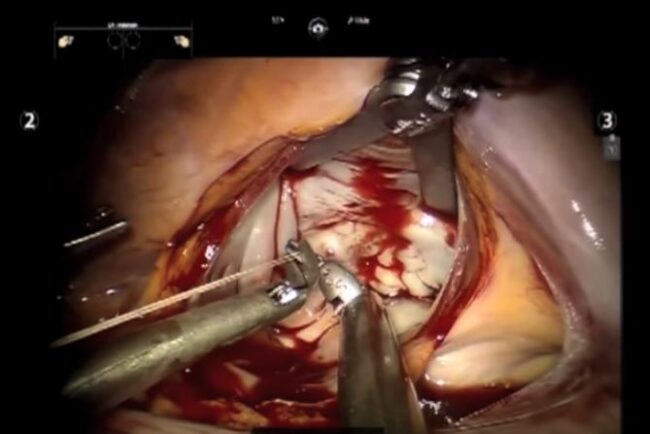
This video shows a complex mitral valve repair performed for active endocarditis with persistent bacteremia, fevers, and embolic neurologic events. The patient underwent a robotic-assisted repair with the excision of several vegetations, and then subsequent leaflet plasty and pericardial leaflet patch repair. The patient had an uneventful post-operative recovery with no recurrent neurologic events and…
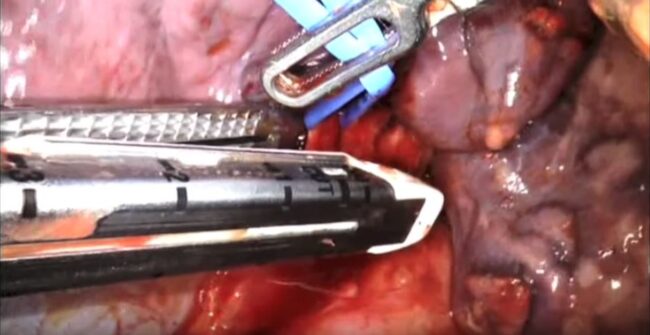
This video shows a middle lobectomy performed via a uniportal approach on a 55-year-old woman who had previously undergone a right upper lobectomy.The patient underwent a right upper lobectomy for a stage I adenocarcinoma in 2014. During a follow-up exam, a 6 mm indeterminate nodule in the middle lobe was shown to have progressed to…
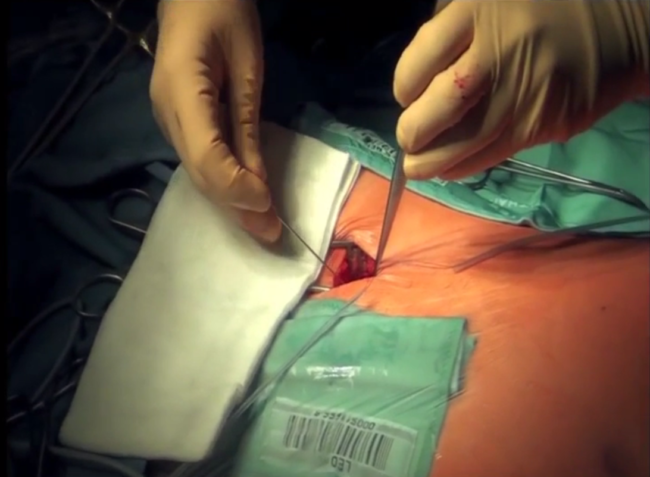
This video demonstrates a micropneumonectomy. This technique uses 5 mm ports in the intercostal space and a subxiphoid incision for the stapler. The lung is removed through the subxiphoid incision. CO2 and the anterior VATS lobectomy approach are used for duration of the operation. VATS pneumonectomy is often limited by the large size of the…
Friedrich Mohr of the Heart Center, Leipzig, Germany, discusses his 18 years of experience performing minimally invasive mitral valve surgery. Dr. Mohr shares statistics on minimally invasive mitral valve surgery, as well as specific surgical techniques. Click here for more informative content from Dr. Mohr. These presentations were originally given during the SCTS Ionescu University…
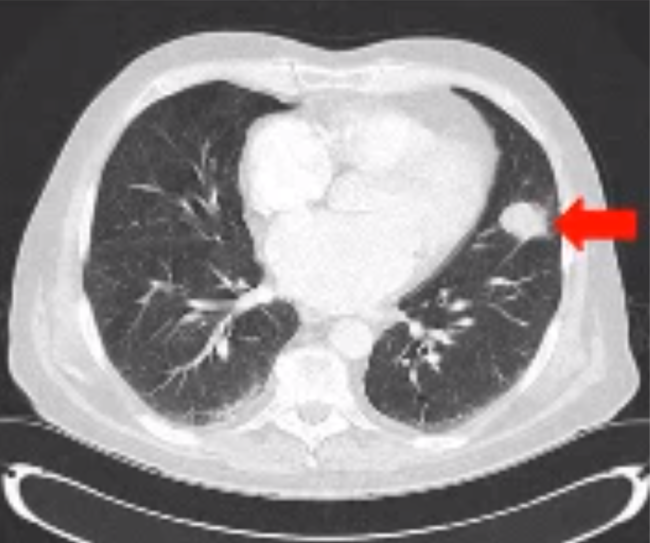
Case This video presents the case of an 82-year-old male with history of HTN, atrial fibrillation, and skin cancer. He had recently quit smoking after a 30 pack per year history. The patient presented with hemoptysis and investigation revealed a 3 cm spiculated mass in the lingula, which was a concern for malignancy. A CT…
Originally presented as a Surgical Motion Picture at the 2015 STSA Annual Meeting Objectives: Outcomes for surgical management of aortic valve endocarditis are still suboptimal and represent an excellent opportunity for quality improvement. Transitioning to aortic valve repair seems logical, but a recent effort involving limited autologous pericardial leaflet patching had a high failure/reoperation rate.…
Background It is estimated that up to one in 100 children will be born with a congenital cardiac defect. This incidence may be even higher in developing nations where the capacity to care for the patients is low or completely absent [1]. In this regard, cardiothoracic surgeons have a long and storied history of humanitarian…
At the 2015 SCTS Annual Meeting in Manchester, United Kingdom, Mohamad Bashir and Duke Cameron sat down for an in-depth discussion of valve-sparing aortic root replacement. Dr. Cameron is Chief of the Division of Cardiac Surgery and Pediatric Cardiac Surgery at The Johns Hopkins Hospital, Baltimore, Maryland, AATS Vice President, and CTSNet Treasurer. He shares…
In this video, the author presents the case of a 78-year-old patient who was admitted for recurrent lung carcinoma in the left lower lobe. Three years prior, the patient was diagnosed with adenocarcinoma in the right upper lobe. The patient underwent a right upper lobectomy, wedge resection of the lower lobe, and mediastinal lymphadenectomy via…