Content from the Journal of the American Neurological Surgeons.
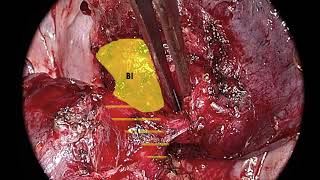
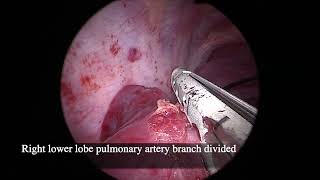
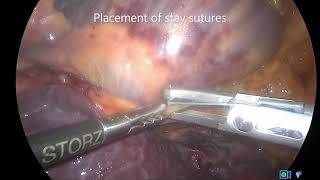
This video demonstrates the technique of an open right lower sleeve lobectomy. The patient is a thirty-four-year-old male diagnosed with a typical carcinoid involving the right lower lobe bronchus. For this surgery, a right posterolateral thoracotomy approach was used. Lung isolation was achieved with a left-sided double lumen endotracheal tube (DLT). The surgical steps depicted…
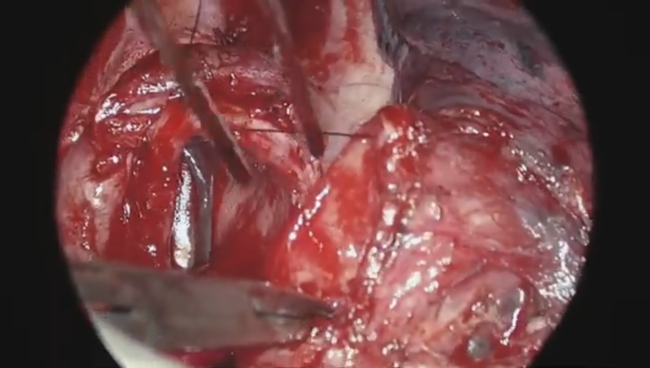
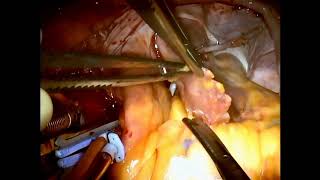
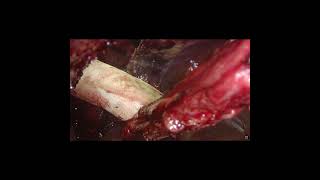
This video demonstrates the use of autologous pericardium to reinforce and reconstruct the posterior annulus during a mitral valve replacement for endocarditis and severe mitral annular calcification (MAC). Background The patient was initially admitted for pneumonia and sepsis. After persistently positive blood cultures despite appropriate antibiotics, he underwent an echocardiogram on hospital day four, which…
Surgical resection is curative for carcinoid tumors of the airway (1). Parenchymal preserving techniques such as bronchoplasty and sleeve resections have been shown to have equivalent oncological outcomes when compared to more radical resections (2). This video demonstrates two cases. The first is a simple resection of a typical carcinoid tumor located in the right…
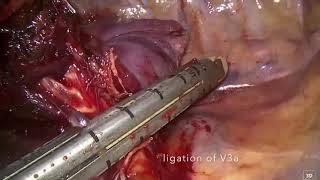
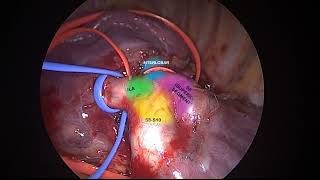
Recently, there has been a worldwide increase in the number of segmentectomies for early-stage I primary lung cancer, intrapulmonary metastases, and benign disease limited to segmental borders and not suitable for wedge resection (1,2). As a result, residents, trainees, and young surgeons in the fields of cardiothoracic and thoracic surgery are getting more exposed to…
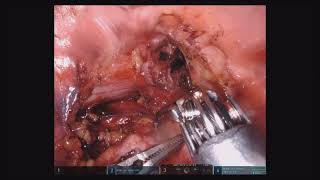
This video demonstrates the robotic resection of an extremely apically located posterior mediastinal mass in a patient who had a prior ipsilateral thoracotomy. It highlights the fact that robotic surgery can be utilized in patients with a prior thoracotomy and may even provide an advantage in the resection of extremely apical posterior mediastinal masses, which…
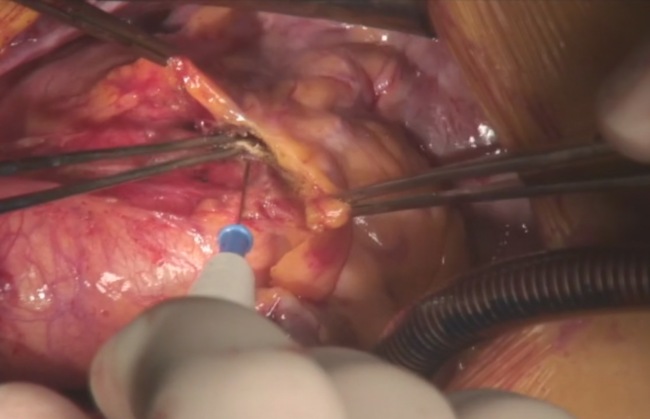
Operative videos are becoming increasingly common on many platforms, yet the quality of these videos in the field of cardiac surgery has room for improvement. Many surgical fields have shifted to video-based surgery platforms such as thoracoscopy and laparoscopy, which allow for inherently high-quality surgical videos. Yet most cardiac operations are still performed using open…
A forty-seven-year-old male with a known case of advanced retroperitoneum leiomyosarcoma developed a sudden right shoulder pain with unusual resistance upon flushing of his chemo port. An immediate chest X-ray showed evidence of a chemo port catheter fracture that was situated behind a cardiac shadow. A CT scan confirmed that the fractured distal portion of…
Anomalous aortic origin of the left coronary artery (AAOLCA) from the right coronary sinus is a rare condition. However, this disease process is clinically important because it carries an increased risk of sudden cardiac death in otherwise healthy young people. This is especially true when compared to anomalous right coronary arteries. Anatomically, after its origin…
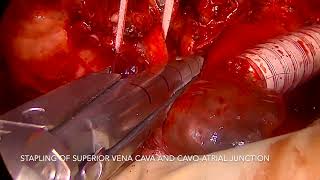
This video describes the management of an extended resection for thymoma invading the superior vena cava and other essential structures, including the cavoatrial junction, right phrenic nerve, and brachiocephalic veins. The different steps and the orders in which to perform them are important. When do we clamp the superior vena cava? Can we preserve the…
Postoperative atrial fibrillation is the most common arrhythmia following cardiac surgery. While often self-limiting, studies have demonstrated that it is associated with increased morbidity and mortality, including thromboembolic stroke and recurrent atrial fibrillation, hospital stay length, and healthcare costs. Furthermore, research has shown that in patients with nonvalvular atrial fibrillation, the left atrial appendage serves…
The patient was a fourteen-month-old infant who was born at term with an antenatal diagnosis of congenital pulmonary airway malformation. The infant was otherwise healthy and never had any episode of chest infection. Her CT chest showed mixed micro and macro cystic lesions, occupying 50 percent of the right lower lobe, without evidence of synchronous…
Tracheobronchial injury is a rare occurrence in people with blunt thoracic trauma, and it is associated with significant mortality (1). The majority of patients with tracheobronchial injuries die before reaching the hospital because of the associated mechanism of high-energy impact injuries. However, for those who survive, signs and symptoms can be nonspecific, and a high…
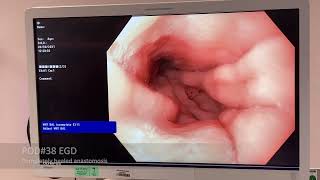
Anastomotic leaks after minimally invasive Ivor Lewis esophagectomy result in high morbidity for patients, including reoperation, prolonged hospitalization, and the need for distal feeding access. The treatment of anastomotic leaks varies widely and depends on the timing of presentation, the patient’s clinical status, and the severity and extent of contamination into the pleural cavity. Management…
A seventy-four-year-old male underwent a thoracoscopic biatrial ablation procedure with bipolar frequency. His past cardiac history was significant, with a three-year history of atrial fibrillation and multiple failed cardioversions. Further details of the procedure are as follows: Preoperative TTE: EF 65% Biatrial enlargement Mild mitral valve regurgitation Cardiac Catheterization No…
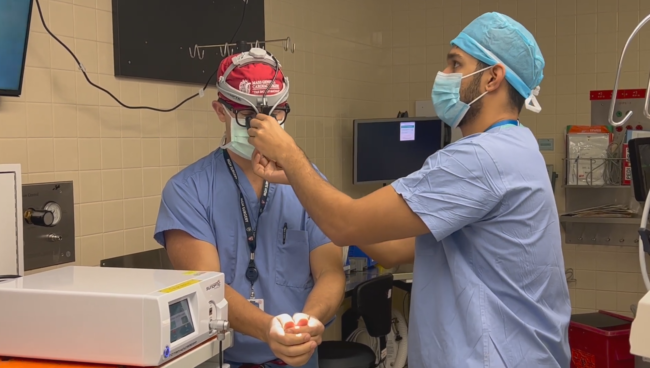
Holography is a method of creating three-dimensional images called holograms. These are made by superimposing a second wavefront, usually defined as a reference beam, on the wavefront of interest. This produces an interference pattern, which is then recorded on a physical medium (1). Holograms are used in many fields, including logistics, search and rescue operations,…
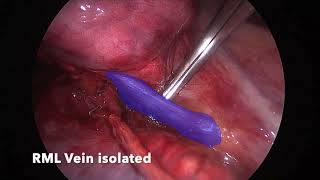
This video demonstrates a technique for VATS right en bloc S3, S4, S5 segmentectomy. The primary surgeon for this operation was Mr. Soon Sing Yang, a consultant cardiothoracic surgeon. The video shows an example of the CT thorax (in axial view) lung window. Surgeons always use the airways as a guide to identify the…