Content from the Journal of the American Neurological Surgeons.
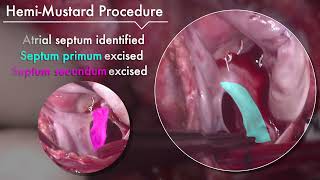
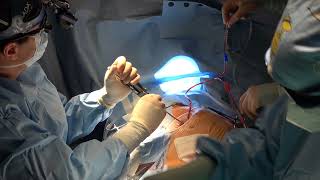
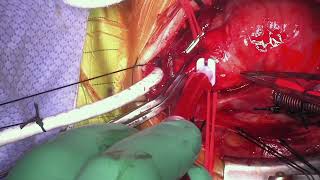
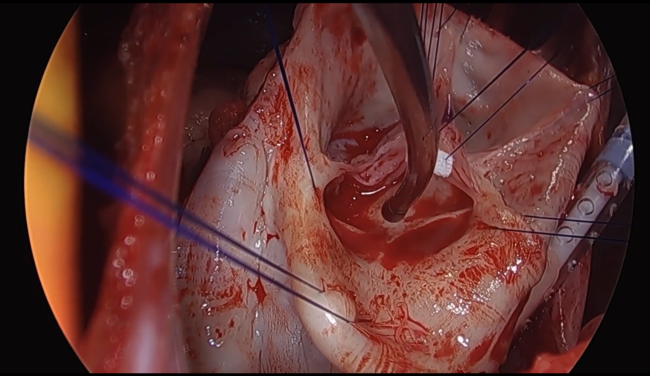
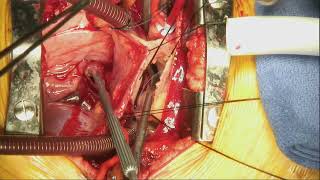
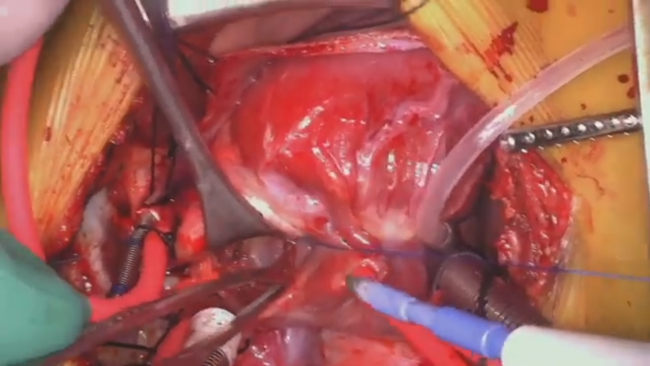
This operative technique video demonstrates an anatomic repair of congenitally corrected transposition (ccTGA) with ventricular septal defect (VSD), pulmonary atresia (PS), and mild right ventricular hypoplasia in a two-year-old who was palliated with a 3.5mm rmBTS (and coronary artery fistula ligation) in the neonatal period, followed by a rmBTS takedown and bidirectional Glenn shunt at…
This is a retrospective study that was performed in the Department of Thoracic and Cardiovascular Surgery, Subspecialty Hospital – Medical City (Baghdad) from January 1, 2017 to December 21, 2020. The aim of this study was to show the points of agreement and disagreement with other studies throughout the world that deal with mediastinal masses…
As the execution of percutaneous edge-to-edge repair increases, so does the need for surgical treatment of failed procedures. Mitral valve surgery after failed percutaneous edge-to-edge repair can be complex, and the feasibility of surgical mitral valve repair or replacement depends on the patient’s underlying systemic conditions and the time between the primary percutaneous and the…
A two-week-old, 3.5 kg newborn presented with tachypnea and a heart murmur. An echocardiogram showed a type I aortopulmonary window and patent foramen ovale. A computed tomography scan confirmed the diagnosis and showed a mild distal aortic arch hypoplasia. No coronary arterial anomalies were identified. Through a standard median sternotomy, and with indirect innominate artery…
Ascending aortic dissections often involve the aortic root and create aortic valve insufficiency. Prosthetic valve replacement in this setting yields inferior long-term results. Reparative management by commissural resuspension has been associated with an incidence of valve and sinus deterioration over time. This talk—first presented at the EACTS Aortic Forum in Bologna, Italy on November 15,…
A sixty-two-year-old female with a history of chronic cough and exercise intolerance initially presented for elective calcium scoring via cardiac CT. The scan showed previously undiagnosed anomalous pulmonary venous return (scimitar vein) in the patient’s right atrium. Further workup revealed moderate right ventricular dilation and a Qp/Qs ratio of 1.92. The video accompanying this article…
As this article and video demonstrate, the superior approach for repair of supracardiac TAPVC carries several advantages, including minimal-to-no heart manipulation, ease of accessibility through the transverse pericardial sinus, and all parts of the anastomosis readily visible, which ensures creation of the largest possible anastomosis with less risk of anastomotic distortion. In this case, a three-day-old, 2.6kg male was diagnosed prenatally with supracardiac TAPVC.…
CTSNet is wrapping up another year of outstanding cardiothoracic content—and looking ahead to 2022. But before we wish you Happy New Year, we took a look back at some of our personal favorites. Here is a list of recommended content from throughout 2021 that CTSNet Editor Mark K. Ferguson, M.D. says cardiothoracic surgeons and allied health professionals shouldn’t miss. Guest Editor Series Lung Cancer Screening—Health Care Disparities By Virginia Litle Virginia Litle, MD, brought together six video presentations and discussions to broaden our…
CTSNet is marking the end of year by showcasing our top-performing content from 2021. Read on for more on everything from our most popular webinar to our most prolific contributor—and everything in between. Most Attended Webinar Aortic Root Enlargement Archived Webinar: New Insights, New Techniques This webinar on aortic root enlargement was presented by a highly esteemed group of presenters and panelists, including Ed Chen, CTSNet President…
The year is coming to a close. To honor and celebrate the last twelve months of hard work from the CTSNet community, we’ve pulled together a list of the ten most popular clinical videos contributed by CTSNet members in 2021. Let the countdown begin! 10. Total Arterial Myocardial Revascularization Using OPCAB Technique With 3 In-Situ Arterial Grafts By Giuseppe Tavilla, Daniel Beckles, Ramachandra Reddy The authors of CTSNet’s tenth most popular submitted video of 2021 demonstrate their technique…
Donald D. Chang, MD PhD Department of General Surgery, Henry Ford Hospital, Detroit, Michigan. Correspondence: dchang1@hfhs.org “Before our able discussant embarks On his salient and probing remarks I happen to have a rhyme Not that I’m buying time COVID you were never welcomed here You’ve taken so much we hold dear But we’re resilient and…
The cephalic vein is suitable for central venous access and pacemaker and defibrillator implantation. Furthermore, with a success rate of approximately 80 percent, the cephalic vein cut-down method is associated with a lower probability of complications than the subclavian puncture. A surgeon’s ability to recognize and identify the anatomical variations of the cephalic vein will reduce the occurrence of iatrogenic complications when surgery is performed in…
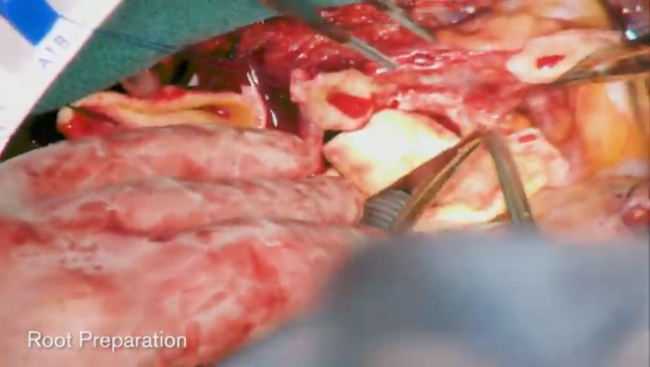
This video demonstrates a valve-sparing root replacement with a reimplantation technique in a fifty-two-year-old female with a dilated root aneurysm and a bicuspid aortic valve with mild aortic valve regurgitation. The procedure was done via median sternotomy. To start, routine cannulation for cardiopulmonary bypass was performed. Then, a left ventricular vent was inserted through the right superior pulmonary vein, cross-clamping was performed, and…
Mitral valve replacement using the top-hat technique can be an option in patients with small mitral annulus or patients with patient-prosthesis mismatch. This technique can provide adequate left ventricle in-flow without a need to perform radial incisions to the mitral annulus, intraoperative balloon dilation of the mitral annulus, or aorto-mitral curtain reconstruction. The Patient A nineteen-year-old, 62kg…
Intraoperative aortoscopy during arch resection and stabilization of the “downstream aorta” with the frozen elephant trunk (FET) procedure using hybrid stent devices (Thoraflex in this video) is a new emerging adjunct diagnostic modality. Intraoperative direct visualization of the distal aortic bed prior to and after deployment of the hybrid stent device during the period of deep hypothermic circulatory arrest is necessary to confirm proper deployment and inspect…
The patient in this case is a sixty-eight-year-old male with a background of bowel adenocarcinoma (pT3aN1a) resected in 2019. Follow-up surveillance demonstrated two suspicious, enlarging non-fluorodeoxyglucose lesions in the right lung, one affecting the lateral basal (S9) and posterior basal (S10) of the right lower lobe, and the other within the right middle lobe abutting the horizontal fissure. The patient’s past medical history included a benign…