Content from the Journal of the American Neurological Surgeons.
Inappropriate sinus tachycardia (IST) is defined as a sinus HR >100 bpm at rest (with a mean 24-hour HR > 90 bpm not due to primary causes) and is associated with distressing symptoms of palpitations, fatigue and exercise intolerance. Postural tachycardia syndrome (POTS) is a systemic disease, with postural tachycardia being one of several underlying…
Dr. James L. Cox is rightly credited for his pioneering methodical work developing a treatment for atrial fibrillation (AF): identifying the magnitude of the clinical problem, studying the mechanisms of AF in his laboratory, developing an operative solution in the animal model, then successfully introducing the operation into clinical practice in 1987. The operation became…
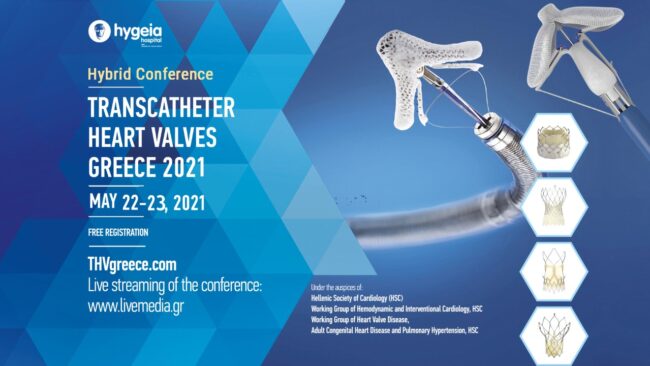
The Transcatheter Heart Valve Greece 2021 conference will be livestreamed on CTSNet’s YouTube channel and on this page! The THV Greece conference is the leading transcatheter valve therapies annual conference in Greece since 2011. This hybrid event will take place on May 22-23, 2021. Click here for the full schedule of events. Click Here to…
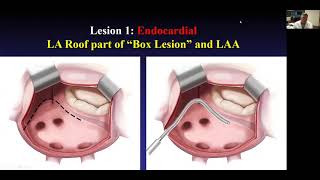
This video demonstrates a novel non-atriotomy technique for performing the maze procedure in patients undergoing non mitral valve open heart surgery. It is estimated that only 15-25% of patients with atrial fibrillation undergoing either coronary artery bypass or aortic valve procedures receive a maze procedure(1). However, concomitant maze procedure is recommended by the Society of…
In this video, we have used a homemade chord loops for mitral valve repair. We believe that this system is flexible for the mitral surgeons as the number of loops can be controlled. Usually, we use the Chordex system made by On-X, but due the shortage of supplies we faced due the pandemic, we started…
Welcome to the tenth of twelve videos that compose the series “Thoracic Surgical Oncology – Technical Approaches” by Professor Tristan D. Yan. To learn more about the series and see the complete list of videos, click here. This series of video tutorials demonstrate how to perform VATS lobectomy in a safe and simple way, using…
For the CTSNet Guest Editor Series, “Surgical Atrial Fibrillation – What We Must Do and What We Can Do,” we asked Marc W. Gerdisch, MD, to bring together videos that broaden our perspective on atrial fibrillation. Learn more about Dr. Gerdisch by reading his Featured Profile interview. There are eight contributor videos in this series.…
The lessons learned from 8 years of experience using the Intuity Rapid Deployment valve is summarized. The first patient underwent resternotomy Aortic Valve Replacement (AVR) and concomitant Mitral and Tricuspid annuloplasty. This case demonstrates the expeditious implant of a 25mm Intuity Elite valve. A step-by-step description of the procedure is shown. The annular skirt was…
This is an 11-year-old boy with hypertrophic cardiomyopathy (HCM) and MYH-7 gene mutation. He has been on medical therapy with B-blockers but recently it was noticed progression of his symptoms especially during exertion. He experienced recurrent episodes of presyncope and chest pain while riding his bike. Transthoracic echocardiography showed severe septal hypertrophy with a thickness…
A 79-year-old female presented with dyspnea. She had a history of interstitial pneumonia on oral steroid therapy. Further workup revealed severe mitral regurgitation from the anterior leaflet and severe central aortic regurgitation. She was a high-risk candidate with EuroScoreⅡ 6.6 %. She was considered as a totally endoscopic MICS candidate for aortic valve replacement and…
We present two cases of squamous cell carcinoma in mid-thoracic esophagus. Patients received neoadjuvant concurrent chemo-radiation as per CROSS protocol. They underwent transthoracic radical esophageal mobilization with Mediastinal lymph node clearance successfully using VATS and da-Vinci Robotics. Intraoperatively, we could identify an anomalous pulmonary vein draining the right lower lobe directly into the left atrium.…
Welcome to this two-part CTSNet series “What Can Adult and Congenital Surgeons Learn From One Another–Parts I and II.” CTSNet organized two roundtables featuring several giants in the field of adult and cardiac heart surgery to provide thought-provoking discussions on what adult and congenital surgeons can learn from one another within mitral valve and tricuspid…
Background: Transcatheter aortic valve replacement (TAVR) has proven be an effective and safe option for intermediate and high surgical risk patients. [1] Despite the continued advancement of valve technology and delivery systems, there still remains a cohort of the TAVR population who are not suitable for a transfemoral (TF) approach. [1] Several options for alternative…
Introduction:Phlegmasia Cerulea Dolens (PCD) is a rare condition with high mortality and morbidity risk resulting due to massive deep venous thrombosis (DVT), arterial occlusion and subsequent compartment syndrome[1-2]. These patients are seen to present with a classical triad of severe pain, significant edema and bluish discoloration (cyanosis) of the affected limb[3]. PCD is the only…
We are presenting the case of the minimally invasive total repair of Tetralogy of Fallot in a 2-month-old male patient. Echocardiography showed good LV contractility, open permanent ductus arteriosus (PDA), open permanent foramen ovale (PFO), large ventricular septal defect (VSD), severe infundibular stenosis and hypoplastic main pulmonary artery (PA) and PA branchesOur operation plan was:…
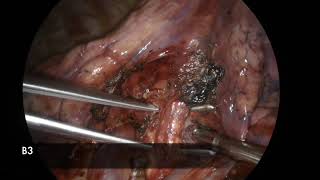
This video demonstrates a subxiphoid left S3 segmentectomy, as a day surgery radical oncological treatment of an early stage lung cancer in an elderly patient. This is the case of an 82-year-old COPD patient with a 10 mm suspect nodule located in the middle of segment 3. An anatomical 3D reconstruction allowed us to plan…