Content from the Journal of the American Neurological Surgeons.
Patient selection for hypertrophic cardiomyopathy (HCM) surgery is based on clinical presentation risk factors and imaging studies. The main modalities of imaging are echocardiography and cardiac MRI. It is often productive for the surgeon to spend time in the imaging department interacting directly with the imaging specialists in order to plan the extent of…
In anticipation of the 36th Annual European Association for Cardiothoracic Surgery (EACTS) Meeting, CTSNet met with two representatives of the association. Dr. Rafael Sádaba Sagredo, secretary general and chair of the EACTS Education Committee, joined the discussion alongside Dr. Patrick Myers, secretary general elect and chair of the adult cardiac surgery domain. In this brief…
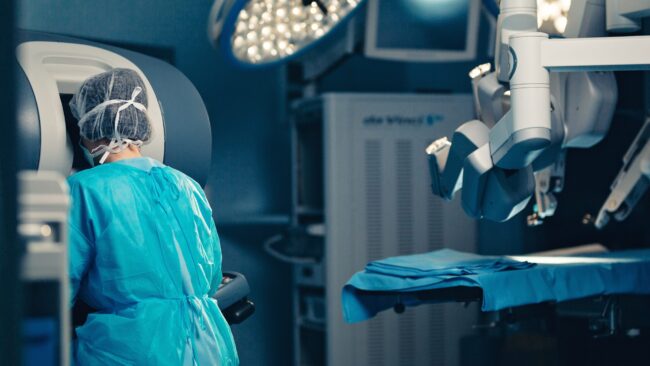
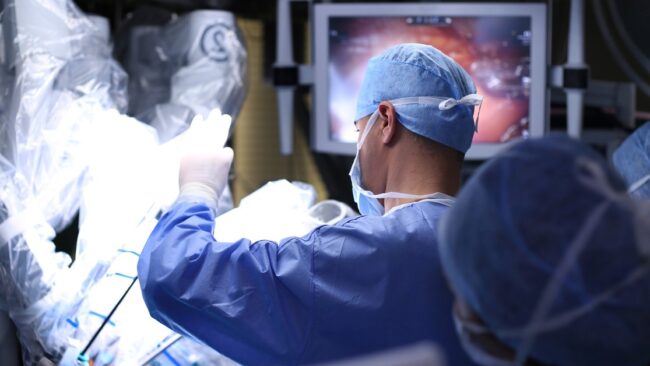
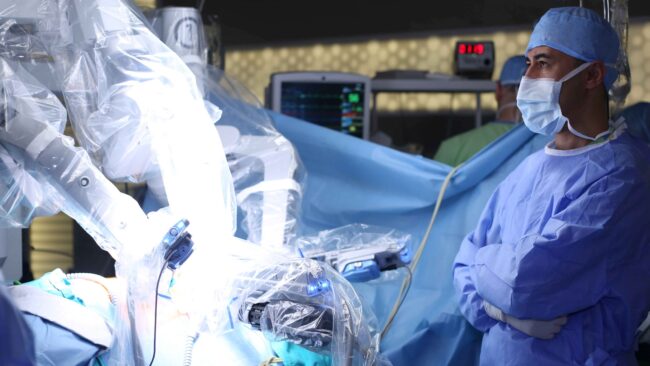
This video shows a case of a robotic assisted thoracoscopic surgery (RATS) performed with the DaVinci Xi system through a uniportal approach. An eighty-two-year-old woman with BMI 29 and a history of systemic arterial hypertension, non-insulin dependent type II diabetes mellitus, and ischemic cardiac disease (ASA physical status III) underwent a superior segmentectomy (S6)…
This video presents a case of an off pump redo CABG using a recycled left internal mammary artery (LIMA) graft in combination with the right internal mammary artery (RIMA) and the right gastroepiploic artery (GEA). The patient was a sixty-five-year-old male, who arrived in the emergency room with a ST-elevation myocardial infarction (STEMI). Seventeen years…
September’s top content includes a few of our specialty roundups, a video from Diego Gonzalez Rivas on his groundbreaking uniportal robotic technique, and many more helpful articles. 1. Book Review: Minimally Invasive Cardiac Surgery—A Practical GuideBy Peyman Sardari NiaIn his review, the author praises a manual on minimally invasive cardiac surgery edited by Theo Kofidis. Serving…
Although robotic thoracic surgery is associated with lower pain-related morbidity, it is important to address pain in a patient undergoing robotic thoracic surgery as diligently as a patient undergoing any other thoracic surgical procedure. Unlike in the abdomen, even the most minimally invasive procedures in the chest can be painful. Therefore, regardless of the number…
The frozen elephant trunk procedure has evolved immensely in the past few years. This hybrid vascular graft is now used in the treatment of a variety of aortic pathologies and all types of aortic dissection. For your viewing convenience, we have gathered a list of CTSNet’s most popular content involving the procedure. 1. Proximalized Custom-Made Frozen…
The patient, now a fifteen-year-old boy, was born with multivalvular disease with congenitally stenotic bicuspid aortic valve (AV). This was combined with congenital mitral valve (MV) stenosis and Ebsteinoid regurgitant tricuspid valve (TV). He underwent two previous sternotomies for repair and re-repair of all three valves. He also had a previous supravalvular aortic stenosis…
A seventy-five-year-old man, also a heavy smoker, was admitted with an incidental finding of a lesion in the right upper lobe (RUL) near the right main bronchus. A PET scan revealed a slight hypermetabolic lesion (SUV max of 5) close to the origin of the right upper bronchus. No previous medical history was referred; physical…
A seventy-one-year-old male presented with local recurrence after a right apical posterior segmentectomy three years prior. The staging workup was consistent with localized disease, and he was deemed a good surgical candidate. After multidisciplinary evaluation, the patient was brought in for repeat resection. First, four robotic trocars were placed in the eighth intercostal space,…
Aortic dissection is a life-threatening condition, and it is important to understand how to manage it in the varying circumstances under which it can occur. This informative collection of videos, published over the last couple of years on CTSNet, features a wide variety of procedures involving the repair of aortic dissection. 1. Iatrogenic Aortic Dissection…
This video shows a uniportal robotic right lower lobectomy. The surgeons used uniportal robotic surgery, which represents a fusion of the advantages of uniportal VATS and robotic surgery, including wristed instrumentation and 3D vision. In this case, the patient presented with a 6 cm right lower lobe tumor with adhesions. The uniportal incision was performed…
Right axillary artery cannulation has gained consensus in recent years as one of the mainstays of surgical treatment of type A aortic dissections (1). This technique is routinely used in the treatment of type A dissections, aortic arch aneurysms, aneurysms of the ascending aorta extending to the proximity of the innominate artery takeoff, and any…
Dr. James S. Tweddell was a thoughtful and technically outstanding congenital heart surgeon and an internationally renowned leader, innovator, teacher, and friend. He passed away at the young age of sixty-two on July 1, 2022 in his hometown of Cincinnati, Ohio. Dr. Tweddell was most known for having some of the world’s best outcomes with…
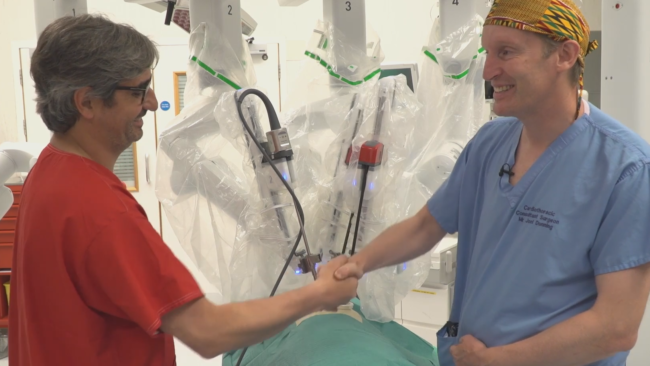
This interview with Diego Gonzalez Rivas, performed during his recent visit to the James Cook University Hospital in the UK, covers the evolution of his new technique to combine uniportal VATS with robotic surgery. Dr. Gonzalez Rivas explains how he came up with the idea and how the technique might benefit both uniportal VATS surgeons…
Over the past few years, CTSNet has published dozens of informative articles and videos on minimally invasive cardiac surgery. Minimally invasive techniques can be applied to mitral valve repair and replacement, CABG, and other procedures. Read on for five of our most popular posts on minimally invasive cardiac procedures from experts around the globe. Do…