Content from the Journal of the American Neurological Surgeons.
The patient is a six-year-old boy with a known diagnosis of transposition of the great arteries, a ventricular septal defect, and pulmonary stenosis who presented with severe longstanding cyanosis. The VSD was subpulmonic, and the aorta was right and anterior to the pulmonary artery. As the routability of the VSD was doubtful, the surgical team…
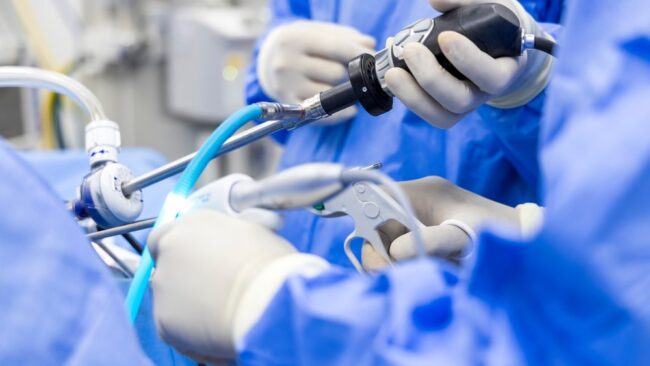
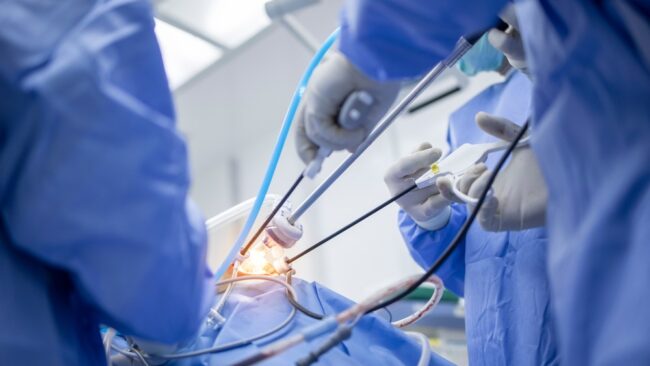
Minimally invasive mitral valve repair surgery is an alternative procedure to a conventional median sternotomy for patients with mitral valves that are damaged but not severe enough to require replacement. This procedure requires a smaller incision and is associated with better cosmesis, quicker recovery, and fewer postoperative complications. This video presents the case of a…
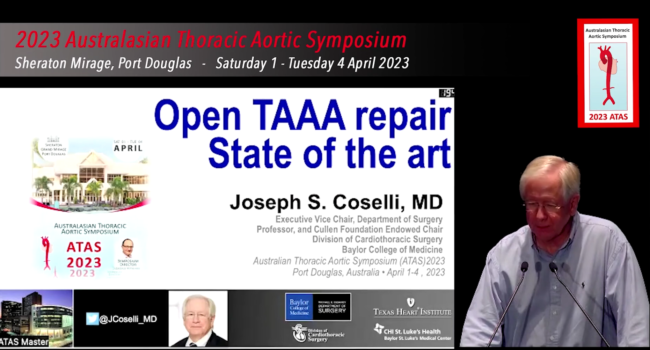
As a part of the 2023 Australian Thoracic Aortic Symposium, Dr. Joe Coselli presented on his methods for open thoracoabdominal aortic aneurysm repair. Dr. Coselli is a cardiothoracic surgeon at the Texas Heart Institute and Baylor College of Medicine in Houston, Texas. View Dr. Coselli’s CTSNet profile for more of his articles and videos on…
CTSNet saw some very popular clinal videos in September, including a faster technique for aortic hemiarch replacement, using a Cabrol patch and Cooley fistula to control bleeding, and an endoscopic tricuspid valve replacement. 1. Aortic Hemiarch Replacement: The 7-Minute TechniqueBy Stephen Spindel, Elbert Williams September’s most popular video demonstrates a safe and simple technique for…
Severe mitral annular calcification remains a challenge for the mitral valve surgeon. The past decade has introduced promising new technologies in the mitral valve replacement space, and ongoing clinical trials are evaluating the use of percutaneous technologies for this purpose. Mitral valve repair can be achieved safely in the setting of mitral annular calcification (MAC)…
An eighty-eight-year-old man with a history of hypertension, pulmonary embolism, prostate cancer, and right hip and femur surgery came to the cardiology clinic with progressive shortness of breath in recent months. His physical examination revealed a grade IV systolic murmur and irregular heart rhythm. Electrocardiography confirmed atrial fibrillation. A cardiac ultrasound reported severe mitral regurgitation,…
This video demonstrates a step-by-step method for transaxillary transcatheter aortic valve implantation. The procedure utilizes the axillary artery, which lies beneath the clavipectoral fascia, medial, below, and lateral to the pectoralis minor muscle. To begin the procedure, a small horizontal infraclavicular incision was made at the junction of middle and outer third of the clavicle,…
CTSNet is happy to share a discussion held between premier planners of the upcoming 37th Annual European Association for Cardiothoracic Surgery (EACTS) Meeting! To sort out major questions of interest and concern among the cardiothoracic community, Patrick Myers, new EACTS Secretary General, and Rafael Sádaba, returning EACTS Chair of Education Committee, held a conversation to…
A fifty-one-year-old female patient was admitted to the hospital for a second opinion regarding surgical intervention. She had been diagnosed with small cell lung carcinoma of the right upper lobe that was crossing the oblique fissure. Previously, she underwent treatment with multiple cycles of chemo and radiotherapy with a good initial response. The treatment was…
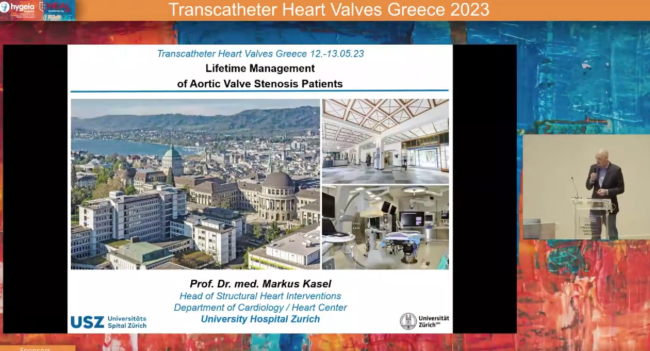
In this recording from the 2023 Transcatheter Heart Valves Greece conference, Dr. Markus Kasel, an interventional cardiologist at University Hospital of Zurich, discusses his techniques and standards for lifetime management of aortic stenosis in a wide range of patients. Disclaimer The information and views presented on CTSNet.org represent the views of the authors and contributors…
A previously healthy two-month-old infant born at thirty-six weeks presented with increasing fussiness, a respiratory rate of sixty breaths per minute and an oxygen saturation of 85 percent. A chest X-ray revealed significant cardiomegaly. A transthoracic echocardiogram demonstrated a severely dilated left ventricle with an ejection fraction of 26 percent. The patient’s hemodynamic stability was…
Costal margin reconstruction is a challenging technique but addresses the needs of slipping rib syndrome patients with complicating features including skeletal hypermobility disorders, multiple ipsilateral slipping ribs, rib deformities, and failed prior slipping rib operations. In this video, surgeons demonstrate the technique. To begin the surgery, a single-lumen endotracheal tube was placed. The patient was…
Transcatheter mitral valve-in-valve (ViV) is emerging as an alternative to surgery in patients with degenerated mitral valve bioprosthesis. One of the most common exclusion criteria for mitral ViV is left ventricular outflow tract obstruction (LVOTO) due to displacement of the anterior leaflet of the mitral valve prosthesis towards the septum, thus reducing the LVOT area.…
CTSNet is proud to present the webinar recording of “The Myth Behind Left Ventricular Outflow Tract Obstruction in Mitral Valve Replacement,” featuring panelists Dr. Tom Nguyen (Chief of Cardiothoracic Surgery, University of California, San Francisco), Dr. Dee Dee Wang (Cardiology/Structural Heart Imaging, Henry Ford Health), and Dr. Brian O’Neill (Inteventional Cardiology, Henry Ford Health). This discussion was broadcasted…
This video presents the case of a six-day-old boy with truncus arteriosus, interrupted aortic arch, ventricular septal defect (VSD), patent ductus arteriosus (PDA), and patent foramen ovale (PFO). A preoperative echocardiogram showed moderate to severe truncal valve regurgitation and a large ventricular septal defect. First, the truncal root was opened, and a complete transverse ascending…
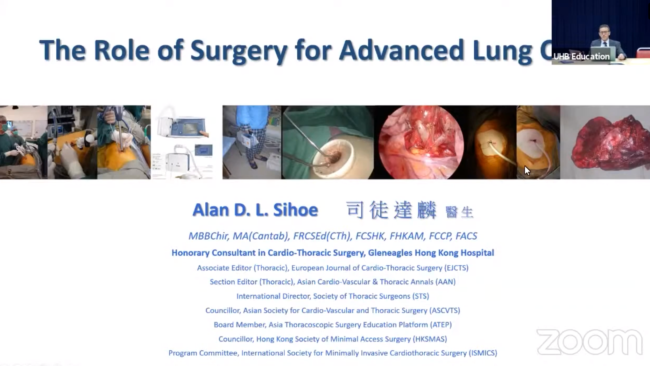
This is a recorded session from the 2021 Birmingham Review Course. In this session, five expert thoracic surgeons came together to present on thoracic malignancy and its surgical solutions. In this talk, Dr. Alan Sihoe, a thoracic surgeon at CUHK Medical Centre in Hong Kong, discusses his perspective on surgical techniques for advanced lung cancer…