Content from the Journal of the American Neurological Surgeons.
In this session from the 2024 London Core Review Cardiothoracic Surgery Course, Dr. Venkatachalam Chandrasekaran discusses minimally invasive direct coronary artery bypass grafting (MIDCABG) with a focus on total arterial approaches. He examines off-pump total arterial revascularization (TAR), the use of a single internal mammary artery (SIMA) along with saphenous vein grafts (SVG), bilateral internal…
This video is part of CTSNet’s 2024 Resident Video Competition. Watch all entries from the competition, including the winning videos. The patient was a 2.4 kg neonate diagnosed with hypoplastic left heart syndrome. The Birmingham technique of arch reconstruction in Stage I palliation aims to simplify the process of arch reconstruction during the Norwood procedure. This…
A 68-year-old male presented with chest pain and breathlessness on exertion during the preceding 10 days. He had undergone percutaneous transluminal coronary angioplasty (PTCA) of the left anterior descending artery (LAD) the previous year and had a history of hypertension (HTN) and hypothyroidism, with no history of fever. Preoperative evaluation, including a CT coronary angiogram,…
This video is part of CTSNet’s 2024 Resident Video Competition. Watch all entries from the competition, including the winning videos. An 81-year-old female patient was admitted for surgical treatment of early-stage non-small cell lung cancer (NSCLC) in the right lower lobe for which a minimally invasive resection of segment 10 was indicated. Bleeding occurred during the…
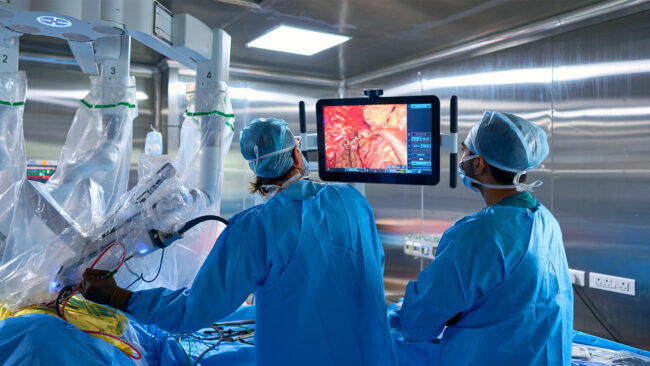
In this new CTSNet President’s Series, Dr. Husam Balkhy, president of ISMICS, showcases cutting-edge, totally endoscopic cardiac procedures from the University of Chicago. Watch for more videos in this series coming soon. Introduction This video presents a robotic beating-heart totally endoscopic coronary bypass (TECAB) procedure involving a single vessel, specifically, the left internal mammary artery (LIMA) to…
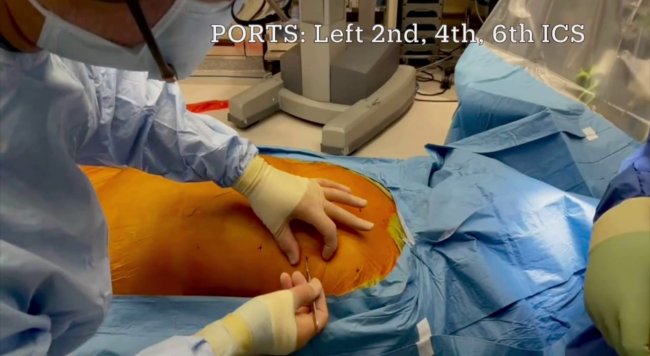
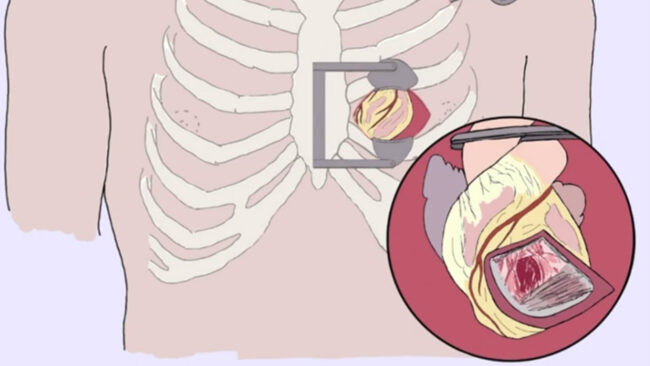
The authors present a case of post-myocardial infarction ventricular septal defect repair with coronary artery bypass grafting performed via minimally invasive access—a left anterior minithoracotomy through the fourth intercostal space. Closure of the ventricular septal defect (VSD) was performed using the infarct exclusion technique with xenopericardium, as introduced by David in 1987 (1). A 68-year-old…
This video describes Dr. Vince Gaudiani’s technique for a standard aortic valve replacement. The patient was a 69-year-old man with severe bicuspid aortic valve stenosis. To begin, femoral vein cannulation and direct aortic cannulation were performed. The aorta was then opened, the valve was removed, and a 27mm Edwards bioprosthesis was used to replace the…
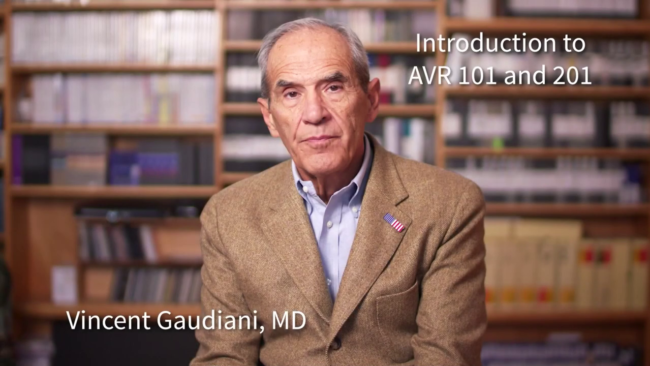
This video introduces the aortic valve replacement series and includes a discussion of the rationale for aortic valve enlargement. Disclaimer The information and views presented on CTSNet.org represent the views of the authors and contributors of the material and not of CTSNet. Please review our full disclaimer page here.
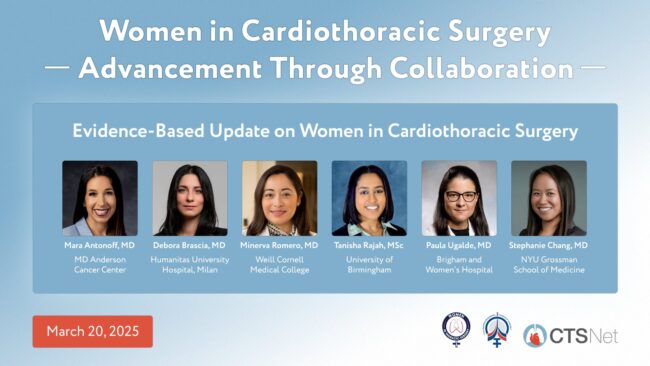
CTSNet recently partnered with Women in Thoracic Surgery (WTS) and the European Society of Thoracic Surgery (ESTS) Women in General Thoracic Surgery (WGTS) Committee to host the second annual three-part webinar series, “Women in Cardiothoracic Surgery—Advancement Through Collaboration. In Part 1 of this series, experts reviewed the last 12-18 months of presentations and publications on…
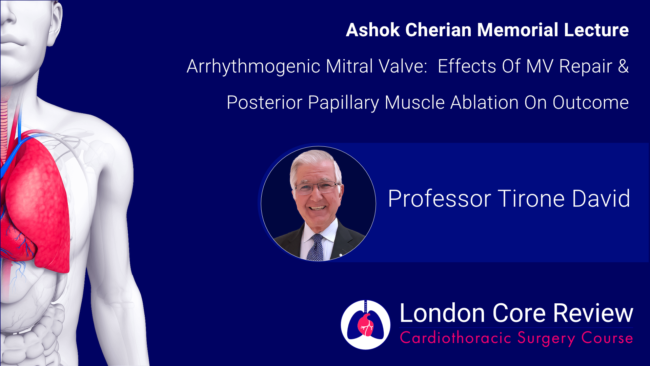
In this session from the 2024 London Core Review Cardiothoracic Surgery Course, Dr. Tirone David discusses the surgical treatments of aortic root aneurysms. He examines the anatomy of the aortic root and thoracic aorta, the pathology of the aortic root and ascending aorta, primary and secondary aortic root aneurysms, and aortic root aneurysms associated with…
This video is the third-place winner from CTSNet’s 2024 Resident Video Competition. Watch all entries into the competition, including the other winning videos. Clinical Vignette A 78-year-old male presented with worsening intermittent shortness of breath. Diagnostic imaging revealed severe mitral regurgitation with prolapse and extensive mitral annular calcification (MAC). A CT scan showed severe MAC with…
A 67-year-old marathon runner and Ironman competitor with a history of aortic valve replacement and ascending aortic aneurysm repair presented to an outside hospital with strep viridans endocarditis, leading to a root abscess and pseudoaneurysm. He experienced cardiac arrest with return of spontaneous circulation (ROSC), developed complete heart block requiring pacing, and acute kidney injury…
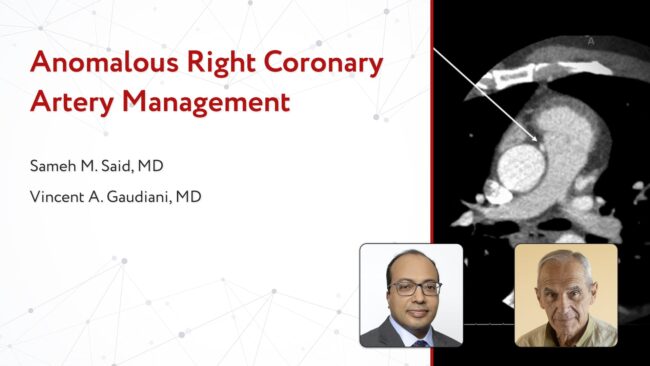
In this series, CTSNet invites top cardiothoracic surgeons from around the world to engage in in-depth discussions about important topics in the field of CT surgery by examining specific cases in detail. Watch for more insightful expert discussion videos in the coming weeks. In this in-depth discussion, CTSNet Senior Editors Drs. Vince Gaudiani and…
The aorta was cross-clamped, and the heart was arrested using antegrade cardioplegia. The aorta was transected and trimmed to the sinotubular junction. Commissural pledgeted stay sutures were placed, and the valve was carefully assessed. Once the valve was deemed suitable for preservation, the graft was sized using a Hegar dilator and measurement of the interleaflet…
This video is the second-place winner from CTSNet’s 2024 Resident Video Competition. Watch all entries into the competition, including the other winning videos. Clinical Presentation and Preoperative Course A 72-year-old male presented with significant weight loss and dysphagia for one month. His medical history included coronary artery disease (s/p LAD stent), NSTEMI (on Plavix), atrial fibrillation…
This video demonstrates Dr. Vince Gaudiani’s technique for performing an upper ministernotomy. The manubrium was opened, followed by a horizontal osteotomy through the third intercostal space. Bone wax was used to dry the incision, and a small anodized retractor was placed initially without towels to allow for complete mobilization of the pericardium. The pericardium was then…