Content from the Journal of the American Neurological Surgeons.
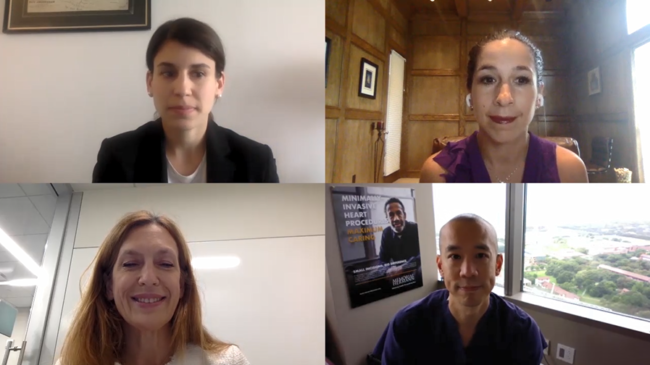
CTSNet Roundtable filmed on April 15, 2020. Dr. Jessica Luc, cardiovascular surgery resident from the University of British Columbia, Vancouver, is joined by an expert panel of colleagues discussing the topic of telemedicine for the cardiothoracic surgeon during the COVID-19 pandemic and beyond. Panelists include Drs. Shanda Blackmon (Mayo Clinic, Rochester, MN, USA), Mahesh Ramchandani…
The classification of the COVID-19 threat by the WHO as a pandemic underscores the massive impact that this infection is having around the world, both now and for the foreseeable future. Cardiothoracic surgeons are among those at the forefront of mitigating this pandemic through a variety of means: educating our colleagues, patients and friends; changing…
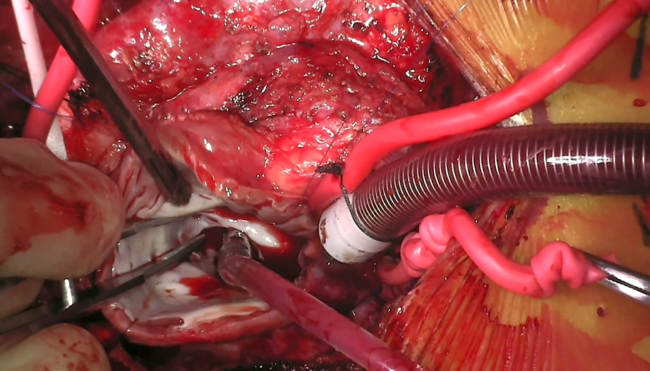
In this video, the authors describe their method of autopericardial reconstruction. They had previously done a series of autopericardial mitral reconstruction in 2008-2009 based on the method described by Radu Deac et al and, surprisingly, on follow-up none of the patients had developed structural degeneration over the course of a decade, despite most of them…
The patient was a 16-month-old female with a diagnosis of Shone’s complex, including hypoplasia of the mitral valve, aortic valve, left ventricle, and aortic arch, and a ventricular septal defect. She had previously undergone single ventricle palliation with a Norwood procedure as a neonate and subsequent bidirectional Glenn procedure at the age of four months.…
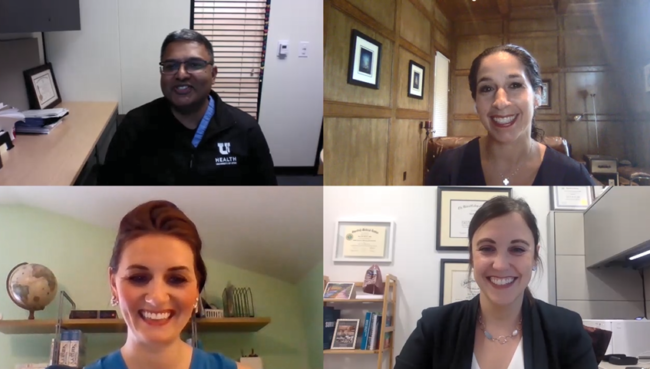
Since many conferences have been canceled due to the COVID-19 pandemic, it may affect how one manages an early academic career. Mara Antonoff, a general thoracic surgeon at MD Anderson in Houston, is joined by Lisa Brown from UC Davis Medical Center, Tom Varghese from the Huntsman Cancer Institute, and Erin Corsini from MD Anderson…
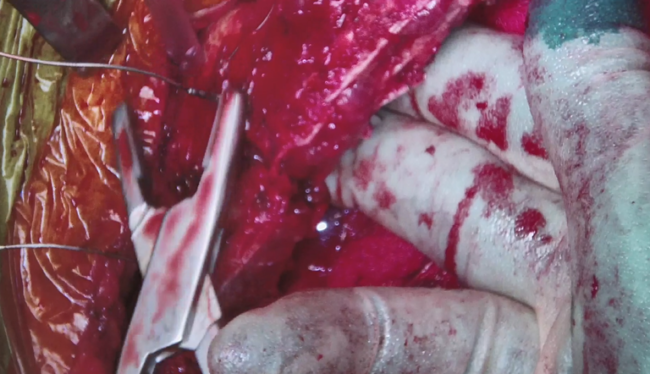
This is a video of the Robicsek procedure for repair of a dehiscence of the sternum. Francis Robicsek, who died on April 3, 2020, created this technique among many other novel operations in his career, which spanned over 60 years. He began in 1949 in Budapest, Hungary, and spent his later years in Charlotte, North…
Ethical questions for surgeons surrounding the COVID-19 pandemic are addressed by an expert panel of surgical colleagues with exceptional accomplishments in the field of medical ethics. Cardiac surgeon Dr Emily Farkas moderates a session with: Dr Robert Sade, Director of the Institute of Human Values in Health Care at the Medical University of South Carolina,…
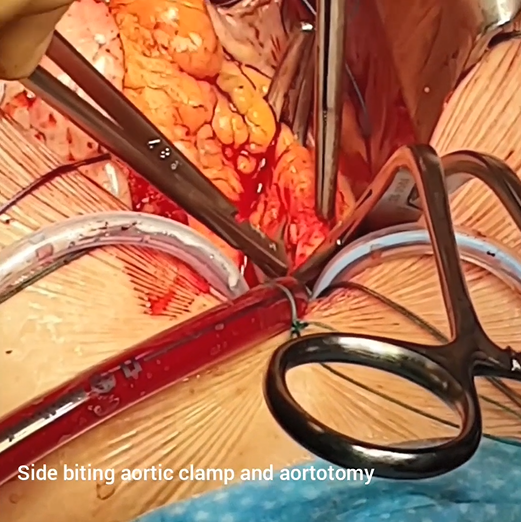
The patient was a 70-year-old woman who presented with hypertensive, peripheral vascular disease, three vessels disease, and NSTEMI (ISR). She had ongoing chest pain despite maximal medical treatment, NYHA III, EF 455, mild MR. Cardiac Enzymes; CK 21,1, CK-MB 2,74, Trop. 2071 (increasing). She underwent emergency on-pump CABG (LIMA-LAD, SVG-OM “T-graft on LIMA”). RCA showed…
Mara Antonoff of MD Anderson in Houston moderates a discussion on how to keep homes safe from clinical exposure during the COVID-19 pandemic. Dr Antonoff is joined by Daniela Molena from Memorial Sloan Kettering Cancer Center, Tom Nguyen from the University of Texas Memorial Hermann, and Tamar Nobel from Mount Sinai Hospital. Disclaimer The information…
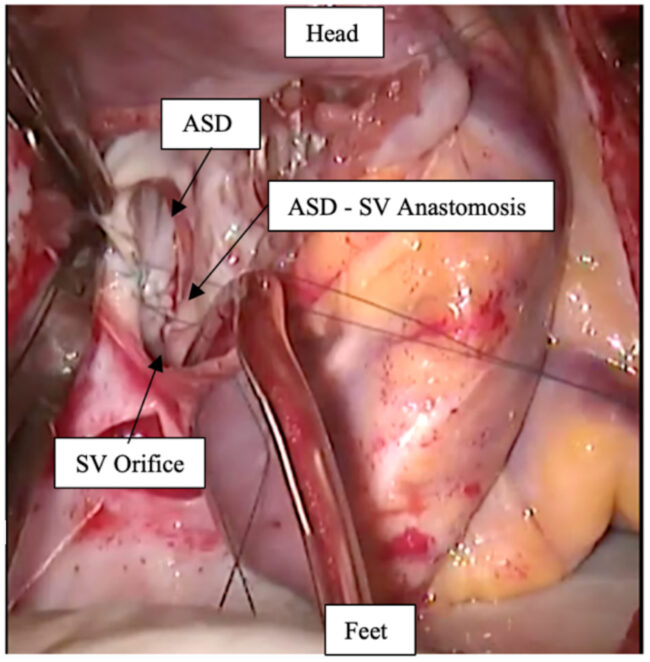
IntroductionScimitar syndrome is a rare congenital disease characterized by lung hypoplasia and anomalous pulmonary venous return from the right lung to the inferior vena cava (IVC) or right atrium (RA). This anomalous pulmonary vein is referred to as the scimitar vein (SV). Without surgery to correct this left-to-right shunt, many patients are at risk of…
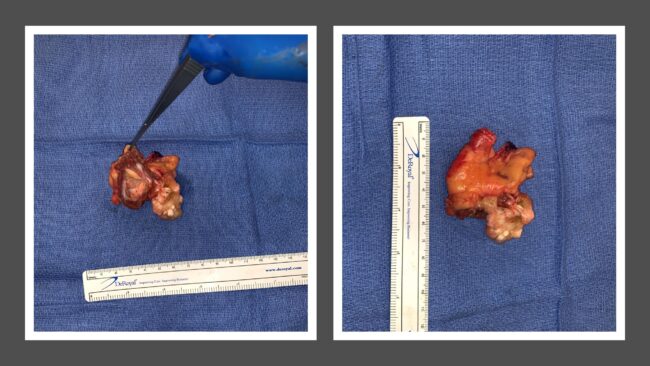
The patient was an 80-year-old former smoker who presented with shortness of breath and chest pain. Computed tomography showed a large filling defect in the main pulmonary artery presumed to be a pulmonary embolus. Further workup with transthoracic echocardiography revealed a 2.5 x 2.1 cm pedunculated mobile mass in the main pulmonary artery, just distal…
A 41-year-old male patient presented with sinus rhythm, PAPS 44 mm Hg, left atrial dimention 45 mm, LVEF 70%, severe mitral regurgitation with mechanism, A2-P2 prolapse, and A3-P3 prolapse. A triple-orifice repair (TOR) with annuloplasty was performed. At intraoperative TEE, the three orifices showed a mean total valve area of 2.9 cm2 with no residual…
The authors present a right modified Blalock-Taussig-Thomas shunt via median sternotomy using a cryopreserved saphenous vein homograft. The patient was a 2-month-old, 5.2 kg infant with heterotaxy, situs ambiguous, and dextrocardia. He presented with cyanosis and an echocardiogram showed double outlet right ventricle with transposed great arteries and multilevel severe right ventricular outflow tract obstruction.…
The patient was a 63-year-old male chronic smoker with a positive family history of lung cancer. Computed tomography (CT) scan thorax was suggestive of 1.4 x 1.2cm mixed GGO in the S3 segment of the left upper lobe. The rest of the investigations were normal. The authors started with a standard 3-port VATS approach dissecting…
Leanne Harling, cardiothoracic surgeon at Imperial College, UK, moderates a discussion with Tom Routledge, clinical lead at Guy’s Hospital, London; Alberto Sandri, consultant surgeon at Ospedale San Luigi Gonzaga, Turin, Italy; Nirmal Kumar, lead ENT and consultant surgeon at Wrightington Wigan & Leigh NHS Foundation Trust; and Nigel Mercer, president of Federation of Surgical Specialty…
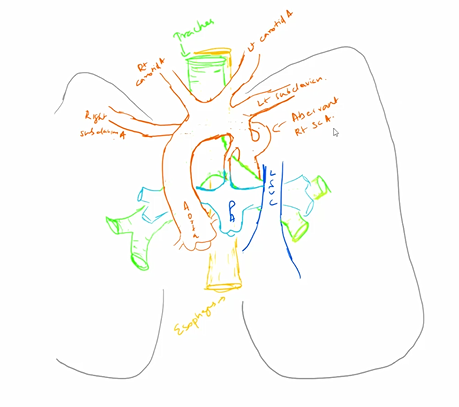
Abberent subclavian artery is the rare anatomical variation of aortic arch where the right subclavian artery origin is distal to the left subclavian artery. Its way to the right arm crosses the midline posterior to the esophagus. Operative approach and timing to correct this condition has not been well-defined. A muscle-sparing right thoracotomy was used…