Content from the Journal of the American Neurological Surgeons.
CTSNet is excited to announce that “Double Switch Operation (Senning and Rastelli)” by Awais Ashfaq has won first place in the 2019 Resident Video Competition. Dr Ashfaq is a congenital surgery fellow at Cincinatti Children’s Hospital in Ohio, USA. In this interview, CTSNet Associate Editor Joel Dunning asks him about the case presented in his winning video, the skills and…
Filmed at the 2020 STS Annual Meeting in New Orleans, Louisiana, Jessica Luc of the University of British Columbia in Canada interviews Marc Ruel of the University of Ottawa Heart Institute about his pioneering work in minimally invasive cardiac surgical operations. They discuss his career, the importance of mentorship, and the development of current minimally…
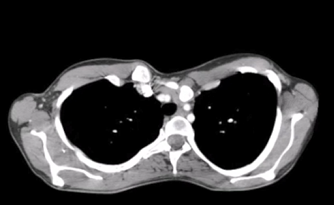
Partial anomalous pulmonary venous connection (PAPVC) is a rare and frequently under diagnosed entity in which one or more pulmonary veins are connected to the systemic venous return. Bilateral Partial anomalous pulmonary venous return is extremely unusual. The authors present the case of a 27-year-old woman with a history of childhood asthma. She was symptomatic…
Even though infection of thoracic aortic grafts is rarely seen, management of these cases still remains a real challenge in current clinical practice. The treatment of complete removal of the infected graft and radical debridement has been accepted as the gold standard. Reoperation has been shown to be a high mortality situation (1). In situ…
Case PresentationA 46-year-old man with a history of stroke and permanent atrial fibrillation was referred to the authors’ institution with the diagnosis of an LV mass. During preoperative study, catheterization revealed an 80% stenosis of the mid portion of the left anterior descending artery (LAD), and echocardiography showed a PFO. As the authors’ institution has…
The authors present a case of mitral valve (MV) repair combined with pectus excavatum repair in a highly symptomatic 28-year-old woman. Her preoperative transesophageal (TEE) echo showed severe mitral insufficiency, and her preoperative computed tomography (CT) scan showed a Haller index of 16.3 and heart displacement to the left. The authors’ plan was to take…
The authors present their experience with totally endoscopic beating mitral valve surgery by presenting this case of mitral repair. They recently moved to beating mitral surgery due to the shortage of the endo-balloon aortic clamp which was their preferred method of myocardial protection. Their team does not feel very comfortable using the external clamps (Chitwood…
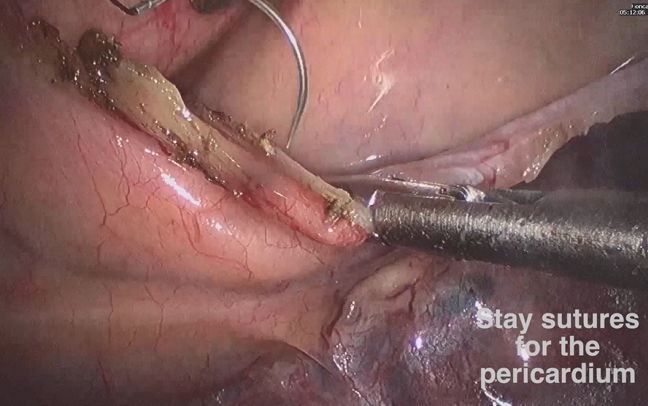
This is a short slideshow and video on how to place an epicardial LV lead using the VATS technique. This is usually indicated in patients who need a CRT-D device, and in whom a transvenous LV lead could not be placed. Disclaimer The information and views presented on CTSNet.org represent the views of the…
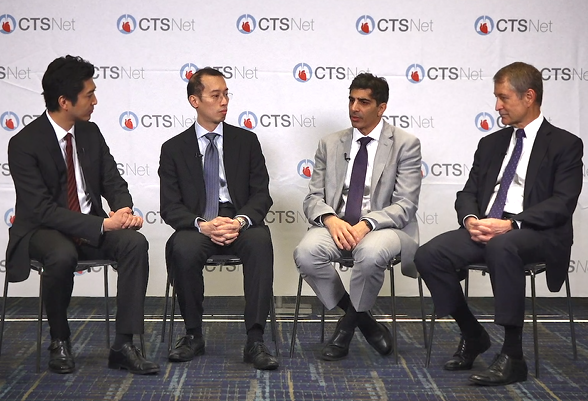
Filmed at the 2020 STS Annual Meeting in New Orleans, Louisiana, Tsuyoshi Kaneko of Brigham and Women’s Hospital in Boston, Massachusetts, USA, moderates a discussion on surgical and transcatheter management of mitral regurgitation (MR). He is joined by Michael J. Reardon of Houston Methodist Hospital in Texas, USA, Gorav Ailawadi of the University of Virginia, and Gilbert…
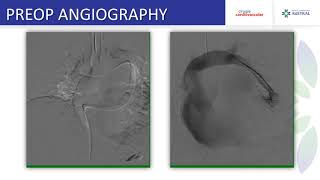
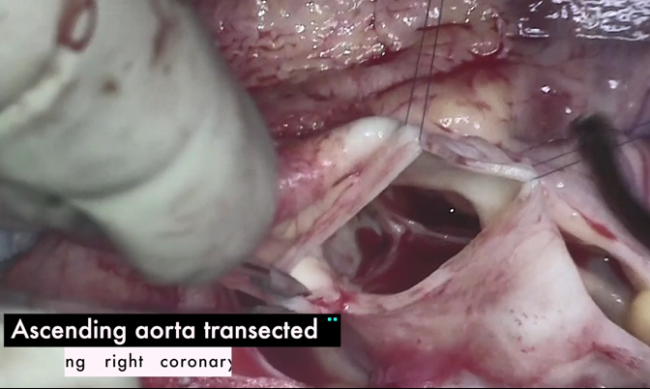
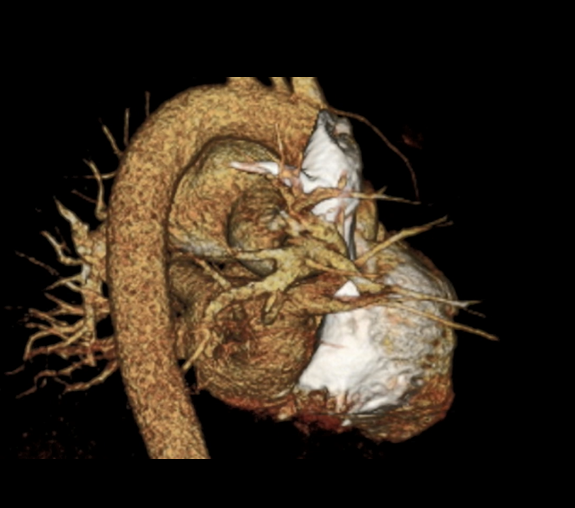
The patient was a 22-year-old 72.7 kg man with a diagnosis of Loeys-Dietz syndrome with a mutation in TGRBR1 (Loeys-Dietz Type 1 variant). The patient was initially diagnosed as a teenager due to an incidental finding of basilar artery dolichoectasia on a head CT. The patient was subsequently referred to Cincinnati Children’s Hospital Medical Center Cardiovascular Genetics program…
Looking for guidance on crisis management during COVID-19? Exploring strategies that will keep you strong for the challenging road ahead? Mara Antonoff of UT MD Anderson and Brian Mitzman of NYU Langone Health hosted a discussion on May 19 when they talked with a panel of experts about crisis management and resilience. The panel addressed showing leadership,…
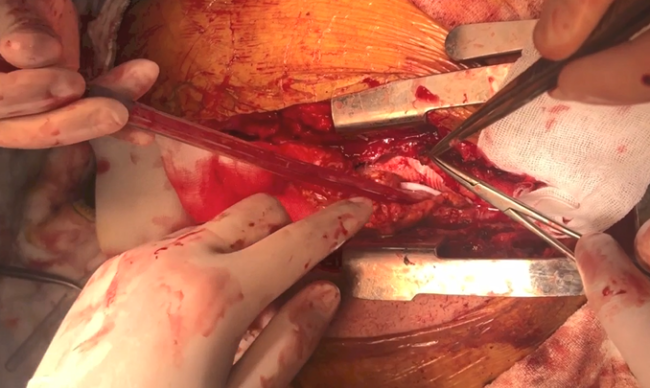
ProcedureA small left anterolateral thoracotomy was performed through the fifth intercostal space to access the left ventricular apex with a 5 cm skin incision. Pericardiotomy and exposure of the left ventricle was followed by the application of two purse-string 2-0 prolene sutures with large Teflon pledgets around the site of the access on the posterolateral…
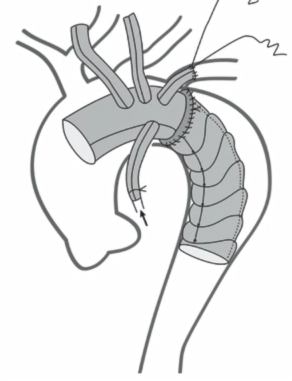
Type Ia endoleak represents a major complication after TEVAR implantation (1). The treatment of choice to obtain the closure of the proximal leak includes a) total arch replacement with a distal suture taking the native distal aorta, the stentgraft, and the arch graft, and b) total arch replacement with frozen elephant trunk (2). While such…
An asymptomatic 51-year-old man with bilateral pulmonary artery dilatation, incidentally noted on chest radiography 20 years previously, demonstrated progressive dilatation up to 5.8 cm on serial imaging studies despite normal pulmonary artery pressures. The aneurysm involved the left and right branch pulmonary arteries and spared the main pulmonary artery and the pulmonary valve. The patient…
This is a 10-year-old boy with Noonan syndrome and HCM who presented with exertional chest pain that required repeat hospitalization. His exercise treadmill stress test had to be discontinued due to chest pain. He underwent previous left ventricular septal myectomy via combined transaortic and transventricular approaches for LVOTO and had frequent PVCs that were being…
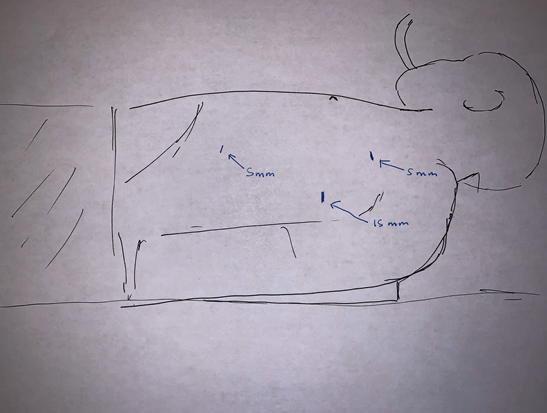
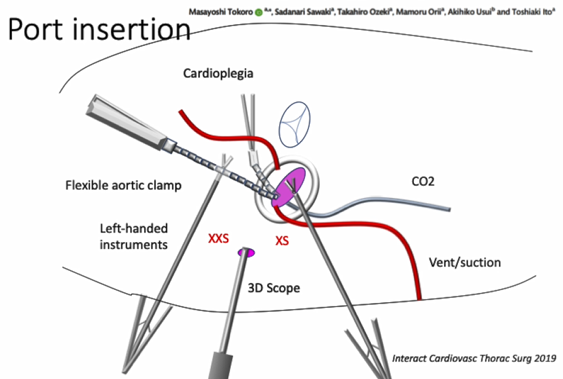
A cardiopulmonary bypass was established through a groin incision. A 10 mm trocar for a 3D-endoscope was inserted through the fourth intercostal space at the midaxillary line. A main small incision (2.5 cm, fourth intercostal space) without rib spreading was made at the anterior axillary line. A 5 millimeter port was also inserted at two…