Content from the Journal of the American Neurological Surgeons.
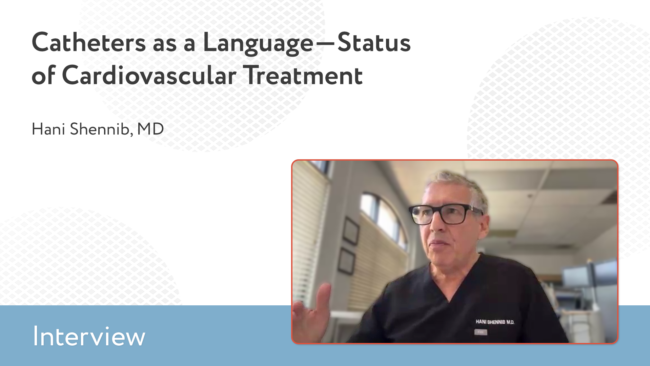
In this remarkable interview, CTSNet Editor-in-Chief Joel Dunning speaks with Dr. Hani Shennib, a Clinical Professor of Vascular and Cardiothoracic Surgery at the University of Arizona College of Medicine, Phoenix, USA, about catheters as a language. They explore the importance of making catheters a language by learning, speaking, and practicing it daily. They also…
This video is part of CTSNet’s 2025 Resident Video Competition. Watch all entries into the competition, including the winning videos. This video demonstrates an alternative approach to positioning the retrograde cardioplegia catheter during coronary artery bypass grafting for three-vessel coronary disease involving the left anterior descending artery (LAD), obtuse marginal artery one (OM1), and obtuse marginal artery two (OM2).…
A 53-year-old female patient had a known diagnosis of a tricuspid valve Ebstein’s anomaly, characterized by elongated septal and posterior leaflets that resulted in moderate regurgitation seven years before the current hospitalization. At that time, the patient and the heart team decided to pursue medical management and annual evaluations to monitor any changes in clinical presentation or increases in the tricuspid regurgitation. Six months prior to this admission, a new transthoracic echocardiogram (TTE) with her heart team diagnosed severe tricuspid regurgitation, and more exertional dyspnea was documented. Consequently, the choice for an…
A 4-year-old boy who had been followed for a ventricular septal defect (VSD) and remained asymptomatic had a follow-up echocardiogram that showed enlargement of his cardiac chambers secondary to a left-to-right shunt and a gradient across the left ventricular outflow tract (LVOT), with the development of multiple hypertrophied muscle bundles in the right ventricle, creating…
This video is part of CTSNet’s 2025 Resident Video Competition. Watch all entries into the competition, including the winning videos. The patient was a 21-year-old female with a past medical history of attention-deficit hyperactivity disorder (ADHD) and anxiety who presented to the emergency department (ER) with symptoms of shortness of breath, cough, and chest pain. She was initially diagnosed…
When the initial tear is located within the aortic arch, the surgical strategy often involves a more comprehensive repair (1, 2). Surgical procedures involving the transverse aortic arch are particularly complex (3, 4, 5, 6, 7, 8). This evolving landscape has led to various innovative strategies to improve patient outcomes (7, 8, 9). The Ascyrus…
This video is part of CTSNet’s 2025 Resident Video Competition. Watch all entries into the competition, including the winning videos. Constrictive pericarditis is a challenging clinical condition in which the pericardium becomes thickened, fibrotic, and often calcified, resulting in impaired diastolic filling and progressive symptoms of right-sided heart failure. This video demonstrates the step-by-step diagnostic and surgical approach to…
In this highly educational interview, Cristina Ruiz Segria, CTSNet Senior Editor—Clinical Care Providers and nurse practitioner at James Cook University Hospital, UK, interviews April Thomas, an inpatient acute care nurse practitioner specializing in thoracic surgery at The University of Texas MD Anderson Cancer Center, Texas, USA. They discuss an extraordinary presentation prepared by April Thomas…
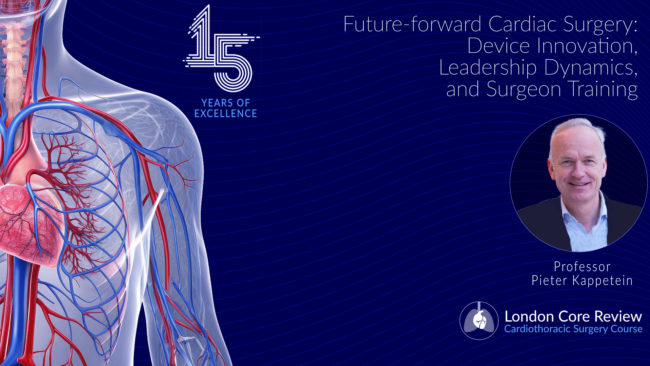
Click here to view all videos from the 2025 London Core Review Cardiothoracic Surgery Course and register for the 2026 session below. In this session from the 2025 London Core Review Cardiothoracic Surgery Course, Dr. Pieter Kappetein, a cardiac surgeon at Erasmus Medical Center in Rotterdam, The Netherlands, and Chief Medical Officer of Medtronic,…
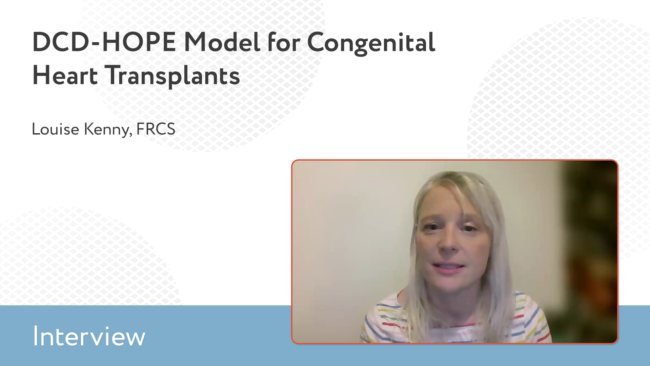
In this remarkable interview, CTSNet Editor-in-Chief Joel Dunning speaks with Dr. Louise Kenny, a consultant pediatric and adult congenital cardiothoracic and transplant surgeon at Freeman Hospital in Newcastle upon Tyne, England, about congenital heart transplants. They discussed the complexities surrounding congenital heart transplants, donation after brain death (DBD), and donation after circulatory death (DCD). They also explored the benefits of hypothermic oxygenated perfusion (HOPE) for children, particularly in…
This video is part of CTSNet’s 2025 Resident Video Competition. Watch all entries into the competition, including the winning videos. The patient had a previous type A dissection repair using an Ascyrus Medical Dissection Stent (AMDS) four years prior to the current operation. Follow-up computed tomography (CT) imaging showed arch aneurysm formation with persistent flow in the false lumen.…
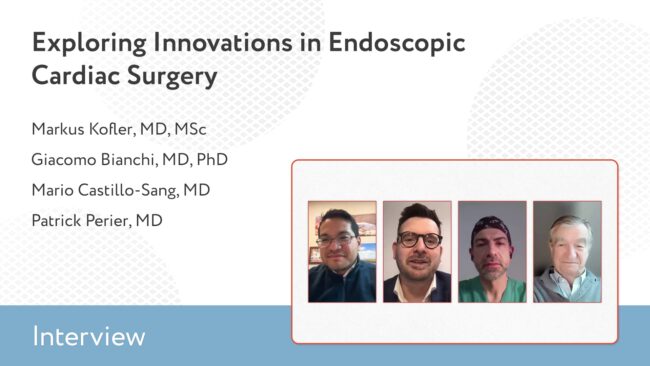
In this interview, Dr. Mario Castillo-Sang, CTSNet Senior Editor—Minimally Invasive Cardiac Surgery and Surgical Director of Mitral Valve and Heart Failure Therapies at St. Elizabeth Healthcare in Edgewood, Kentucky, USA, discusses endoscopic cardiac surgery with Drs. Giacomo Bianchi, Medical Director at Fondazione CNR-Regione Toscana Gabriele Monasterio in Pisa, Italy; Markus Kofler, a cardiac surgeon at…
This video is part of CTSNet’s 2025 Resident Video Competition. Watch all entries into the competition, including the winning videos. The authors present the case of a 4-month-old male infant weighing 2.8 kg who first presented with severe heart failure symptoms. Initial echocardiography revealed a tight coarctation segment and hypoplasia of the distal aortic arch. Cardiac computed tomography (CT)…
The patient was a 13-year-old boy who was born with a congenital unicuspid or bicuspid aortic valve. He developed progressive aortic valve stenosis and became symptomatic. The decision was made to proceed with the Ross procedure. Through median sternotomy, cardiopulmonary bypass (CPB) was initiated via aortic and bicaval cannulation. After cardioplegic arrest, the autograft was…
This video is part of CTSNet’s 2025 Resident Video Competition. Watch all entries into the competition, including the winning videos. In this video, the authors demonstrate a robotic-assisted thoracoscopic resection of a secretory intrapericardial paraganglioma. The purpose of this video is to review preoperative planning with a multidisciplinary team, robotic port placement, and surgical technique. A 42-year-old woman presented…
A 51-year-old nonsmoking female presented with recurrent pneumonia and a persistent cough. A chest computed tomography (CT) demonstrated an obstructive lesion in the left lower lobe bronchus with hyperinflation of the lower lobe. Positron emission tomography (PET)/CT revealed increased metabolic uptake at the lesion site, without evidence of distant metastasis. Bronchoscopic biopsy indicated a neuroendocrine…


 welcomes you to the new, improved website!