Content from the Journal of the American Neurological Surgeons.
This article is part of CTSNet’s Guest Editor Series, “Operative Management of Obstructive Hypertrophic Cardiomyopathy—Gold Standard Septal Myectomy to Stand the Test of Time.” Guest editor Eduard Quintana has curated a robust collection of content that shares the knowledge, techniques, and insights of several distinguished experts from around the world. See the full series here.…
Dr. Eduard Quintana is currently a consultant cardiovascular surgeon at Hospital Clínic de Barcelona and serves as director of the cardiovascular surgery residency and fellowship programs. As an associate professor of surgery at the University of Barcelona Medical School, he teaches fourth-year medical students and mentors final-year students in cardiovascular surgery. At the University of…
Dr. David Charles Johnson, former chief of cardiothoracic surgery at Westmead Hospital in Sydney, Australia, passed away on February 16, 2022 of unknown causes. David, who was eighty-three at the time of his death, trained in cardiothoracic surgery at the Royal North Shore Hospital in Sydney. In addition, he underwent training with Drs. Donald Ross…
Workup The patient was a twenty-nine-year-old man who presented us with a seven-year history of episodic chest pain that radiated to the left neck and arm. The pain was associated with exertion, and only mild improvement of symptoms were noted with medication. He underwent a stress echocardiogram that revealed septal buckling and apical sparing during…
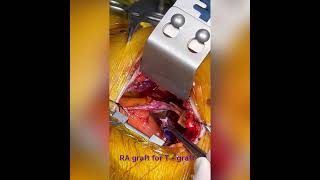
Off pump minimally invasive CABG via anterolateral minithoracotomy is safe, reproducible and can be done at a low cost. Disclaimer The information and views presented on CTSNet.org represent the views of the authors and contributors of the material and not of CTSNet. Please review our full disclaimer page here.
After more than six hours in an emergency department, a seventy-one-year-old male was diagnosed with acute aortic dissection. He was transported by helicopter and taken directly to the operating room in shock (lactate 4.4mmol/L) with hemopericardium. The dissection extended from the sinus portion of the aorta to the distal arch. An 8mm graft was sewn…
CTSNet presents the recording of “Lifetime management of aortic valve disease: Key considerations for optimal valve selection.” This webinar was live broadcasted on Friday, March 25 by CTSNet in collaboration with Edwards Lifesciences. The event was a case-based review of key considerations for optimal aortic valve selection, from first intervention to reintervention. Topics that were covered: Bioprosthetic…
This is the case of a sixty-four-year-old male patient who was a smoker and with ischemic cardiopathy. He also had a neuroendocrine mediastinal thymic carcinoma involving the superior third of the SVC and the confluence of the two innominate veins. The patient underwent induction chemotherapy (five cycles of CBDCA–VP16) from November 2018 to March 2019.…
Objective Total arterial revascularization in coronary artery bypass grafting (CABG) using bilateral internal mammary arteries (BIMA) has been associated with better long-term survival rates. Complex composite grafting can occasionally be required for total arterial revascularization in patients who need multiple grafts. Side-to-side sequential anastomosis is widely used in such cases but can be kinked. This…
A twenty-year-old woman presented with a severe left ventricular outflow tract (LVOT) obstruction secondary to prosthetic aortic valve dysfunction. She was born with a bicuspid aortic valve and had undergone four previous operations: a left thoracotomy with left subclavian artery flap for repair of aortic coarctation and three sternotomies (resection of a subaortic membrane, resection…
A ninety-one-year-old man presented with shortness of breath and exercise intolerance because of a bioprosthetic aortic valve degeneration with severe regurgitation and moderate stenosis. He also had a history of a surgical implantation of an aortic bioprosthetic valve (Sorin Mitroflow 21mm in 2012) because of a severe fibro-degenerative aortic valve stenosis. The patient was refused…
This video demonstrates a redo aortic root procedure and homograft replacement for a thirty-year-old woman who was diagnosed with PTA at birth. She also had surgical repairment and reconstruction of the right ventricular outflow track with a homograft when she was six. The computed tomography angiography (CTA) showed an aortic root aneurysm beneath her sternum…
This article and accompanying video present a case of a robotic assisted Ivor-Lewis esophagectomy after gastric band placement. The patient was a sixty-seven-year-old man who had previously undergone placement of laparoscopic gastric band for weight loss approximately twenty years prior to this procedure. Under a routine surveillance esophagogastroduodenoscopy, he was found to have a long…
Across the globe, coronary artery disease is a leading cause of morbidity and mortality. In December 2021, the American Heart Association (AHA), American College of Cardiology (ACC), and Society for Cardiovascular Angiography and Interventions (SCAI) released a new coronary artery revascularization guideline. While the American Association of Thoracic Surgery (AATS) and The Society of Thoracic…
The patient was a twenty-eight-year-old man with an upper abdominal discomfort and dyspepsia with no comorbidities and no significant family history. Upon examination, his performance status was good. On initial assessment, a USG abdomen showed a well-defined retrohepatic mass. A CT scan showed a heterogenous pleural based mass in the right hemithorax abutting the inferior…
The development of cardiopulmonary bypass (CPB) has revolutionized cardiac surgery (1). To improve the outcome of patients undergoing cardiac surgery, a task force has developed evidence-based guidelines for the use of CPB, which contributed to the optimization and standardization of CPB techniques (2). However, to ensure safe and effective practice, surgeons need to be adequately…