Content from the Journal of the American Neurological Surgeons.
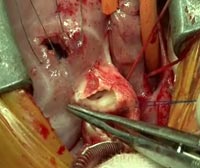
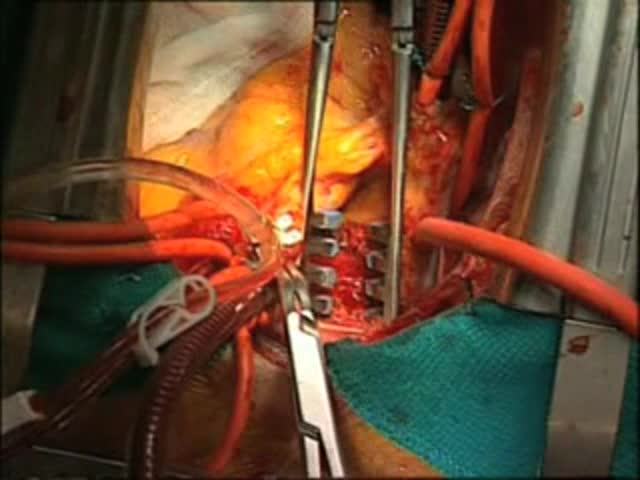
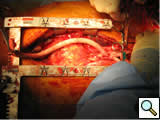
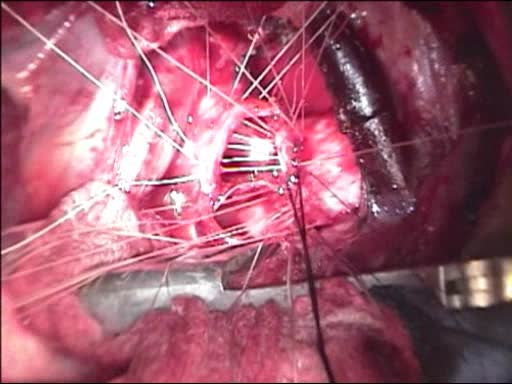
EACTS Film Session 2008 Annual Meeting Introduction We present a video of a surgical repair in a newborn with common arterial trunk type A1-2 in a 2.6 kg newborn. The view is from the patient’s head. Methods A premature baby girl was admitted to the Children’s Heart Centre Slovakia with signs of congestive heart failure and failure…
Professor emeritus Viking Olov Björk, the first editor of the Scandinavian Journal of Thoracic and Cardiovascular Surgery died on February 18, 2009 in Stockholm at the age of 90 years. He was born on December 3, 1918 in Sunnansjö, Dalecarlia, Sweden. Viking Björk was active as a cardiothoracic surgeon during the era of rapid development…
Pulmonary endoarterectomy (PEA) is the treatment of choice in patients with chronic thromboembolic pulmonary hypertension. Traditionally, PEA is achieved by adopting periods of deep hypothermia at 18 degrees Celsius and circulatory arrest. We present an alternative strategy, based on the application of a negative pressure in the left chambers and also in the superior vena…
Paul Allen Ebert, MD died in the early hours of April 21st, 2009 in Sacramento, California quite unexpectedly of an acute myocardial infarction at 76 years of age. He was a towering figure of a man, a virtual giant upon whose shoulders a generation of trainees, colleagues, admirers, sports fans, philosophers, friends, and family members…
It was a clear, cool fall morning of my first year in medical school. I had remembered that we were scheduled to have a special guest for our 8 AM lecture that morning, but little did I know how much that lecture would change my life. Bleary-eyed and struggling to wake-up, I entered the lecture hall…
Introduction The current “traditional” method for training cardiothoracic surgeons (five years of general surgery and two-three years of thoracic) dates back 80 years to a time in which the specialty consisted of operations for empyemas and tuberculosis. Needless to say, over the course of the last 80 years, the field of cardiothoracic surgery has changed…
Fluoroscopy is an essential tool for the endovascular surgeon. This manuscript will review the fundamentals of fluoroscopy for thoracic endovascular aortic repair (TEVAR) and will focus on matters specific for thoracic aortic stent grafting. The following items will be discussed: types of fluoroscopy, preoperative use of fluoroscopy, positioning of patient, positioning of fluoroscopy for successful…
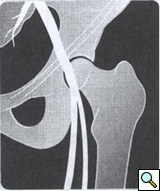
Introduction Safe performance of thoracic endovascular procedures including thoracic stentgrafting of aneurysms, dissections, retrograde delivery of transcatheter aortic valves, and other complex endovascular procedures for structural heart disease requires zero tolerance for major access-related complications. Thorough preoperative planning, understanding the pathology of aorto-iliac occlusive disease, advanced endovascular skills, and ability to perform an iliac conduit…
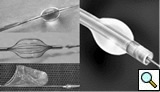
Introduction A vascular stent is a tube composed of a metal mesh intended to restore or preserve the patency of a vessel. The development of endovascular stent technologies made it possible and improved the minimally invasive treatment of many vascular diseases. Indications for stent utilization include: dissection after angioplasty, residual stenosis (>30%), pressure gradient (>10…
Building upon the endovascular knowledge gained by stent graft treatment of abdominal aortic aneurysms, and using that same femoral approach to treat thoracic aortic pathology has been successful, except in cases where the larger thoracic stent grafts are difficult to place through many femoral arteries. In the Gore TAG trial, upwards of 15% of the…
Introduction The ability to perform percutaneous or limited incision access for deployment of stent grafts defines endovascular surgery. This summary will highlight endovascular access methods as well as common complications associated with the procedures. Choice of Approach The most common percutaneous access sites are the femoral, radial, and brachial arteries. When choosing which site to…
Patient Selection Coronary angiography in the setting of coronary artery bypass grafting (CABG) is important diagnostic tool for the evaluation of bypass graft patency in patients presenting with angina or ischemia. Furthermore, coronary interventions in diseased vein grafts are common practice for the treatment of graft atherosclerosis. Angiography in the setting of CABG is more complex…
STSA Surgical Motion Picture 2008 Annual Meeting Surgical resection of carinal tumors can be safely accomplished via median sternotomy. Resection effectively alleviates airway obstruction. The transsternal approach provides excellent excellent exposure and should be considered for carinal tumors.
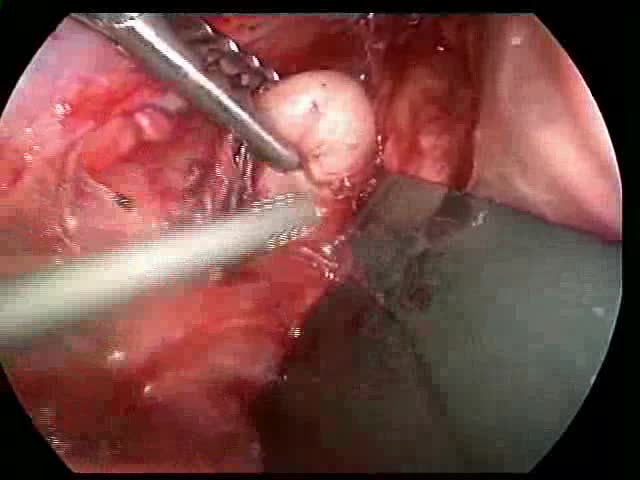
STSA Surgical Motion Picture 2008 Annual Meeting Minimally invasive VATS enucleation of a proximal esophageal leiomyoma is a safe approach to treat this unusual benign esophageal tumor.
Patients with recurrent or persistent spontaneous pneumothorax are treated thoracoscopically. Those with blebs or small bullae are generally managed by stapler resection of the lesions. We have recently experimented with a new device (Endo-Floating Ball) for the coagulation of blebs as an alternative to endostapler resection. Introduction Patients with recurrent or persistent spontaneous pneumothorax are…