Content from the Journal of the American Neurological Surgeons.
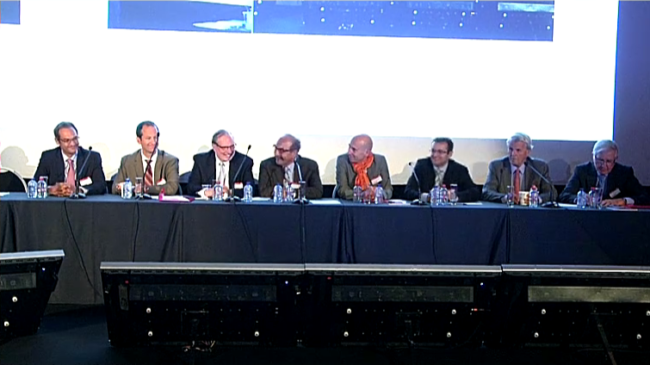
Correct graft sizing requires an intrinsic understanding of normal aortic valve anatomy and the role of the functional aortic annulus. Yet sizing methods have generated significant controversy amongst surgeons. Mohamad Bashir of Barts Heart Centre, London, United Kingdom, moderates a panel discussion on this complex topic that was filmed at the 2016 Aortic Valve Repair…
Complementary to a previous video describing repair of a right Bochdalek hernia, this video explains how to deal with a left one. The patient was a 46-year-old male who was very fit, but noticed deterioration in his level of stamina. He also noticed increasing shortness of breath lying flat. His spirometry was normal, but there…
Ruben Osnabrugge interviews EACTS Secretary General and CTSNet President Pieter Kappetein about the highlights of the 2016 EACTS Annual Meeting.
View an SCTS and Bupa patient resource explaining what to expect the first three days after cardiac surgery. Click below to view the full patient guide. This patient resource is provided by SCTS and Bupa.
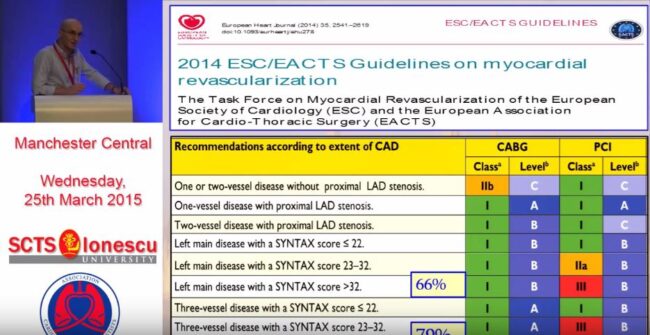
David Taggart of the University of Oxford, UK, argues that CABG remains the best therapy for coronary artery disease. Professor Taggart provides a detailed review of the current evidence and trial data. This presentation was originally given during the SCTS Ionescu University program at the 2015 Annual Meeting of the Society for Cardiothoracic Surgery in…
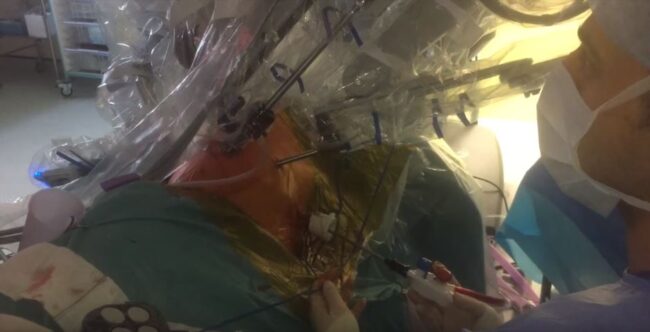
This video shows a robotic right lower lobectomy utilizing a subxiphoid approach for the assistant port and specimen removal. This approach also used four robotic ports: one 5 mm posterior port, two 8 mm arm ports, and one 12 mm camera port. The large specimen was removed via the subxiphoid incision, which eliminated the need…
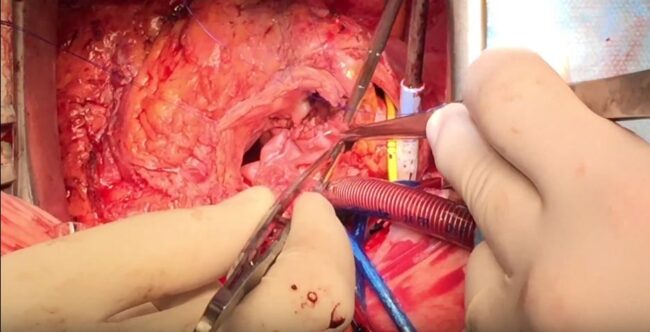
Involvement of the mitroaortic curtain as a complication of infective endocarditis constitutes a serious medical condition. Extensive surgical debridement and mitroaortic curtain reconstruction is required in order to eradicate the infection. The fact that most of affected patients have had previous valve replacements brings additional challenges regarding optimal surgical exposure of the mitral valve annulus.…
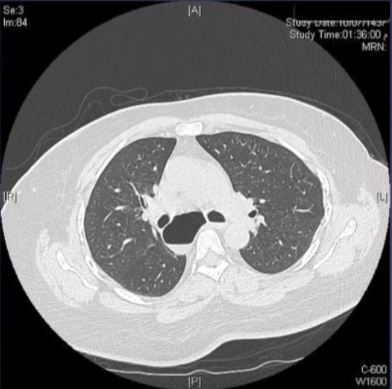
The authors present the case of a complex mediastinal bronchogenic cyst that was excised through a right VATS approach. The anatomy of the mediastinal structures are highlighted, as well as the use of intraoperative endoscopy.
In a roundtable filmed at the 2016 STS Annual Meeting in Phoenix, Arizona, a group of experts discuss the current state and future of image-guided cardiothoracic surgery. Shanda Blackmon of the Mayo Clinic, Rochester, Minnesota, is joined by Todd Demmy of Rutgers Cancer Institute of New Jersey, New Brunswick, New Jersey; Mark Berry of Stanford…
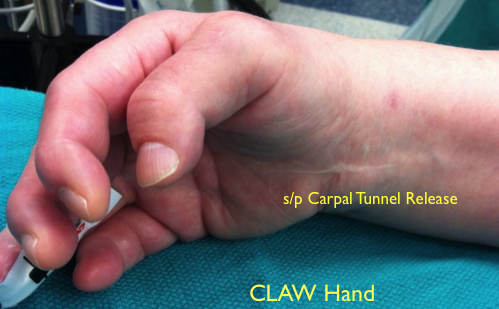
Fig. 1: Right Hand: short, spindle shaped fingers. Status post carpal tunnel release. Introduction An autosomal recessive lysosomal storage disease, Scheie’s syndrome is a hereditary disorder involving a missing lysosomal alpha-L-iduronidase enzyme used in the breakdown of glycosaminoglycan (GAG). Unbroken GAG can be deposited anywhere in the body, including: bones, cartilages, eyes, and the cardiovascular system…
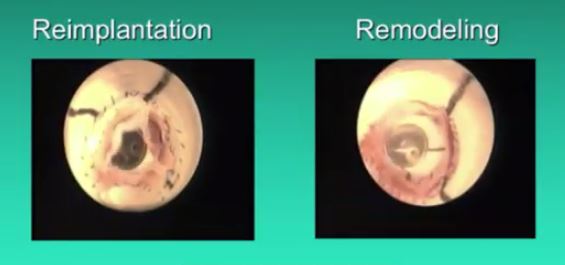
Hans-Joachim Schaefers of Saarland University Medical Center, Homburg/Saar, Germany, compares the Yacoub and David procedures. Dr. Schaefers discusses the complexities of aortic valve structure, and his experiences with root remodeling versus re-implantation of the aortic valve. This presentation was originally given during the SCTS Ionescu University program at the 2016 Annual Meeting of the Society…
The authors have previously reported on a subxiphoid single-port thymectomy. As a camera is inserted into the midline of the body, the subxiphoid approach facilitates identification of the bilateral phrenic nerves and also provides a good visual field in the neck region compared with that afforded by the lateral thoracic approach. However, the limited operability…
View an SCTS and Bupa patient resource explaining what will happen the day of surgery. Click below to view the full patient guide. This patient resource is provided by SCTS and Bupa.
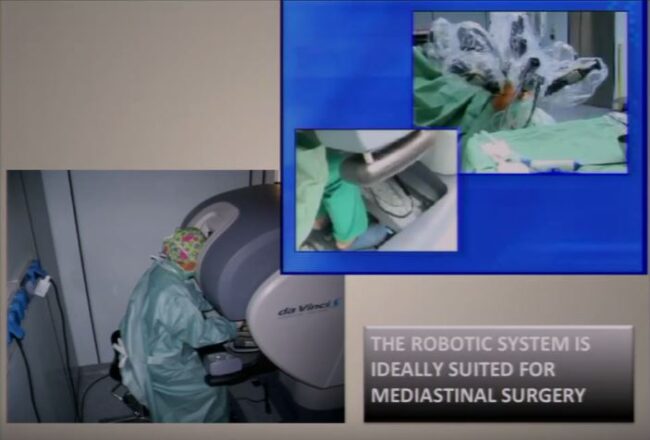
Franca Melfi of the University of Pisa, Italy, discusses the benefits of robotic surgery in the management of mediastinal disease, along with the supporting evidence. Dr. Melfi describes her own use of robotic surgery for thymectomy, and shares a video demonstration of her technique. This presentation was originally given during the SCTS Ionescu University program…
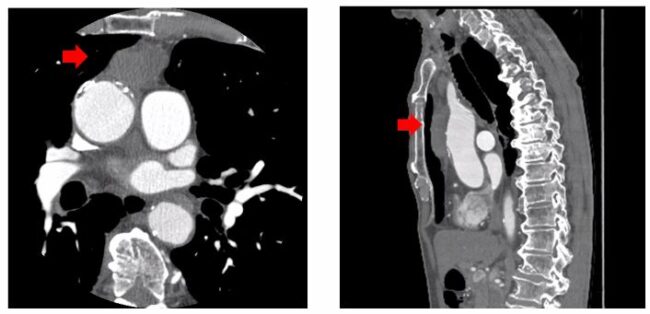
Originally presented as a Surgical Motion Picture at the 2015 STSA Annual Meeting Objectives: A 23-year-old male patient presented with dyspnea, chest pain, and fatigue for three days. He had no cough, fever, or myalgias. He had a family history of aortic aneurysms. An exam revealed a pectus excavatum deformity. According to the Haller index,…
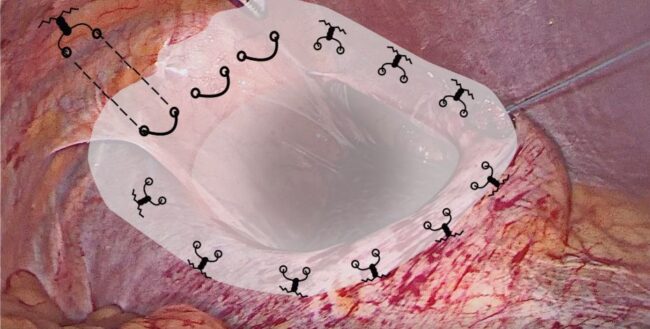
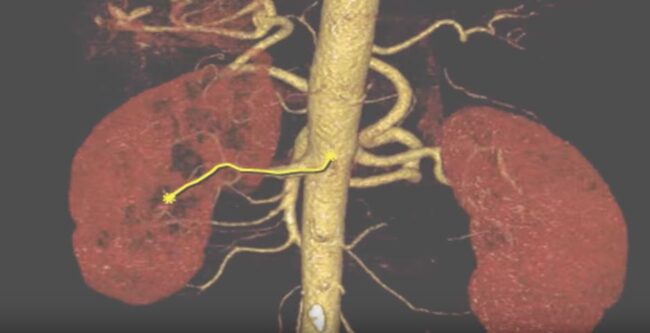
Abdominal aortic cross-clamping is required in many visceral bypass operations, but results in increased risk of postoperative morbidity. Originally developed for coronary artery bypass grafting, the PAS-Port Proximal Anastomotic System (Cardica Inc., Redwood City, CA) creates sutureless proximal aortic anastomoses without the need for cross-clamping, although its use elsewhere in the body has not been…